Tehran vs. Baghdad: Iraq’s armed factions face a strategic recalculation


Shafaq News
The rapid escalation of regional tensions —driven by internal unrest in Iran, mounting international pressure on Tehran, and renewed warnings from Washington— has placed Iraq’s armed factions before one of their most sensitive tests since the defeat of ISIS. What is unfolding is not a debate over ideology, but a recalibration of strategy, as these groups attempt to reconcile long-standing ties with Iran with the political, legal, and economic realities of the Iraqi state.
At stake is more than regional alignment. The current moment forces armed factions in Iraq to reassess how far their external commitments can extend without undermining their domestic standing, exposing the country to international penalties, or accelerating efforts to dismantle their military power outside state control.
Iran has faced weeks of heightened internal tension marked by protests, security crackdowns, and intensified rhetoric from Western capitals. The US-based Human Rights Activists News Agency (HRANA) documented demonstrations at nearly 300 locations across 111 cities in all 31 provinces, reporting at least 50 deaths, including police officers, and over 2,200 arrests, though exact figures remain contested due to restrictions on independent verification. Iranian authorities have also announced the arrest of individuals accused of espionage, including one suspect described as linked to Israel’s Mossad, claims that further raised regional alarm without independent confirmation.
Read more: Iran’s protests between economic crisis and political contestation
For Iraq’s armed factions, these developments matter not because they demand immediate action, but because they raise the cost of association. Any perception that Iraqi groups are intervening beyond their borders —or assisting Tehran in internal matters— risks transforming Iraq from a fragile stabilizer into an extension of regional confrontation.
Iraq’s armed factions are neither purely non-state militias nor fully subordinated government forces. Most emerged after 2003 and expanded dramatically following the 2014 ISIS onslaught, later becoming formally linked to the Popular Mobilization Forces (PMF). While the PMF is legally recognized and funded by the state, many constituent factions retain independent command structures, political wings, and economic networks.
This dual identity, simultaneously inside and outside the state, explains why regional crises quickly turn into domestic political dilemmas. Decisions taken beyond Iraq’s borders reverberate directly through Baghdad’s institutions.
Political researcher Ramadan al-Badran describes the current phase as “embarrassing and complex” for armed factions, arguing that Iran’s pressures and Washington’s demands have converged into a “moment of existential decision.” Some groups, he notes, are increasingly inclined toward prioritizing Iraqi state interests and avoiding escalation, while others hesitate, less for ideological reasons than for fear of losing entrenched political and economic influence should weapons be relinquished.
The question is no longer theoretical: can armed influence survive without arms?
From within the factions themselves, the dominant public message emphasizes sovereignty and restraint. Hussein al-Sheihani, a senior figure in Sadiqoon, the political wing of Asaib Ahl Al-Haq, led by Qais al-Khazaali, stresses that armed groups operate under “clear constants,” foremost among them adherence to Iraq’s religious authority and alignment with state decisions on war and peace.
By rejecting comparisons with Yemen and insisting on Iraq’s “specificity,” factions signal that they seek to avoid transforming the country into a battlefield for proxy wars. Yet Sheihani also draws clear red lines, warning that any direct attack on Iraq would trigger a response framed as both a national and religious duty.
A similar balancing act appears in the remarks of Hadi al-Saadi of Asaib Ahl Al-Haq, who argues that Iran remains capable of managing its internal unrest and deterring external threats without Iraqi involvement. While affirming ideological and strategic ties with Tehran, al-Saadi insists that Iraqi factions have not historically functioned as “an automatic extension of Iran’s deterrence apparatus unless Iraqi security itself was at stake.”
This position seeks to reassure two audiences at once: allies within the so-called Axis of Resistance and Iraqi political actors wary of external entanglement. It is a narrative of deterrence without deployment.
Read more: Iraq’s armed factions and the disarmament debate: Why unity masks deep divisions
These carefully calibrated messages come amid accusations by the US State Department that Iran has relied on “Iraqi and Lebanese militias” to suppress protests. Regime opposition-linked outlets have alleged cross-border recruitment and movement under religious cover. Neither Baghdad nor Tehran has confirmed these claims, and Iraqi faction leaders have issued implicit denials.
The veracity of these reports matters less than their political impact. Even unproven allegations intensify US pressure on Baghdad, strengthen arguments for disarmament, and deepen domestic suspicion toward armed groups.
International pressure on Iraq has increasingly focused on controlling weapons outside state authority. Here, armed factions are far from unified. Some groups and political actors, including Asaib Ahl Al-Haq, have signaled openness to negotiations, gradual integration, or redefinition of military roles under state oversight.
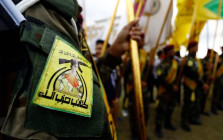
Others reject the premise outright. Hardline factions such as Kataib Hezbollah and Harakat al-Nujaba have repeatedly opposed disarmament initiatives, framing them as externally imposed and strategically dangerous. This split underscores that “the factions” are not a monolith, but a spectrum of interests responding differently to the same pressures.
On the regional level, escalation rhetoric is voiced most clearly by actors operating outside state frameworks. Abdulghani al-Zubaidi, a military figure in Yemen’s Ansarallah (Houthis), tells Shafaq News that the region has entered what he called a “semi-ignited phase,” warning that any direct intervention against Iran or the wider Axis of Resistance would trigger forceful responses with repercussions extending beyond the Middle East.
Iraq’s armed factions, however, have been careful not to adopt this language publicly. Unlike Yemen, Iraq functions within a recognized state structure that includes an elected parliament, an internationally engaged government, and an oil-dependent economy deeply exposed to global markets. Armed groups are embedded in this system through politics, budgets, and local economies, making overt regional intervention far costlier than rhetorical solidarity.
This structural difference explains the emphasis on restraint and “Iraqi specificity.” For factions operating inside Iraq’s institutions, Yemen-style escalation would risk sanctions exposure, domestic backlash, and a direct challenge to state legitimacy, outcomes that could accelerate external pressure to curtail or dismantle armed power rather than preserve it.
Three scenarios now dominate political calculations. The first —and most likely in the short term— is controlled alignment, where factions double down on sovereignty language, avoid cross-border action, and tolerate limited state oversight. The second is internal fragmentation, as pragmatic factions move closer to Baghdad while hardliners resist, producing divergent strategies under a shared umbrella. The third, least predictable but most dangerous, is escalation triggered by a major regional shock that collapses existing restraints.
Caretaker Prime Minister Mohammed Shia al-Sudani has warned that Israel previously sought to drag Iraq into war after October 7, 2023, underscoring Baghdad’s determination to avoid repetition. Washington, however, continues to press for tangible steps to curb armed influence, linking Iraq’s political future to its ability to enforce state monopoly over force.
Ultimately, Iraq’s armed factions are no longer debating loyalty; they are negotiating survival within a tightening corridor of regional pressure and domestic expectation. Their challenge is to preserve influence without becoming the catalyst for isolation or conflict. How long that balance can hold will shape Iraq’s stability, and the wider region’s fragile equilibrium.
Written and edited by Shafaq News staff.