Rusting ambition: Iraq’s railway stalled by neglect


Shafaq News
Iraq’s railway network, once a vital artery linking the country to its neighbors and Europe, is today only a shadow of its past. Lawmakers and transport experts warn that decades of neglect, mismanagement, and poor planning have driven the system into deep decline.
The Transport Ministry, however, insists it is writing a new chapter with ongoing rehabilitation works and ambitious projects under the $17 billion Development Road scheme — a plan that could transform Iraq into a transit hub between the Gulf and Europe.
Lost Legacy
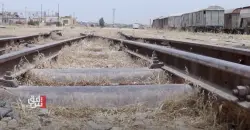
Baghdad’s al-Alawi–Shaljiyah station, long regarded as a regional gateway, now stands in disrepair after years of abandonment. Transport expert Basel al-Khafaji recalls the network’s golden era in the 1960s, when Iraqi trains connected southern ports such as Umm Qasr and al-Maqal to Baghdad, before continuing north through Baiji and Mosul, crossing into Turkiye, and from there into Europe.
“At that time, Iraqi travelers could reach Turkiye by train and continue their journeys on European networks all the way to their destinations,” al-Khafaji recounted to Shafaq News.
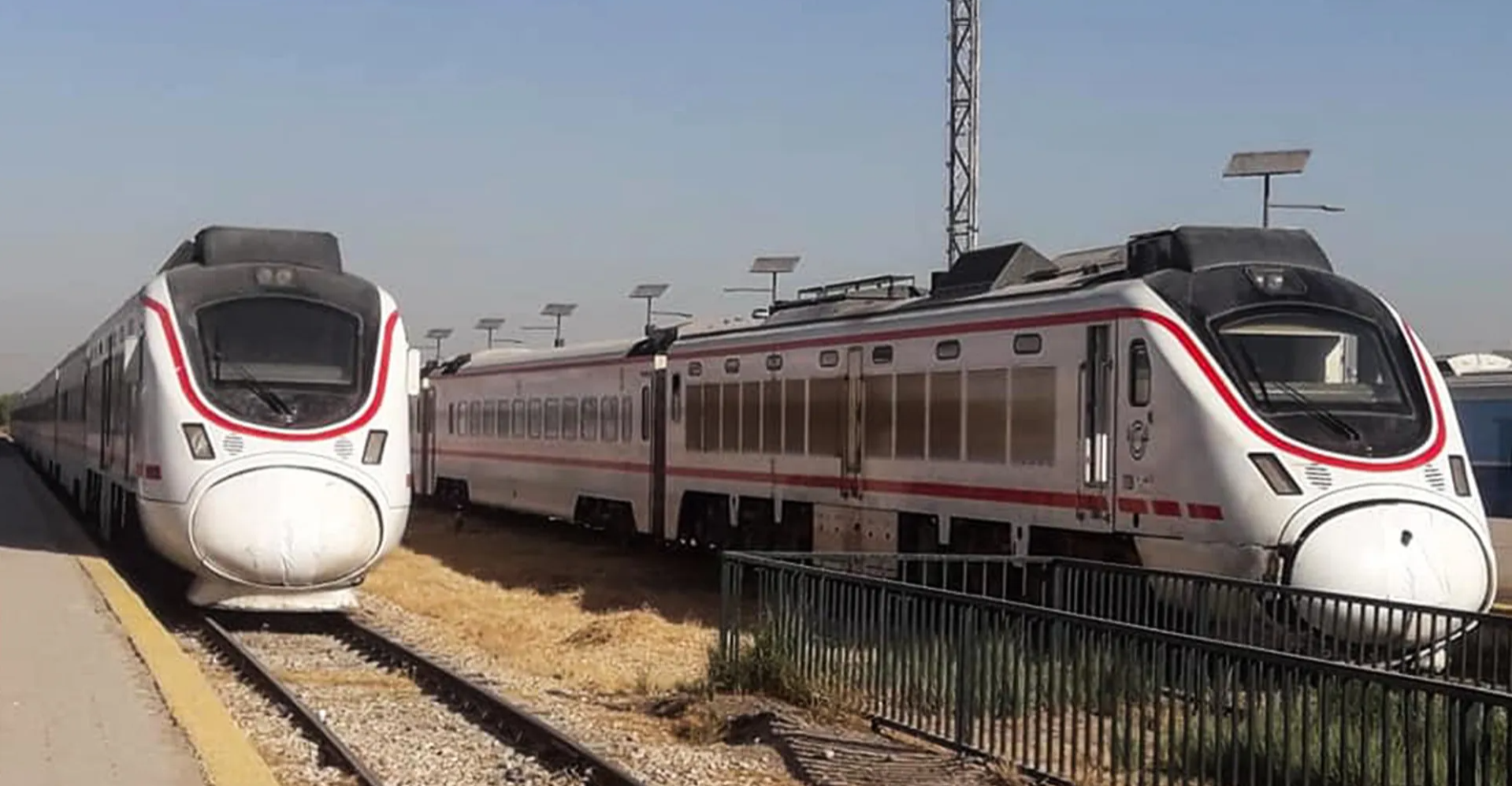
The contrast with today is stark. Main lines have gone untouched for more than half a century, trains no longer reach key stations like Baiji, and the Baghdad–Basra trip now takes more than 12 hours — a journey that modern rail systems abroad cover in a fraction of the time. By comparison, Turkiye’s high-speed rail links Ankara and Istanbul, roughly 500 km apart, in under five hours.
Iraq’s decline is also reflected in the numbers. In the 1970s, Iraqi State Railways operated more than 2,000 km of tracks, carrying millions of passengers and tons of freight each year. Today, fewer than 200,000 passengers board Iraqi trains annually.
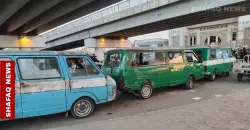
For al-Khafaji, the problem is not only financial: “It is the absence of vision inside the transport ministry and the accumulation of administrative and planning failures.” These failures, he argued, worsened urban traffic gridlock, and robbed the country of what could have been a reliable alternative to road transport.
Empty Pledges
Members of parliament’s Transport Committee share that frustration. Committee member Aqeel al-Fatlawi accused the government of failing to follow through on promises to overhaul the sector.
“The government initially showed interest in strategic rail projects when it took office, but never translated that into action,” al-Fatlawi remarked to Shafaq News, pointing to the Karbala–Najaf line as a missed opportunity, and stressing that the project could have served millions of pilgrims annually, including more than 20 million who travel to Karbala for Arbaeen alone. Instead, it was shelved, along with plans to restore links between Baghdad and other provinces.
Al-Fatlawi noted that projects of long-term value were sidelined in favor of “short-term works with electoral motives, like bridge construction, which usually conclude before elections,” describing the neglect of rail projects as a “strategic mistake” that squandered opportunities to ease traffic, improve services, and reduce Iraq’s heavy road toll.
Moreover, the Health Ministry records more than 7,000 road accident deaths every year, a figure he believes would fall sharply if Iraqis had the option to travel by rail and other forms of public transport.
Turning the Page
The Transport Ministry maintains that progress is underway. At the heart of its plans is the Development Road — a 1,200 km corridor of railways and highways stretching from the port of al-Faw in Basra to Turkiye. Officials project it could handle 22 million tons of cargo annually and create tens of thousands of jobs.
“The project aims to modernize the crumbling infrastructure and address chronic issues such as encroachments on rail tracks,” Ministry Spokesman Maytham al-Safi explained to Shafaq News.
According to al-Safi, the ministry has already restarted 12 lines across central, southern, and northern Iraq, including routes damaged by wars and militant attacks. These include Baghdad–Fallujah, Fallujah–al-Anbar, Baghdad–Saladin, Saladin–Tikrit, and Baghdad–al-Musayyib, along with port connections such as Umm Qasr.
Talks are also ongoing with the World Bank to rehabilitate the historic line running from Basra through Baghdad and Mosul to the Turkish border, forming part of the first phase of the Development Road.
Other projects are advancing as well. The Basra–Shalamcheh line, a 36 km route linking Iraq to Iran, is expected to serve more than 5 million passengers annually under a contract signed with Spanish firm Imathia. The ministry is also preparing an 85 km elevated railway between Karbala and Najaf to ease the journeys of religious visitors.
Read more: Iraq’s Development Road: Geopolitics, rentierism,and broader connectivity
Risks and Realities
Yet even with new contracts on the table, challenges remain. The first phase of the Development Road is not expected to be completed until 2031, and Iraq’s history of delays and unfulfilled contracts has raised doubts. Transport economists further warn that the country still relies on diesel locomotives, while neighboring states are electrifying their systems to cut costs and emissions.
The environmental case for rail is strong: freight trains emit up to 75% less CO₂ per ton-km than trucks. In traffic-choked Baghdad and Basra, where air pollution is worsening, rail could help ease both congestion and emissions.
Budgeting, however, continues to pose an obstacle. Road and bridge projects routinely secure larger allocations than rail. Corruption and widespread encroachments on railway corridors have also derailed past rehabilitation efforts.
For now, trains continue to operate — slowly and inconsistently. Passenger services still link Baghdad with southern provinces, while freight trains haul fuel and goods north. But without sustained investment, Iraq risks losing a rare chance to revive a network that once served as the backbone of regional connectivity.
Written and edited by Shafaq News staff