Najaf’s religious authority: A centuries-old voice for stability in Iraq


Shafaq News
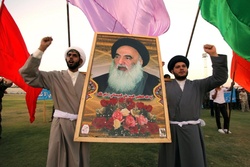
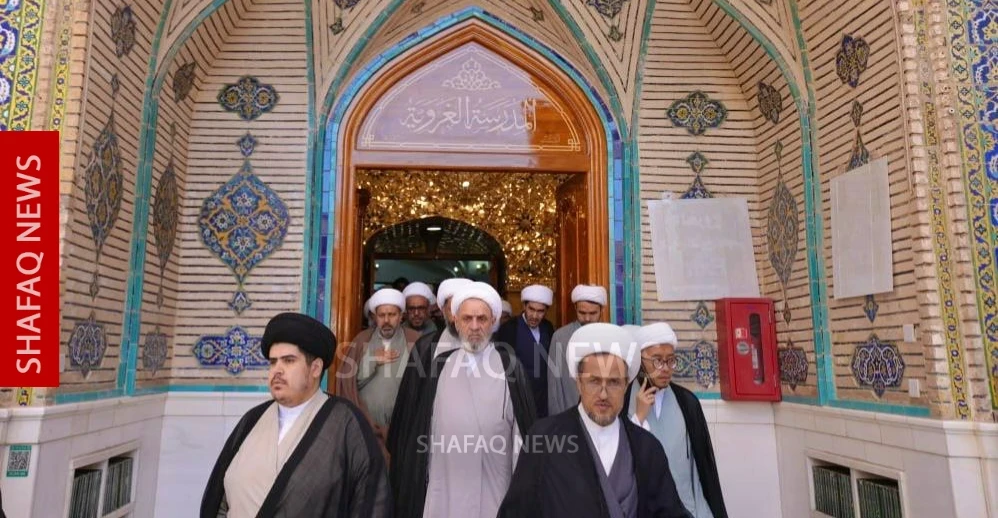
In the southern Iraqi city of Najaf, the modest houses and narrow streets of the old quarter conceal one of the country's most influential religious and political centers. The city hosts the leading figures of Iraq’s Shiite religious establishment, foremost among them Grand Ayatollah Ali al-Sistani. Despite their simple lifestyle and reputation for asceticism, the decisions and guidance issued from Najaf have repeatedly shaped major developments in Iraq and beyond.
For nearly a thousand years, the Najaf seminary has maintained a moderate approach to political and social affairs. Throughout Iraq’s various historical periods, the religious authority has consistently emphasized national interests and social stability, advocating dialogue, political solutions, and diplomacy over violence and internal conflict.
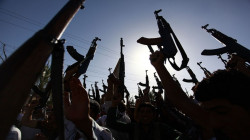
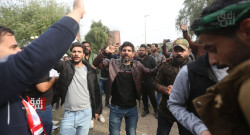
While urging calm and peaceful coexistence, the religious authority has also demonstrated a willingness to take decisive action when Iraq faced existential threats. The most prominent example came after the rapid expansion of ISIS across several Iraqi cities. At a time when both the state and society faced grave danger, the religious authority issued the historic “sufficient jihad” fatwa* in June 2014, calling on Iraqis to defend their country.
Read more: Ayatollah Al-Sistani's authority rejects role in Iraq PM selection
The broad public response to that decree underscored the religious authority’s ability to mobilize society during critical moments. The fatwa became a turning point in Iraq’s campaign against terrorism and contributed to restoring security and stability not only within Iraq but across the wider region during that period.
Also, on very specific occasions, the religious authority outlines its vision for Iraq’s public policies through brief and clearly defined points. On November 4, 2024, after a meeting with the UN Envoy, Mohammed Al-Hassan, Ayatollah Ali Al-Sistani outlined seven factors necessary for the "stability of the country," emphasizing that Iraqis have a "long path" ahead to achieve this goal. One of these factors is extremely related to the key issues in Iraq today. The restraint of weapons on the state. In his seven factors, Ayatollah al-Sistani talked clearly about “confining arms to the authority of the state,” with the other six points focused mainly on preventing foreign interference and enforcing the rule of law.
Historical precedents also highlight the institution’s long-standing opposition to internal conflict. During the 1960s, the late religious authority Mohsen al-Hakim issued positions and rulings urging Iraqis to avoid fighting between Arabs and Kurds amid the conflict between the Iraqi government and the Kurdish movement. He called for dialogue and peaceful solutions, describing internal bloodshed as harmful to national unity and social cohesion.
The religious authority occupies the highest religious status among Twelver Shia Muslims during the period known as the Major Occultation of the Twelfth Imam. As a result, followers are expected to adhere to its religious guidance, reflecting the significant influence it exercises over its constituency.
The fall of the regime of Saddam Hussein in 2003 further expanded the authority’s role in Iraqi public life. The political environment that emerged afterward ended decades of restrictions, persecution, house arrests, and assassinations that had targeted senior clerics under previous governments, allowing the institution to operate more openly and exert greater influence.
Read more: Fatah Alliance anticipates jihad fatwa from al-Sistani amid Israeli strikes onIran
Speaking to Shafaq News, Iraqi researcher Raji Nasser argued that the Najaf religious authority played a “central role” in preserving Iraq’s unity and preventing the country from sliding into civil war after 2003.
According to Nasser, the institution consistently promoted de-escalation, dialogue, and the rejection of sectarianism despite waves of violence and bombings that targeted civilians and religious shrines. He recalled several major crises that were met with restraint by Grand Ayatollah al-Sistani, including the assassination of Mohammed Baqir al-Hakim in 2003 and bombings in Karbala, Baghdad’s al-Kadhimiya and Buratha Mosque, Babil’s Hilla, and other cities.
“The religious authority stressed in its statements the need for awareness and caution regarding parties seeking to tear apart Iraq’s social fabric,” Nasser said, adding that it consistently called for resolving crises “through wisdom, self-restraint, and avoiding sectarian reactions.”
He also pointed to the 2006 bombing of the al-Askari Shrine, one of the most sacred Twelver Shia Muslim holy sites, in Samarra of Saladin Province, describing it as “the most dangerous test of Iraqi unity.” Nasser noted that the religious authority helped contain public anger by encouraging peaceful demonstrations and prohibiting attacks on mosques and shrines belonging to all sects, while emphasizing that internal conflict would only benefit terrorist groups.
“The positions of the religious authority, particularly the statements of Grand Ayatollah Ali al-Sistani, played a major role in calming the Iraqi street and preventing its descent into a comprehensive civil war despite the severe sectarian tensions at the time,” Nasser stressed, describing the institution’s discourse as a moderate national approach based on dialogue, coexistence, and respect for all components of Iraqi society.
The researcher further argued that, in the years following the fall of the former regime, the religious authority helped shape public opinion toward political participation and the building of a constitutional civil state, while also undermining efforts to fuel sectarian division and preserving Iraq’s unity and stability.
A source close to the religious authority in Najaf told Shafaq News that “after this scale of corruption and theft, it has become difficult to find a trusted representative of the people capable of negotiating politically or diplomatically on behalf of Iraqis.”
That distance has been made explicit across successive electoral cycles. In 2018, speaking on al-Sistani's behalf, Deputy Ahmad al-Safi stated that the religious authority was "maintaining a distance from all candidates and electoral lists" and would not back any individual or political grouping. In the elections of 2021 and 2025, al-Sistani reiterated that position while urging voters to treat each cycle as an opportunity for genuine change —to remove corrupt and incompetent figures from power and to participate consciously rather than repeat the failures of previous parliaments and governments. The most recent signal came in 2026, when Mohammed Reza al-Sistani, the cleric's eldest son, delivered a response to the Coordination Framework, the Shiite alliance that emerged as the largest parliamentary bloc, voicing the authority's discomfort over repeated attempts to draw it into the selection of a prime minister candidate, a source told Shafaq News.
Beyond electoral politics, the authority draws an equally firm line on armed conflict.
Read more: Report: Who will succeed Ayatollah al-Sistani, and what will become of hismethodology?
Ali Baqir, a professor at the Najaf seminary, told Shafaq News that “the religious authority does not believe in fighting and bloodshed unless it sees an external threat to the state and its sovereignty.”
According to Baqir, the institution has issued calls for jihad only when the state faced dangers threatening its existence and sovereignty, or when citizens were subjected to killing, displacement, and other violations. He added that the Najaf authority consistently urges respect for state laws when they serve the public interest.
Baqir also highlighted differences between the Najaf school and the religious authority in Qom, Iran, particularly regarding the concept of Wilayat al-Faqih (The Guardianship of the Jurist), explaining that the current Najaf authority under al-Sistani intervenes in political affairs only when public and religious interests require it under the principle of limited guardianship, rather than adopting a doctrine of direct political rule by religious authorities.
The experience of Iraq’s religious authority suggests a model centered on mediation, restraint, and the prioritization of national stability over political competition. Throughout periods of terrorism, sectarian violence, and political turmoil, the institution has sought to promote dialogue while reserving exceptional intervention for moments when the state itself faced serious threats.
Baqir concluded by urging Iraq’s political blocs to follow the guidance of the Najaf religious authority and “work toward an Iraq free from conflict” while avoiding entanglement in the disputes and confrontations of regional powers.
*Fatwa is a formal religious ruling or legal opinion issued by a qualified Islamic scholar or religious authority on matters of Islamic law and practice.
Read more: Al-Sistani reiterates non-intervention in Iraq’s prime minister choice
Written and Edited by Shafaq News Staff.