Mounting delays and workforce fractures, Iraq’s construction sector grapples


Shafaq News
A surge of complaints from homeowners, foremen, and contractors across Iraq is drawing attention to widening problems in the construction sector, where prolonged delays, inconsistent workmanship, and rising workplace disputes are pushing many builders to rely increasingly on foreign labor.
Iraq’s construction industry expanded rapidly after 2003 as part of nationwide reconstruction efforts, with billions poured into public and private building projects. But the sector’s growth outpaced regulation. Licensing requirements remain uneven, inspections are limited, and worker protections are poorly enforced. Of nearly one million foreign workers currently in Iraq, fewer than 10 percent hold legal permits, according to the Ministry of Planning. The result is a labor environment in which quality varies sharply, disputes are common, and accountability is unclear.
Delays And Soaring Costs
The frustrations often surface at the household level. For Baghdad resident Basima Waleed, what should have been a straightforward home-building project turned into a two-year ordeal marked by repeated delays and costly mistakes. The workers she hired routinely stalled tasks, leaving parts of the structure exposed to winter rain and humidity.
“I suffered immensely trying to find reliable Iraqi workers,” she told Shafaq News. “Sometimes I came home to find absolutely no progress—at best, a row or two of bricks.”
Waleed later discovered that a foreman had used contaminated landfill soil, rich in moisture, instead of clean soil beneath the flooring. Months after the concrete dried, cracks and uneven surfaces appeared, forcing her to redo major portions of the work.
“Some laborers prolong tasks because they are paid fixed daily wages.”
Such household-level frustrations reflect deeper structural problems, linked to how job sites are organized and how labor is managed across Iraq.
A Workforce Split
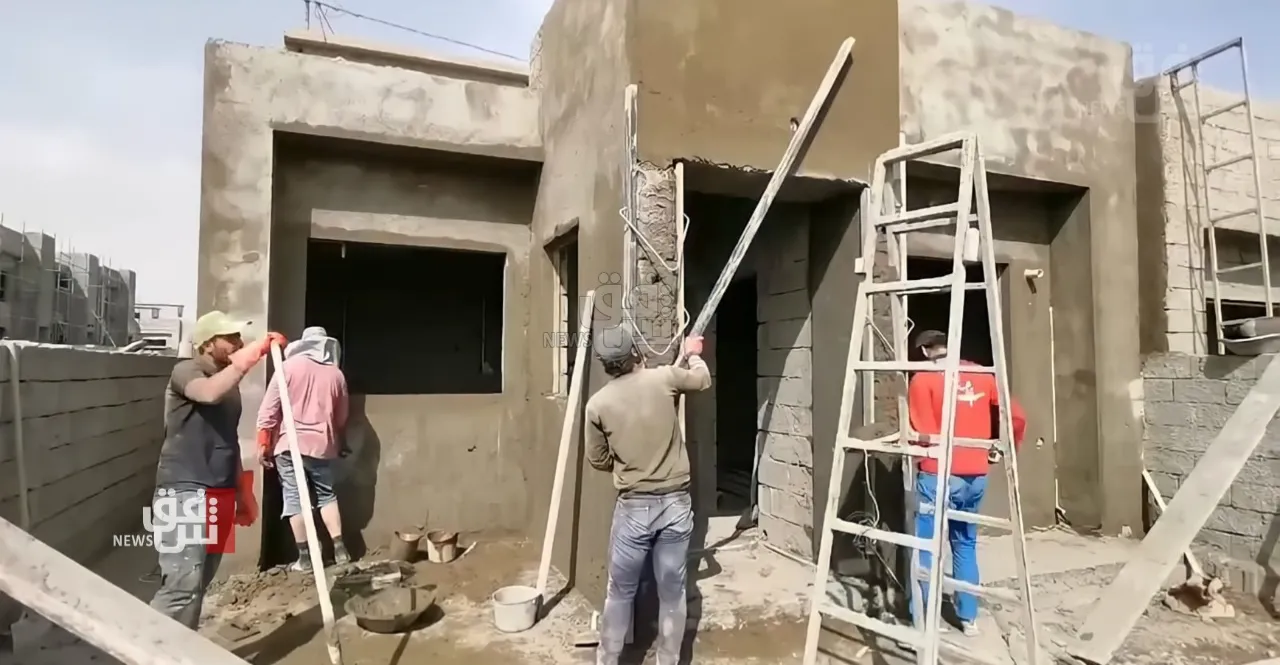
Understanding Iraq’s construction challenges requires looking at how job sites operate. The Usta — or foreman — is the technical backbone of any project. He sets measurements, ensures alignment, supervises brickwork and finishing, and oversees day-to-day implementation. His expertise often determines the overall quality of the build.
Laborers, by contrast, shoulder physically demanding work: transporting bricks, mixing cement, preparing tools, and keeping the site organized. Skilled laborers can progress toward becoming foremen, but the gap in experience heavily affects speed, coordination, and workmanship.
This division is long-established, yet several contractors say the imbalance in discipline and skill between foremen and entry-level workers has widened in recent years. They argue that small technical errors — improper leveling, weak soil preparation, poor brick alignment, or incorrect curing of concrete — can cause structural problems months later, making precision and consistent supervision critical.
Contractors say these tensions do not remain confined to small home builds. They warn that the problems extend well beyond individual projects.
Fouad Mahmoud al-Safi, who once employed 110 Iraqi workers, told Shafaq News he dismissed nearly all of them after what he described as “chronic negligence” and wasted hours. Only 15 foremen remained, with the rest replaced by foreign laborers.
According to al-Safi, actual productive work sometimes amounts to “no more than three hours out of an eight-hour day,” with the rest lost to phone calls, repeated breaks, and informal conversations. “The issue isn’t just poor performance,” he said. “Contractors fear holding workers accountable because of potential tribal retaliation.”
He added that workplace injuries add pressure. Under tribal custom, contractors may be required to pay months of wages and cover medical costs if a worker is hurt — another factor pushing companies toward foreign labor.
Changing Work Culture On Job Sites
Foremen say shifting work culture has made projects harder to manage. Veteran foreman Nizar Saadoun, with more than 25 years of experience, said some laborers now resist guidance or arrive at job sites reluctant to work — often pushed into the profession by family expectations or financial need.
“Some workers refuse instructions and even threaten foremen with fights or tribal escalation,” he told Shafaq News. “It’s unacceptable. Construction is a responsibility, and failing to meet it betrays the integrity of the job.”
Such tensions slow progress and erode standards at a time when Iraq urgently needs reliable building capacity.
Yet not all laborers accept the criticism directed at them. Some say the inconsistencies contractors describe stem from unstable employment and harsh working conditions.
“It’s difficult to find steady work,” laborer Sadiq Ali said. “Sometimes we prolong tasks to ensure a few more days of wages before the next job appears.”
Others point to the physical demands of construction. Worker Majid Lafta said exhaustion pushes many laborers to take breaks or distract themselves with their phones. “Most of us are just waiting for the day to end and for the wage to arrive,” he said.
Daily wages typically range between 35,000 and 40,000 Iraqi dinars ($26-30) — a rate foremen say does not always reflect the discipline or consistency required.
A Deeper Structural Shift
Contractors say their growing reliance on foreign workers is driven not only by performance concerns but by economic logic. Foreign laborers — particularly from South Asia — often arrive through organized agencies, accept fixed monthly salaries, and work longer hours. This predictability, contractors argue, reduces costs and limits the risk of disputes, although it raises concerns about displacing local labor.
At the same time, the construction workforce underwent major shifts after 2003. Many skilled Iraqi craftsmen migrated, retired, or moved into better-paid sectors such as oil, security, or government employment. Contractors say this generational loss of skilled tradesmen left a gap that was gradually filled by less experienced laborers, making consistent training and oversight even more important.
Iraq’s vocational training institutes, once a pipeline for skilled builders, have also struggled with outdated curricula and low enrollment, leaving new workers less prepared for modern construction standards.
A Broader Behavioral And Economic Pattern
Social researchers say these worksite tensions cannot be separated from wider behavioral patterns across Iraqi workplaces.
Academic researcher Kareem al-Jabri told Shafaq News that some negative behaviors — time-wasting, evasiveness, and refusal to accept responsibility — reflect broader cultural tendencies rather than isolated individual problems.
“The Iraqi individual sometimes shows a sense of superiority that justifies his actions, even when they’re wrong,” he said. “Wasting work hours has become normalized in some settings and affects service sectors, construction sites, and community expectations.”
He emphasized, however, that these behaviors do not represent all Iraqis. Skilled and dedicated workers remain central to many projects, he said, and clearer legal protections, consistent wages, and respectful treatment could help improve discipline. “A worker who feels undervalued or under pressure may drift away from his duties,” he added. “Effective communication and appreciation are essential to restoring professional commitment.”
Beyond Private Homes
The consequences of these labor tensions extend beyond private construction. Iraq’s government-funded projects — schools, clinics, water networks, roads, and housing complexes — rely on the same workforce facing disputes and delays. Inconsistent workmanship or prolonged timelines can disrupt provincial budgets, slow reconstruction programs, and weaken public confidence in state-led development.
Contractors warn that without a stronger regulatory framework — including worker certification, clearer safety rules, enforceable contracts, and standardized penalties — the country risks deeper delays in critical infrastructure.
As reliance on foreign labor grows and disputes intensify, experts warn that Iraq may face broader challenges — from delayed infrastructure to declining craftsmanship — unless labor standards, vocational training, and workplace culture improve.
Written and edited by Shafaq News staff.