Kirkuk’s ballot test: Two decades of unresolved promises


Shafaq News
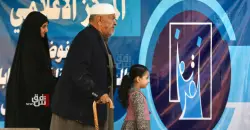
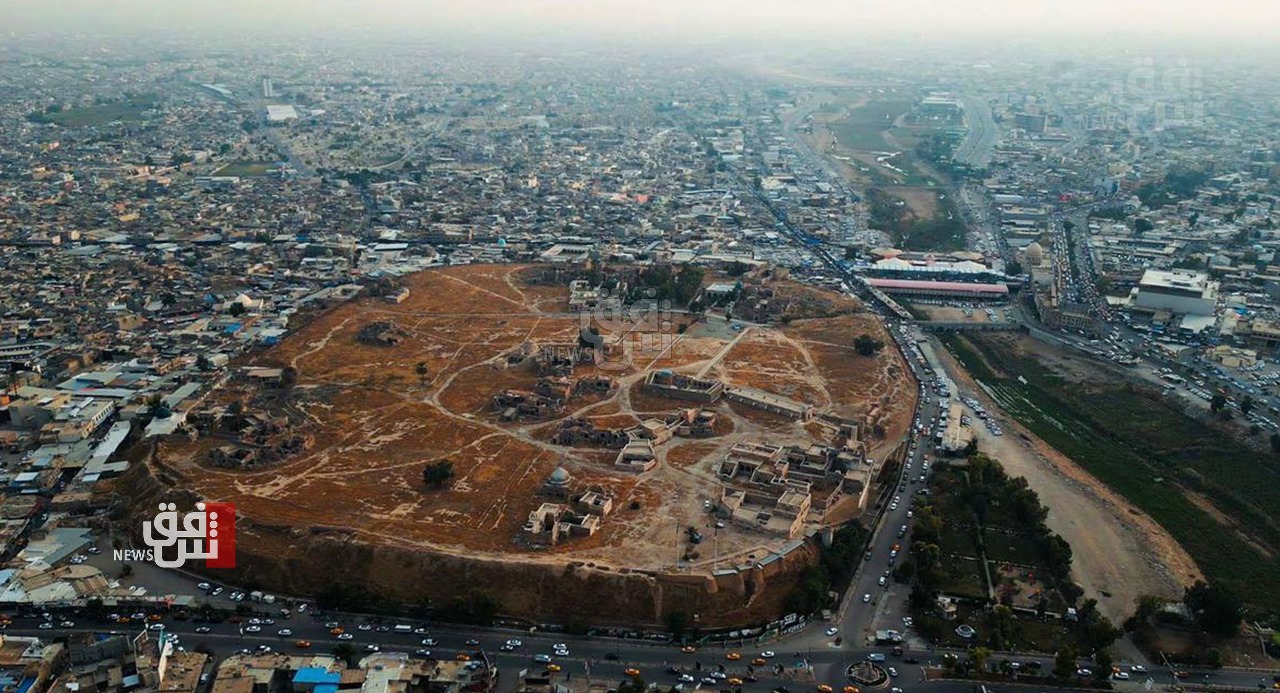
Kirkuk — one of Iraq’s most diverse and contested provinces — is once again the focus of national and regional attention ahead of the November 11 parliamentary elections. Kurdish, Arab, and Turkmen parties are entering one of their most competitive races in years for the province’s 13 parliamentary seats, including one reserved for the Christian community.
In 2021, Kurdish parties secured six seats, Arab alliances four, and Turkmen factions two, reflecting a fragile balance that continues to define Kirkuk’s complex political fabric.
This year, 252 candidates, including 73 women, are vying for Kirkuk’s representation. Kurdish parties have chosen unity, running on a single list, while Arab and Turkmen blocs remain divided. Behind these electoral tactics lies a deeper question: can Iraq’s institutions guarantee a fair contest in the province that most vividly reflects the country’s enduring struggle to reconcile diversity with federal integrity?
The Pulse of Iraq’s Political Balance
Since Iraq’s first post-Saddam parliamentary vote in 2005, Kirkuk has served as both a testing ground and a warning sign. Every election here has mirrored shifts in Baghdad’s national equilibrium — from post-war restructuring to the ISIS’s collapse, from Kurdish autonomy debates to the renewed assertion of federal control after the 2017 independence referendum.
Kirkuk’s electoral history reads less as a list of results and more as a political pulse: in 2005, Kurds captured the majority of seats in a province still hopeful about constitutional inclusion; in 2014, they reached their peak amid the fight against ISIS, while Arab and Turkmen parties were still reorganizing. The 2018 election, held after Baghdad’s retake of the province, exposed the first major rupture — Kurdish participation dropped sharply following the Kurdistan Democratic Party’s boycott, opening the door for Arab and Turkmen blocs to expand. In 2021, a partial Kurdish recovery restored some equilibrium, yet the structural dispute persisted: Kirkuk remained governed by suspicion rather than consensus.
The 2025 race thus represents not simply another vote but the culmination of two decades of unresolved federal promises. Despite institutional progress, Kirkuk’s political DNA has not changed — every electoral cycle reactivates the same fault lines over land, power, and legitimacy.
A Province of Suspicion
Today, the debate has once again centered on the voter registry — the administrative file that has come to symbolize political mistrust.
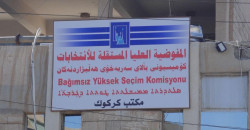
Turkmen leader Arshad al-Salihi has announced his intent to sue the Independent High Electoral Commission, accusing it of “failing to audit the Kirkuk registry” and warning of “interventions aimed at influencing the will of the electorate.” His party’s spokesperson, Qahtan al-Wundawi, told Shafaq News that holding elections without a verified registry contradicts a Federal Supreme Court ruling mandating full review before any vote.
Al-Wundawi insisted that the disputes among Kirkuk’s communities are not about electoral mechanics, but about whether state institutions can act neutrally in a province where demographic engineering under Saddam Hussein still shapes political memory. “Ensuring fair representation,” he said, “requires a special law regulating seat distribution — something Kirkuk still lacks.”
For the Independent High Electoral Commission (IHEC), however, the matter is settled. Spokesperson Jumana al-Ghalai confirmed to Shafaq News that the registry has been finalized and approved by the Board of Commissioners, and that all provinces, including Kirkuk, are operating under identical procedures.
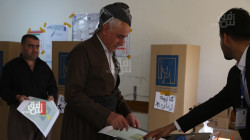
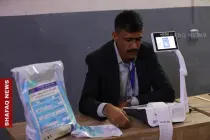
The commission, she added, is conducting the process in coordination with the United Nations Assistance Mission for Iraq (UNAMI), with over 1.2 million eligible voters — nearly 900,000 of whom hold biometric cards — across 330 polling centers.
These reassurances have not quieted doubts. The registry debate represents a deeper issue: Kirkuk’s elections remain the meeting point of procedural law and political fear. Every administrative detail — from the number of cards issued to the placement of polling centers — is viewed through an ethnic lens, converting bureaucratic uncertainty into political tension.
The Shadow of Article 140
No discussion of Kirkuk can avoid the constitutional vacuum left by Article 140, the clause meant to resolve disputes over territories contested between Baghdad and Erbil. Enacted in 2005 and left incomplete ever since, it promised a sequence of normalization, census, and referendum — all of which stalled amid security crises and political paralysis.
For many Kurds, as expressed by Muhammad Dalawi of the Kurdistan Democratic Party, implementing Article 140 remains “the only way to end the cycle of mistrust.” He described current disputes as “electoral, not existential,” emphasizing confidence in the commission’s readiness. But for Arab and Turkmen leaders, Article 140 symbolizes unfinished business — a mechanism that froze their political fate in constitutional limbo.
The Federal Supreme Court reaffirmed in 2019 that the article “remains in effect until fully implemented,” yet that declaration only reinforced the sense that Kirkuk’s future is perpetually postponed. Without resolution, every election becomes a substitute referendum — a proxy battle for legitimacy in a province that Baghdad administers, Erbil claims, and both depend on for oil and symbolism.
Unity and Fragmentation
The current political map intensifies these contrasts. Five Kurdish lists, seven Arab alliances, and two Turkmen blocs are competing this year — the broadest field since 2005. Kurdish coordination may translate into consolidated strength, while Arab and Turkmen divisions risk diluting their influence. Azzam al-Hamdani, a leading figure in the Azm Alliance, told Shafaq News that Kirkuk’s stability “depends on transcending the arithmetic of ethnicity toward a shared vision of governance,” but warned that “political pressure and registry imbalances could again undermine trust in the vote.”
The pattern showed that when unity exists, representation stabilizes, and where fragmentation prevails, grievances multiply. Yet none of the groups seems willing to trade tactical advantage for long-term coexistence. As in previous elections, Kirkuk’s diversity is both its strength and its undoing.
The Test of Federal Credibility
Beyond seat counts and rivalries, the real question is whether the Iraqi state can administer this election in Kirkuk without reopening old wounds. Since federal forces reclaimed the province in 2017, Baghdad has promised balanced governance — but in practice, Kirkuk has remained under a fragile administrative arrangement that satisfies none of its communities completely.
Therefore, if the elections proceed smoothly, Kirkuk could offer a rare example of functional federalism — a province that, despite its divisions, channels competition through ballots rather than barricades. If they falter, it could reaffirm the perception that Iraq’s diversity remains ungovernable without external mediation or extraordinary measures.
Ahead of the Vote
With the sixth electoral cycle approaching, the province remains Iraq’s most revealing mirror — reflecting both the endurance of democracy and the limits of reconciliation. Two decades of ballots have neither erased mistrust nor altered geography, but they have preserved one fragile truth: coexistence in Iraq is still negotiated, not granted.
The November 2025 elections will decide who governs Kirkuk, but more importantly, they will reveal whether Iraq can still govern itself through institutions trusted by all its people.
Written and edited by Shafaq News staff.
Read more:Iraq’s 2025 Parliamentary Elections— What You Need to Know