Judicial freeze: Iraq's new national 5G carrier on hold


Shafaq News – Baghdad
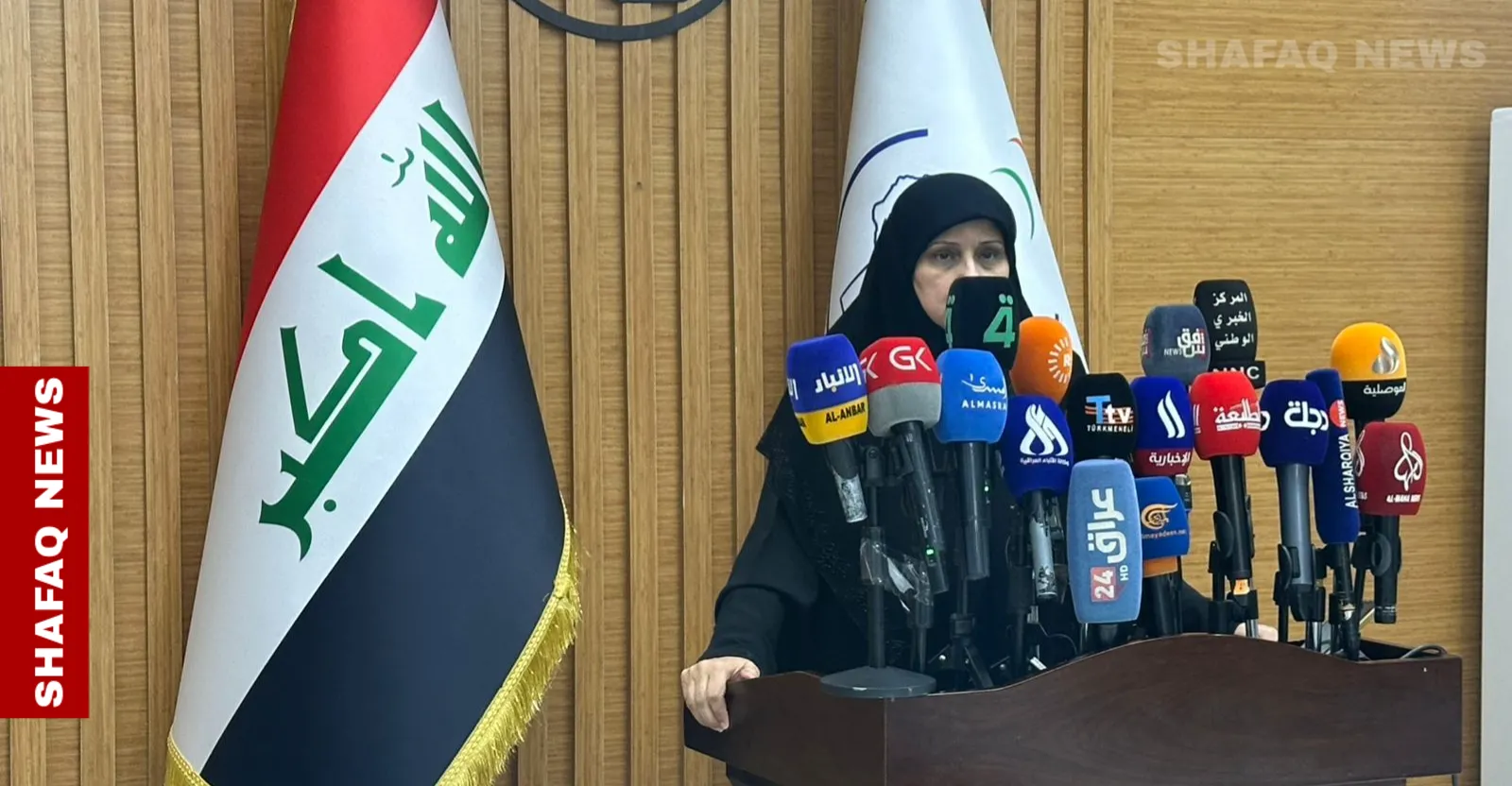
Iraq’s plan to launch a state-backed mobile operator with 5G capability has been suspended after a judge ordered the Communications and Media Commission (CMC) to pause the signing of the operating license, Minister Hiyam al-Yasiri revealed on Monday.
Speaking to reporters in Baghdad, the minister explained that the halt followed a lawmaker’s letter, emphasizing that no contract had been concluded with Vodafone, which is involved solely as a technical partner.
Al-Yasiri noted that the signing between the National Mobile Telecommunications Company (NMTC) and the CMC had been scheduled for October 8, underlining that the suspension targeted the Iraqi entity, not Vodafone.
“No agreement has been signed with Vodafone; only a memorandum of understanding exists,” she clarified.
The first test call had been planned for November 2025 before the judicial intervention.
According to al-Yasiri, the order was issued by the Supreme Judicial Council, not an individual judge. She reaffirmed the ministry’s respect for the judiciary and her team is preparing a legal response. The minister also pointed out that she had personally faced extortion attempts related to ministry contracts but chose to pursue the lawful course despite political and personal pressure.
The Iraqi government approved the creation of NMTC in March 2025 to operate a nationwide 5G network under a three-year exclusive authorization. Ownership is entirely public—divided among the State Employees’ Pension Fund, the Trade Bank of Iraq (TBI), and Al-Salam General Company of the Communications Ministry—with plans to offer shares for public subscription at a later stage.
Al-Yasiri recalled that the ministry had been seeking to establish a national operator since 2010 but had been repeatedly obstructed. “We do not want to repeat the failure of 15 years ago,” she said, pointing out that Parliament had voted for the inclusion of an international partner and that all measures were taken according to Cabinet decisions.
Under a “Partner Market” framework, Vodafone was chosen as the technical and commercial collaborator, responsible for brand use, systems, and training—but without equity in the Iraqi venture, according to government briefings. In August, following political criticism, the ministry reiterated that no investment contract with Vodafone existed and that procedures were still in progress.
On August 31, Prime Minister Mohammed Shia al-Sudani formally inaugurated the NMTC, describing 5G as a “qualitative step” toward improving connectivity and diversifying non-oil revenue. The new operator was expected to compete with Iraq’s three existing providers—Zain Iraq, Asiacell, and Korek—whose dominance dates back two decades.
What The Partnership Entails
Officials say Vodafone’s role includes network planning, commercial systems, and staff training, with full management to be transferred to Iraqi teams after a transitional period. The arrangement also permits the use of Vodafone’s brand for a set duration, while regulatory licensing remains under the CMC.
The Cabinet had authorized the CMC to issue a three-year exclusive national 5G license to Al-Salam, paving the way for the public company’s establishment.
The minister reaffirmed that the cooperation was purely technical, aimed at training Iraqi cadres and transferring expertise, with all capital and management under Iraqi control.
Dispute And Allegations
Al-Yasiri stated that the court’s suspension stemmed from a lawmaker’s letter containing “falsehoods,” without identifying the MP. She said her office holds documents proving that certain parties tried to obstruct the licensing process. “Who benefits from the absence of competition?” she asked, suggesting that existing operators were behind the efforts to block the project.
Meanwhile, posts by Iraqi journalist Qusay Shafiq shared alleged “leaked documents” claiming major financial commitments in the Vodafone arrangement—claims that Shafaq News has not independently verified.
According to these materials, the contract would have required Iraq to pay €30.3 million annually in management fees, €2.5 million every six months for travel and protection expenses, €10 million per year (or 3 percent of revenues) for brand use, and €13 million in platform and service fees.
Shafiqaccused the ministry of enabling “financial waste and monopoly over the telecom sector without genuine service or regulatory guarantees.” Critics online questioned why a “national” company would operate under a foreign brand, with Shafiq writing: “You call it the National Mobile Company, but it carries a foreign name and drains public funds — how is that national?”
The ministry has consistently maintained that no binding contract with Vodafone exists and that all procedures comply with Cabinet decisions and the law.
Economic And Consumer Stakes
The government presents the project as a means to retain telecom profits within the public sector, strengthen the pension system, and enhance competition that could lower costs and expand coverage—especially through 5G-based broadband for homes and businesses.
Officials also argue that local oversight will improve data sovereignty and security.
Al-Yasiri emphasized that telecommunications could become “Iraq’s next oil” in terms of revenue, calling it a strategic resource capable of boosting the national economy and creating jobs for youth.
Context In Iraq’s Telecom Sector
Iraq’s mobile market has long been dominated by Zain Iraq, Asiacell, and Korek. Previous attempts to reform licensing and enhance competition have often been contentious; in 2020, a Baghdad court annulled a government decision extending the operators’ licenses. The new national operator enters this environment as a state-led venture blending public ownership with international expertise.
What Happens Next
As of Monday, the ministry said it is preparing its legal reply while insisting the project will resume once judicial issues are resolved. No new date has been announced for the 5G license signing between the CMC and NMTC. The ministry confirmed it will maintain coordination with the Supreme Judicial Council and regulators, reaffirming its goal to establish a transparent, competitive, and wholly Iraqi-run telecommunications sector.
Written and edited by Shafaq News staff.