Iraqi maqam: Between preservation and reinvention


Shafaq News
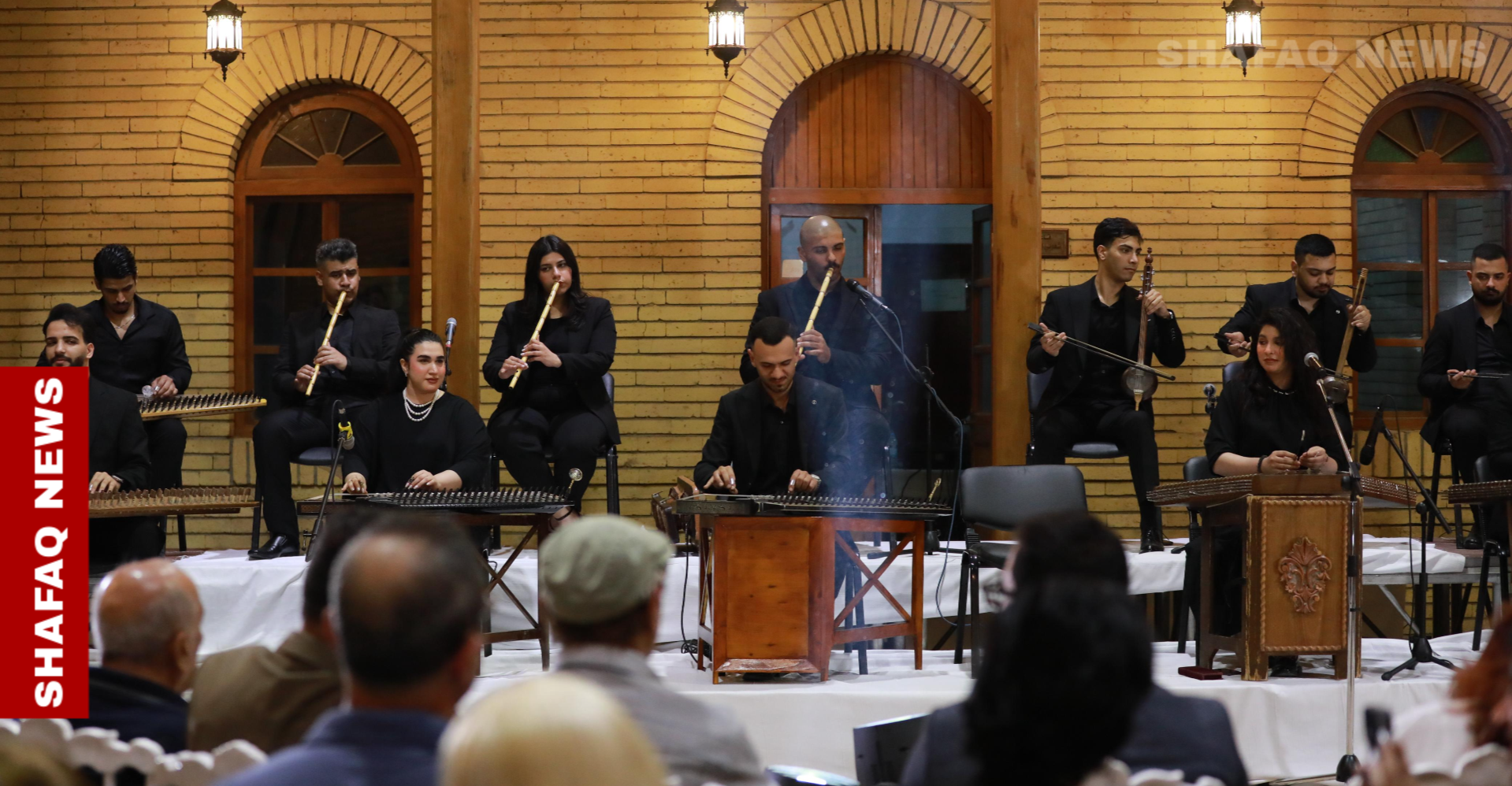
At Baghdad’s College of Fine Arts, music student Rinas Ali lifts her guitar beside the santur and joza. With a group of classmates, she records clips for social media that blend the Iraqi maqam with modern instruments, hoping to draw younger audiences to a tradition often viewed as distant.
“This music is part of our national identity,” she told Shafaq News. “We want to build a bridge between past and present.”
The Form and Its Legacy
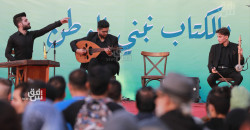
The Iraqi maqam is not a scale but a classical vocal form built on distinct stages: badwa (opening), tahrir (lyric recitation), mayana, jalasa, and taslim. Traditionally performed with instruments like the qanun, oud, and santur, it reached a golden age in the 20th century through masters such as Mohammed al-Qubbanji, Yusuf Omar, and Nazem al-Ghazali. In the 1980s, Farida Mohammed Ali brought the form renewed prominence with her unique vocal range.
By the 1990s, local musicians were layering guitars and violins onto traditional frameworks, producing reworked classics that found receptive audiences.
Today, students continue those experiments. Fellow musician Mai Diaa hopes to establish a professional ensemble to reinterpret Iraqi classics, describing older songs as works of honesty and beauty that deserve recognition in the Arab music scene.
A Divided Debate
However, academics and performers remain split over modernization. Tahir Jassim of the Institute of Fine Arts argues that the form’s structure is resilient enough to absorb instruments like organ or guitar without losing its essence. By contrast, musician Mustafa Zayer calls for preserving the maqam in its original character, urging the Ministry of Culture to establish a dedicated school, archive recordings of past singers, and host annual competitions to protect the tradition.
Faez Taha, Director of the Department of Music, takes a middle view, seeing instrument choice as a matter of the composer’s taste, provided the framework is respected. He points to artists who have combined Eastern and Western instruments while retaining the spirit of the maqam.
This debate is not new; it began when Umm Kulthum introduced piano and organ into her repertoire decades ago on the advice of Baligh Hamdi, and Iraqi musicians in the 1990s attempted similar blends that audiences embraced. For Diaa, the distinction lies in intent: wedding and nightclub music often relies on electronic volume, while serious compositions build carefully crafted phrases that, as she put it, “move hearts.”
Whether defended as heritage or reshaped for new listeners, the Iraqi maqam endures as a living art. Its survival depends both on students experimenting with fresh sounds and on scholars who insist on classical preservation — a balance that anchors Iraq’s cultural memory while keeping the form alive in the present.
Written and edited by Shafaq News staff.