Iraqi farmers plan protests over cultivation ban


Shafaq News
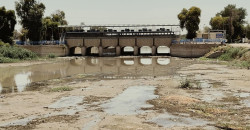
Farmers in the southern provinces of Dhi Qar and Maysan are preparing large demonstrations to demand the right to plant and produce after government decisions halted crop cultivation and imposed new irrigation rules, a source told Shafaq News on Saturday.
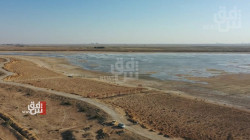
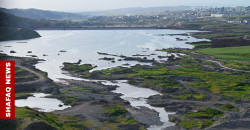
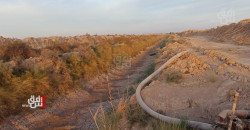
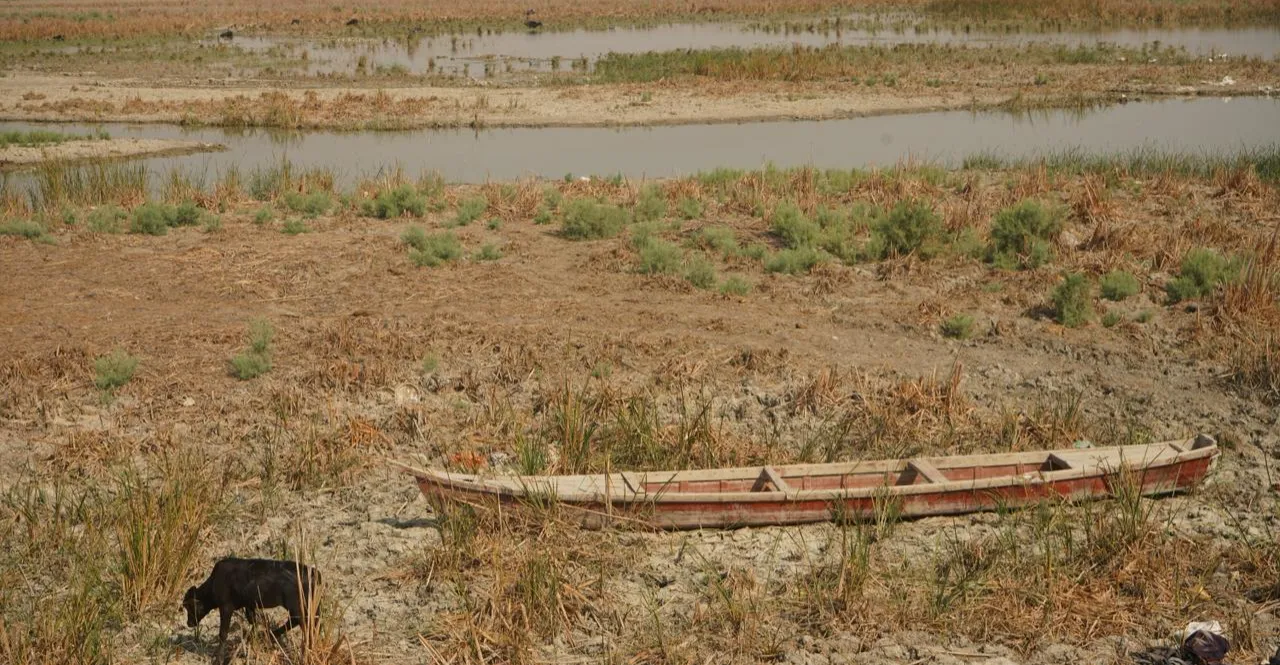
Hussein Al-Zirjawi, head of the Farmers’ Union in Dhi Qar, said agricultural activity in the province “has nearly collapsed,” urging the federal government to revise its water policy. He noted that palm cultivation has stopped in Dhi Qar and neighboring Maysan, leaving vast farmland to dry up without adjustments to water allocations.
Al-Zirjawi added that many farmers now rely on groundwater in parts of Karbala, Najaf, and Al-Zubair in Basra, pointing to the need for federal and local authorities to conduct field assessments of affected rural areas.
Agricultural expert Hussein Al-Moussawi said the cultivation halt announced in August followed a sharp drop in water reserves to their lowest levels in decades. He indicated that the government’s updated plan now permits planting 3.5 million dunams using groundwater and another one million using surface water.
According to Al-Moussawi, the recent measures reflect confusion within the Ministry of Agriculture and were issued without full studies on groundwater, whose renewable reserves were previously estimated at less than five billion cubic meters and have been heavily depleted in recent years. He stated that decisions to seal wells and close fish farms were also taken without adequate technical assessment.
Banning crop cultivation could accelerate rural migration, reduce food production, and increase dependence on food imports, raising prices and contributing to social tensions, the expert warned, adding, “In Maysan, 13 people have died in disputes linked to water scarcity.”
In Dhi Qar, Agriculture Director Mohammed Abbas said the province is among the hardest hit by drought. He reported that agricultural land has declined from 400,000 dunams to 120,000, and this year’s plan covers only 100,000 dunams. Greenhouse numbers have dropped from 7,000 to 3,000.
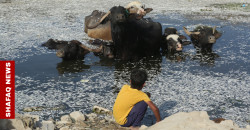
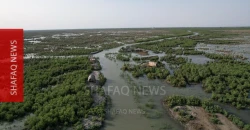
Abbas pointed out that the province lost 14,000 buffaloes from the marshlands in the past five years, while 85 percent of fish stocks died, contributing to internal and external migration. Reduced agricultural output, he added, will drive prices higher due to lower supply. Under the winter plan, 150,000 dunams will rely on groundwater and 100,000 on surface water.
Farmers in Dhi Qar and Maysan said prolonged drought has made the sprinkler irrigation systems required under new rules financially out of reach. They confirmed they are preparing protests to demand water access and reverse what they describe as unfair decisions.
According to the United Nations and international environmental assessments, Iraq is among the world’s five most climate-affected countries. A recent UN study estimated that by 2040, Iraq will require $233 billion in investments—equivalent to 6% of its GDP annually—to meet urgent development needs and support sustainable growth.
Read more: Iraq’s water crisis deepens: Reserves collapse, mismanagement continues
Written and edited by Shafaq News staff.