Iraq slips into constitutional vacuum as presidential deadlock drags on


Shafaq News
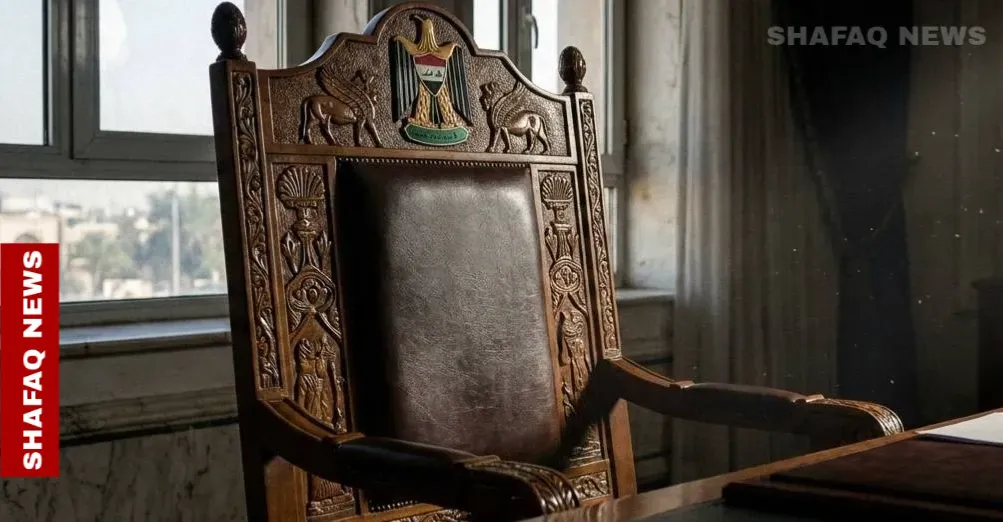
Iraq is sliding deeper into a constitutional vacuum after parliament failed to elect a president, a delay that has stalled the subsequent step of nominating a prime minister and raised concerns of an open-ended governance crisis that could paralyze key state institutions.
The impasse follows two failed presidential voting sessions on February 1 and January 27. Although the Council of Representatives has scheduled a new parliamentary session for February 9, the agenda notably excludes a vote to elect the president, a signal of how entrenched the deadlock has become.
At the center of the problem lies a long-running dispute between Iraq’s two main Kurdish parties: the Kurdistan Democratic Party (KDP) and the Patriotic Union of Kurdistan (PUK).
The presidency has traditionally gone to the PUK, which argues that the post is part of an established political understanding. The KDP, however, maintains that the position belongs to the Kurds as a whole rather than to a single party. The party has reinforced its claim by pointing to its electoral strength in the November parliamentary elections, where it secured more than one million votes and won 27 of the Kurdistan Region’s 46 seats. With the addition of five quota seats, the KDP’s total rises to 32 seats.
That outcome places the KDP fourth nationwide in parliamentary representation, behind the Reconstruction and Development Coalition led by Mohammed Shia al-Sudani, the Taqaddum Party headed by Mohammed al-Halbousi, and the Sadiqoon Bloc led by Qais al-Khazali.
The presidential stalemate is unfolding against a fragile political backdrop marked by regional and international pressures that have complicated efforts to reach domestic compromises. Tensions persist not only between the KDP and PUK but also among groups within the Shiite-led Coordination Framework, the alliance that brings together the country’s main ruling Shiite parties.
Uncertainty has intensified following Washington’s public opposition to Nouri al-Maliki returning to the premiership. That stance, coupled with the absence of any clear Iranian endorsement and reservations from influential Shiite actors such as the National Wisdom Movement and Asaib Ahl al-Haq, has left al-Maliki’s prospects in doubt.
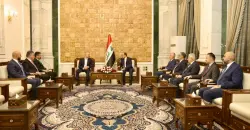
Despite recent visits by Coordination Framework delegations to Erbil and Al-Sulaymaniyah —where they held talks with both the KDP and PUK on electing a president and launching the process of forming a new federal government— no tangible progress has followed.
Legal experts warn that the prolonged delay carries serious political and economic consequences, even if the constitution itself does not spell out penalties for missing deadlines.
Mohammed Jumaa, a constitutional law expert, told Shafaq News that Iraq has effectively entered a phase of constitutional vacuum. “The constitution does not impose punitive measures for exceeding constitutional timeframes,” he said, “but the country is entering a very difficult phase with clear political and economic repercussions.”
Jumaa noted that the current government is operating in a caretaker capacity, severely limiting its authority. “It cannot take new decisions, and any measures it does issue are vulnerable to annulment. Ministers also lack the authority to sign or issue directives involving new policies,” he added, arguing that lawmakers bear responsibility for addressing the vacuum.
“If MPs submit to their bloc leaders and allow the country to drift into deeper political and economic consequences, that could amount to a breach of their constitutional oath, with potential legal implications.”
Read more: Nouri Al-Maliki’s return rekindles Iraq’s divisions as Iran and the US pull apart
Political analyst Mohammed Zangana described foreign intervention as a key factor behind the fragile political scene, pointing to a single social media post by Donald Trump rejecting al-Maliki’s candidacy as a moment that “shifted the balance for all political actors.”
Zangana stressed that the Kurds should not be blamed for the crisis, and that parliament could still elect a president even without agreement between the two main Kurdish parties by relying on what he termed a “national quorum” inside the legislature.
According to Zangana, US opposition extends beyond al-Maliki to any figure seen as clashing with American interests, a dynamic he warned could destabilize Iraq’s political landscape further.
He also cautioned that prolonged political fragmentation could create security openings, with one possible outcome being the resurgence of ISIS, especially amid the transfer of 7,000 detainees from Syria to Iraq with Baghdad’s approval and “complicity by some factions.”
Zangana warned that insisting on pushing forward with Nouri al-Maliki’s candidacy could trigger renewed international pressure, including discussions around Iraq’s status under the UN Security Council Chapter VII. Such a scenario, he pointed out, could expose the country to economic or diplomatic measures that would undermine its sovereignty and restrict its engagement with the international system.
Iraq lived under Chapter VII for more than two decades following the 1990 invasion of Kuwait, a period marked by sanctions, external oversight, and deep institutional and economic strain. While a full return to the pre-2013 sanctions regime appears unlikely under current conditions, Zangana cautioned that prolonged political paralysis and unresolved leadership disputes could still invite indirect or conditional forms of international pressure, including financial constraints or conditional diplomatic engagement, at a time when Iraq’s stability and external credibility remain fragile.
Against this backdrop of mounting external pressure and internal fragmentation, attention has now shifted back to parliament, where another session could break or prolong the deadlock.
Earlier this week, the Framework said its lawmakers would be “free” to choose in a presidential vote if Kurdish parties fail to agree on a single candidate, signaling a readiness to move forward even in the absence of a unified Kurdish position.
From within the Framework, Mukhtar al-Moussawi, a senior figure in the Badr Organization, said that the next parliamentary session, aimed at electing a president, could prove decisive, and if there is more than one candidate, lawmakers may resort to a secret ballot, a mechanism often used to limit bloc discipline and allow MPs greater freedom of choice.
For now, Iraq remains caught between constitutional procedure and political rivalry, with no clear timeline for resolution —and growing concern that the longer the vacuum persists, the higher the cost to the state and its stability.
Written and edited by Shafaq News staff.