Iraq's second US troop withdrawal shifts the test to armed factions


Shafaq News
Iraq's second US military withdrawal in 15 years ended on September 30, when the last US-led Coalition troops and equipment left Erbil Air Base in the Kurdistan Region (KRI), Iraq's autonomous, Kurdish-governed north. Their departure closed the Coalition's military mission against ISIS, launched in 2014, nearly 15 years after the last American convoy crossed from southern Iraq into Kuwait in December 2011.
Both exits raised the same doubt: whether the Iraqi state could secure its territory, airspace, and borders without foreign forces. This one adds a harder test. For more than a decade, Iran-aligned armed factions justified keeping their weapons by pointing to the presence of foreign troops. That argument has now lost much of its premise, narrowing the factions' case against a state monopoly over the use of force.
When President Barack Obama announced the first withdrawal in October 2011, about 39,000 US troops remained in Iraq, what was left of a far larger force. By September 2024, when Baghdad and Washington agreed to wind down the Coalition, the declared US contingent stood at about 2,500. The divergence between those figures reflects two different missions. The first closed a war of regime change. The second ended an advisory campaign launched after ISIS seized Mosul. In both cases, the combat role ended before the troops left: in 2010 the first time, and at the end of 2021 the second.
That first exit still shapes how Iraqi and Kurdish leaders read this one. Obama promised a normal relationship between two sovereign states. Less than three years later, Mosul fell, and Baghdad asked foreign forces to return. The 2011 withdrawal alone does not explain the rise of ISIS, which also fed on Iraq's political crises and the war in Syria. But the speed of that collapse has made two questions part of every later debate about an American departure: what Iraq's army can do, and whether it keeps access to US intelligence.
Like the first exit, this one was set by one US administration and completed by another. Under the September 2024 agreement between the Biden administration and the government of then-Prime Minister Mohammed Shia al-Sudani, Coalition forces first left the areas under Baghdad's direct authority. That included Ain al-Asad air base in western al-Anbar, whose evacuation Iraq's Higher Military Committee confirmed in January. A contingent stayed in the KRI to support operations against ISIS in Syria. That contingent has now gone.
Where the troops went matters more than the departure itself. The US Central Command (CENTCOM) said the Combined Joint Task Force–Operation Inherent Resolve (CJTF-OIR), the command that has led the campaign against ISIS since 2014, remains operational from a new headquarters in Jordan. US forces, it said, will continue the counter-ISIS mission in Syria alongside Coalition partners and the Syrian government.
Patriot missile batteries had already been moved to Jordan, according to Mohammed Saleh, a nonresident senior fellow at the Foreign Policy Research Institute's national security program. He told Shafaq News he did not rule out a limited presence, such as special forces, or a return of US troops if a major crisis erupts.
Washington presents the exit as a change in form rather than an end. The Pentagon described it as the end of the Coalition's military mission, not of the relationship, and said targeted training and intelligence support would continue with Iraqi forces leading operations against ISIS cells. A senior White House official told Shafaq News in late August that Washington was moving toward a permanent bilateral security partnership. Its terms remain open, including what training, intelligence, maintenance, and weapons the United States will supply.
Read more: Iraqi factions hail US exit, some threatens attacks
The likely shape is technical rather than territorial. Training, advice, and maintenance for Iraq's F-16 fighter jets and C-130J transport aircraft could continue without permanent US deployments at Iraqi bases, said Myles Caggins, a former military spokesperson for the Coalition. Nor is Washington asking Baghdad to seal its border with Iran, he told Shafaq News. Its aim, in his description, is to curb Tehran's influence inside Iraqi institutions and the activities of the armed groups it backs.
The anxiety is sharpest in the KRI, which Iran and Tehran-aligned Iraqi factions have attacked repeatedly since the war between Iran and the US broke out on February 28. Days before the deadline, Masoud Barzani, leader of the Kurdistan Democratic Party (KDP), the KRI’s dominant party, recalled in a television interview the 2011 debates over whether Iraqi forces could protect the country. He warned against a repeat of the ISIS scenario while acknowledging that conditions today are different.
KRI Prime Minister Masrour Barzani said the departure came at a sensitive moment and that leaving the region without air-defense systems was cause for concern. He thanked Coalition members and said Iraqi forces and the Peshmerga, the KRI's armed forces, were ready for what follows.
Read more: Kurdistan Region faces air-defense gap as US troops leave Iraq
Saleh called the Kurdish concern justified. Washington has been the KRI's main security guarantor for about 35 years, he said, a role that dates to the no-fly zone imposed over northern Iraq after the 1991 Gulf War. Kurdish leaders have also watched what happened to the Syrian Democratic Forces when US support in Syria was abruptly scaled back. Even so, Saleh expects the partnership between Erbil and Washington to continue.
Baghdad's answer is procurement. Maj. Gen. Sabah al-Numan, spokesperson for the commander-in-chief of the armed forces, said Iraq was close to acquiring air-defense systems from South Korea, Turkiye, and the United States, under plans that include covering the KRI's airspace. He gave no delivery dates.
The Coalition's exit does not end every foreign military presence in Iraq. Turkish forces deployed in the north against the Kurdistan Workers' Party (PKK) operate outside the Coalition framework. Baghdad and Ankara have agreed to hand the Bashiqa-Zilkan camp near Mosul to the Iraqi government gradually, under an agreed timetable. Whether Baghdad can credibly describe Iraq as free of foreign bases depends on that separate process.
Across the region, the yardstick is the same: what Baghdad does next, not the empty bases. Ahmed Fahim, a Jordanian researcher, told Shafaq News that Jordan's interest lies in an Iraqi state able to protect its borders, but he warned against reducing sovereignty to replacing one outside power's influence with another's.
Lezgin Ibrahim, a researcher at the Euphrates Center for Studies in Syria, said Damascus stands to gain from an Iraq with a unified security command that helps police the shared border and fight ISIS. "Factions acting independently of the state would leave more room for Iranian influence and cross-border threats," he said.
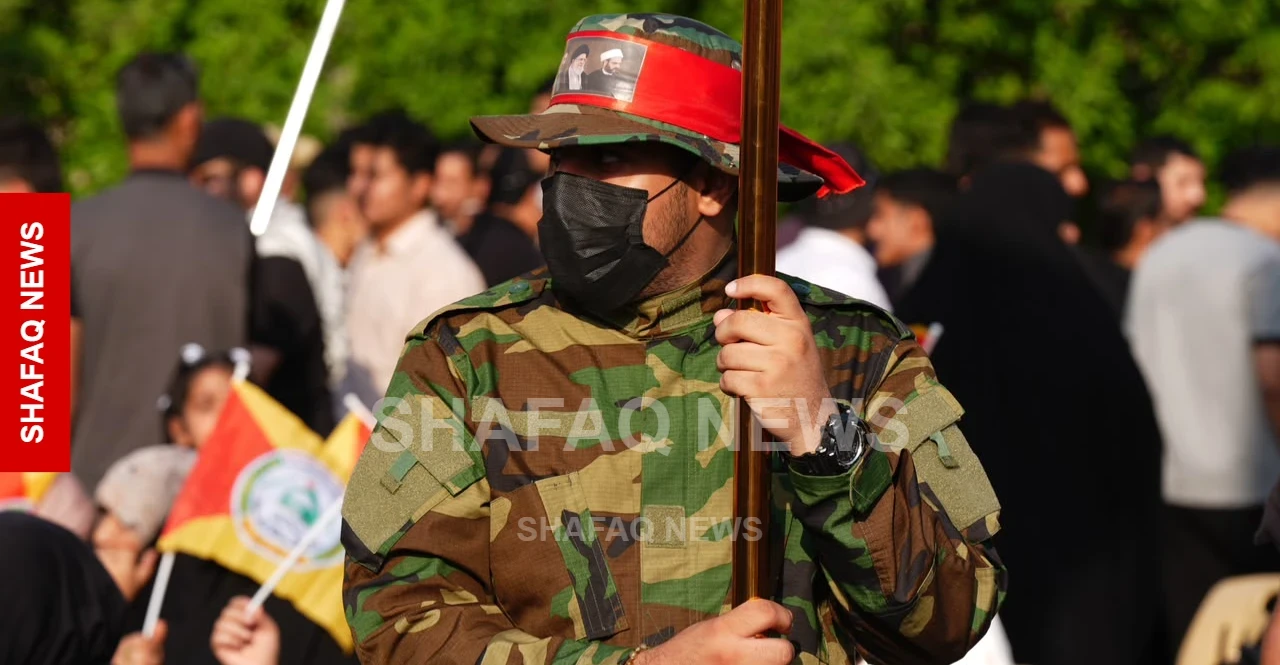
Iran-aligned factions hailed the end of the mission, and their reaction points to the risk that Abdul Qader al-Nayel, an Iraqi political researcher, identified. The end of the mission does not amount to full sovereignty while US advisory, intelligence, and logistical roles continue, he told Shafaq News, and the withdrawal could even help the factions hold on to their influence. A departure they can present as their own victory makes disarmament a harder sell.
Prime Minister Ali al-Zaidi, who took office in May 2026, has set a deadline of June 30, 2027, for bringing those weapons under state control, and the factions are divided over it.
Tehran's position is harder to read. On July 28, Iraqi National Security Adviser Qasim al-Aboudi said Iran had agreed to help bring weapons held outside state institutions under government control. Two weeks later, Esmail Qaani, commander of the Quds Force, visited Baghdad and reportedly urged Iraqi armed factions “not to surrender their weapons for now” while warning them against any armed confrontation with government forces.
Al-Zaidi marked the day of the withdrawal in Baghdad with the Coalition commander at his side. "No weapons outside the umbrella of the law, and no force outside state institutions," he said.
In 2011, the test was whether Iraq could fight its own wars. This time the challenge is narrower and harder: whether the state can claim the authority that the foreign presence allowed others to contest for over a decade.
Written and edited by Shafaq News staff.
*Operation Inherent Resolve is the US-led military campaign against ISIS, and its command, the CJTF-OIR, has advised, assisted, and enabled forces fighting the group in Iraq since CENTCOM established it in 2014.