Iraq’s neutrality fades: Formal war involvement draws closer?


Shafaq News
Less than a month after the outbreak of the conflict involving the United States, Israel, and Iran, Iraq has shifted from a position of observation to becoming an active arena of confrontation. Despite this, analysts and observers interviewed by Shafaq News say Iraq’s political and diplomatic posture still demonstrates an ability to contain escalating regional tensions.
Since the start of the war, the Iraqi government has firmly maintained that decisions on war and peace rest exclusively with the state, in accordance with the constitution and the law. It has been warned that any unilateral military action by armed factions or external actors constitutes a clear violation of sovereignty and threatens national stability. This position faces increasingly complex and overlapping field developments. Armed factions have intensified domestic attacks and claimed strikes on US bases in neighboring countries. At the same time, Iran has carried out strikes against US positions and Iranian Kurdish opposition groups based in the Kurdistan Region, while the United States and Israel have targeted sites and headquarters of the Popular Mobilization Forces (PMF), a state-affiliated paramilitary umbrella group, across Iraq.
Fragile Stability
Researcher and Academic Haider Shallal said Iraq is “walking a tightrope between escalation and containment,” relying on a delicate balance in its foreign policy to avoid sliding into open confrontation. In an interview with Shafaq News, he attributed this approach to Iraq’s sensitive geopolitical position and the far-reaching consequences that any broad escalation could have on regional stability, particularly global energy security.
Shallal added that political will at the domestic, regional, and international levels still leans toward containing tensions. He noted that this aligns with ongoing regional diplomatic efforts, including initiatives led by Turkiye, aimed at de-escalating the conflict and returning parties to dialogue.
Researcher and academic Alaa Najah said the risk of involvement in conflict is not measured solely by the presence of tensions, but by how they are managed. He described the current pattern as “controlling escalation rather than igniting it,” placing Iraq within a “defensible margin.”
Najah, speaking to Shafaq News, added that the multiplicity of international and regional partners generates a form of indirect deterrence, as the interests of various actors converge to prevent a collapse in stability. However, he warned that “the real challenge lies not in conventional war, but in low-intensity escalation and indirect conflicts that may take security or economic forms.”
Read more: Iraq's energy vulnerability: When a petro-state has no buffer
Beyond Neutrality
Ahmed Al-Yasiri, head of the Arab-Australian Center for Strategic Studies, noted that Baghdad has effectively moved beyond neutrality, though it has not entered the conflict as a direct combatant.
“Iraq has become a theater of conflict rather than a fighting party, which is more dangerous because it combines external targeting with internal division,” he told Shafaq News, adding that Iraqi sovereignty is being violated “from all directions.”
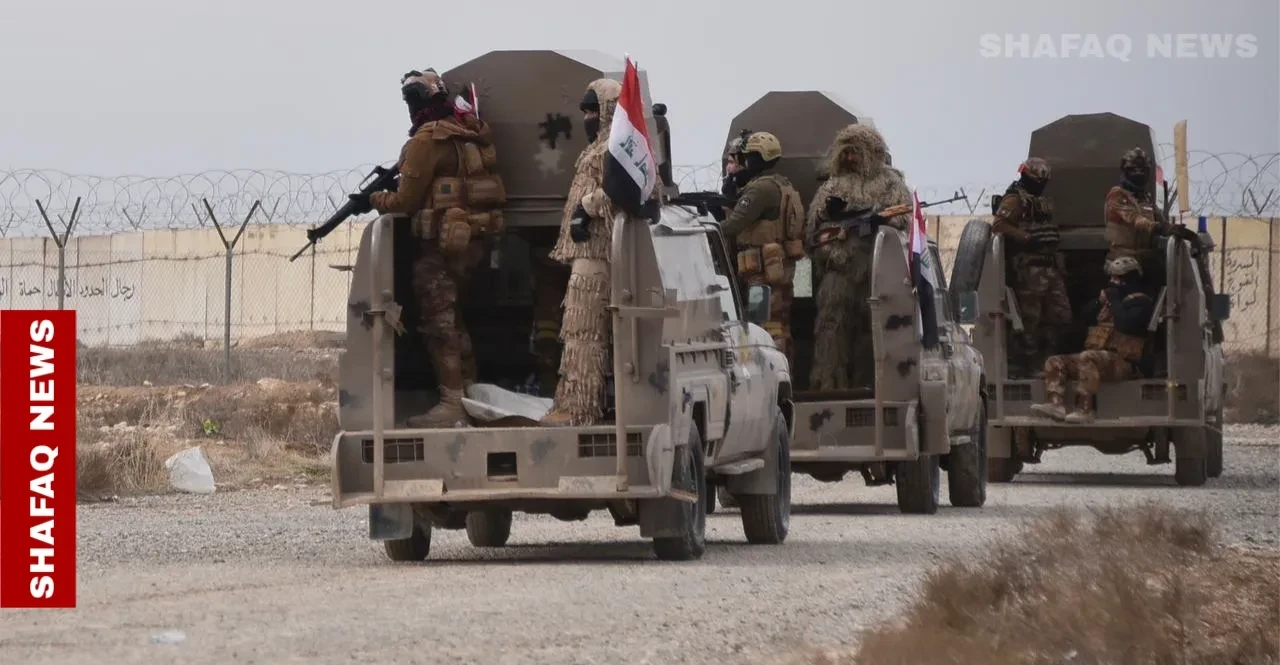
Al-Yasiri noted that this situation prompted the Iraqi government to take an “exceptional decision” earlier this week to grant security forces the authority to respond and defend themselves, reflecting a shift in the rules of engagement.
Political Survival
From London, Haitham Al-Haiti, professor of political science at the University of Exeter, stated that Iraqi political leaders, particularly within Shiite factions, “may not want to go far with Iran, but are compelled to be part of the battle.”
He attributed this to the view that “a collapse of Iran would pose an existential threat to its political future, especially amid political fragmentation and corruption”. As a result, these forces face limited options. According to Al-Haiti, the United States is unwilling to tolerate pro-Iran factions or the continued presence of the PMF, pushing these groups toward a “limited conflict” to preserve their political survival.
Recent Iraqi government decisions clearly reflect this paradox. While authorities have granted security forces, including the PMF, the right to respond, they have simultaneously stressed the need to confine weapons to state control, pursue attacks on diplomatic missions, and reject the use of Iraqi territory to launch attacks on neighboring countries. These measures are seen as an attempt to contain pressure from armed factions while avoiding confrontation with the United States.
Read more: How the Iran–US–Israel war exposes Iraq’s defense paralysis
Risk of War
The head of Iraq’s Supreme Judicial Council, Judge Faiq Zidan, warned against the dangers of an uncontrolled slide toward war, describing the declaration of war as one of the most serious sovereign decisions due to its significant political, military, and legal consequences. He stressed that unilateral decisions in this regard weaken state authority and undermine the rule of law.
Amid these developments, Najah outlined three paths to avoid escalation: strengthening positive neutrality in foreign policy, reinforcing the domestic front institutionally and in terms of security, and expanding multilateral diplomatic engagement.
Al-Yasiri emphasized that diplomacy must remain “balanced and professional,” aimed not only at avoiding war but also at mitigating its impact by managing the complex relationship between Tehran and Washington and using internal pressure tools, such as religious authorities, to restrain armed factions.
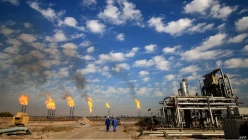
The challenges extend beyond security into political and economic domains. Iraq, which depends on oil for 90 percent of its revenues, faces mounting pressure due to the closure of the Strait of Hormuz and attacks on key oil fields, including Majnoon, Rumaila, and Kirkuk, further complicating the economic situation.
This economic strain coincides with coordinated diplomatic pressure from six Arab countries, Saudi Arabia, the United Arab Emirates, Kuwait, Qatar, Bahrain, and Jordan, which called on Baghdad on Wednesday to take immediate measures to halt attacks by armed factions on neighboring states. They said the use of Iraqi territory as a launch point for such attacks constitutes a violation of UN Security Council Resolution 2817.
Within this landscape, the Kurdistan Region remains a significant factor in the balance of power due to the presence of international military bases and Iranian opposition groups. The Region has witnessed near-daily strikes, underscoring its strategic sensitivity, while continuing efforts to maintain stability and avoid direct escalation.
Written and Edited by Shafaq News Staff.