Iraq’s higher education crisis: +45,000 degrees unrecognized
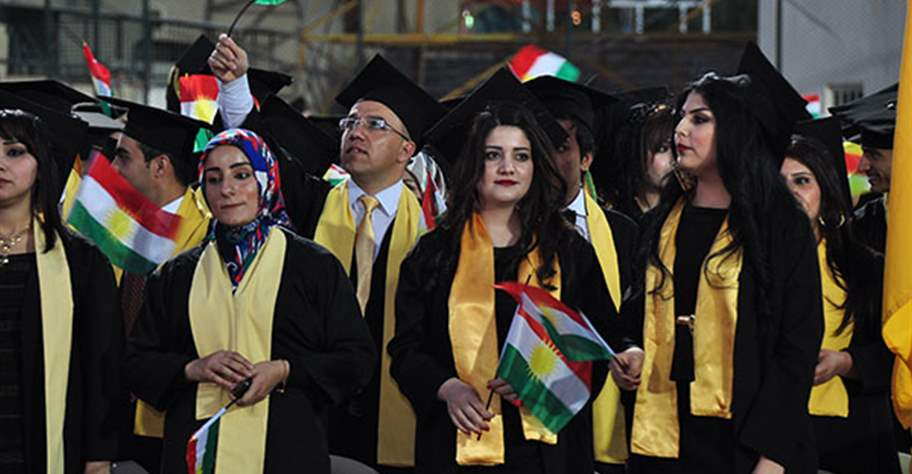


Shafaq News/ Iraq’s higher education sector is grappling with a surge of unrecognized postgraduate degrees from private universities abroad, leaving thousands of students in limbo.
Academics said that degrees from institutions in Lebanon, Turkiye, and Iran are particularly affected, as they fail to meet the Iraqi government's official recognition criteria.
Strict Requirements
Regulations governing foreign degrees leave little room for flexibility. According to Higher Education Ministry spokesperson Haider Al-Aboudi, students funding their own studies must choose universities listed in the ministry’s official guide. "Only then can their degrees be authenticated upon returning to Iraq," he told Shafaq News.
Recognition becomes even more selective for those not employed by the government. While public sector workers earning degrees from approved institutions have their qualifications validated under a cabinet decision, students attending unlisted universities face outright rejection. "A degree from an unrecognized institution holds no weight," Al-Aboudi clarified.
Proposed Amendments to Degree Equivalency Law
A shift in policy could soon be on the horizon. Amendments to Law No. 20 of 2020 on Equivalency of Arab and Foreign Academic Certificates and Degrees have advanced through Iraq’s parliament. Once quorum is met, lawmakers will proceed with the final vote.
The changes aim to tighten academic standards while offering some flexibility in residency requirements. Nahla Qadir, a member of the Parliamentary Higher Education Committee, outlined key provisions. "For PhD candidates, the new rules require a six-month non-continuous stay, while master’s students must complete nine months, with an optional two-month break," she told Shafaq News.
A mandatory two-year gap between earning a master’s and enrolling in a PhD program is also among the proposed revisions. Equally crucial is the requirement that only academically reputable universities qualify for student enrollment.
Degrees Gathering Dust
Even with legislative efforts underway, unrecognized degrees continue to pile up. A 2022 report from the Administrative Research and Studies Department at the Civil Service Council exposed the staggering scale of the issue: 101,519 graduates were excluded from employment eligibility, with only 33,861 permitted to apply for advanced degrees. Meanwhile, 45,690 degrees failed to receive official recognition.
The consequences have been deeply personal for many. Hassan Abbas Ali highlighted the plight of countless PhD holders. "Their degrees hang on their walls, useless, because the ministry refuses to acknowledge them," said the 50-year-old, whose doctorate from a Lebanese university remains unverified.
Similar concerns were raised by Abdul Baqi Sattar, a 42-year-old doctorate holder from an Iranian university. "Iranian institutions have issued 100,000 degrees, yet officials claim 85,000 of them were simply sold," he alleged in an interview with Shafaq News. While no concrete evidence has surfaced to prove mass degree sales, he argued that direct engagement between Iraqi authorities and foreign universities is necessary to validate academic standards.
Constant Worries
For many postgraduate students, shifting policies have created a constant state of anxiety. Frequent changes to the Ministry of Higher Education’s list of recognized universities reportedly mean that institutions granted accreditation one year may lose it the next.
A complex certification process adds to the uncertainty. "Even if a university loses recognition later, its degrees should remain valid under ministry rules," said Ali Salman, a 34-year-old postgraduate student. "But in practice, the verification process is convoluted, and not all degrees make it through."
Beyond bureaucratic hurdles, corruption in some foreign institutions has further eroded trust in overseas education. The rise of “diploma mills,” according to experts, has transformed certain universities into mere certificate distributors rather than centers of learning.
Academics, too, have voiced concerns. "Foreign study was once the hallmark of academic ambition, but today, many private institutions hand out degrees with little oversight," observed university professor Munim Hassan Al-Asam.
"I know someone who earned a PhD without ever completing a master’s. This issue is spreading through private universities abroad," he warned. Some institutions, he noted to Shafaq News, bypass even the most basic academic requirements. "No proof of prior education is needed at some places—it’s purely transactional.”
Yet not all foreign universities operate this way. Al-Asam emphasized that institutions maintaining rigorous academic standards still exist. "Real degrees come through extensive research and in-depth scholarly discussions, not shortcuts."
The Way Forward
Addressing the crisis requires more than policy changes. Experts argue that without stringent oversight, unrecognized degrees will continue to flood the Iraqi job market.
Strengthening ties between Iraq and reputable foreign institutions could help, Al-Asam suggested. "Academic partnerships, rigorous verification procedures, and a crackdown on fraudulent degree mills are the only way to restore credibility to higher education."