Iraq’s Green Belt: The race to forestall desertification


Shafaq News
Dust storms have become an increasingly common feature in Baghdad, frequently covering the capital in thick haze. Hospitals report growing numbers of patients with respiratory problems, while farmers across central and southern Iraq struggle with rising temperatures and accelerating desertification.
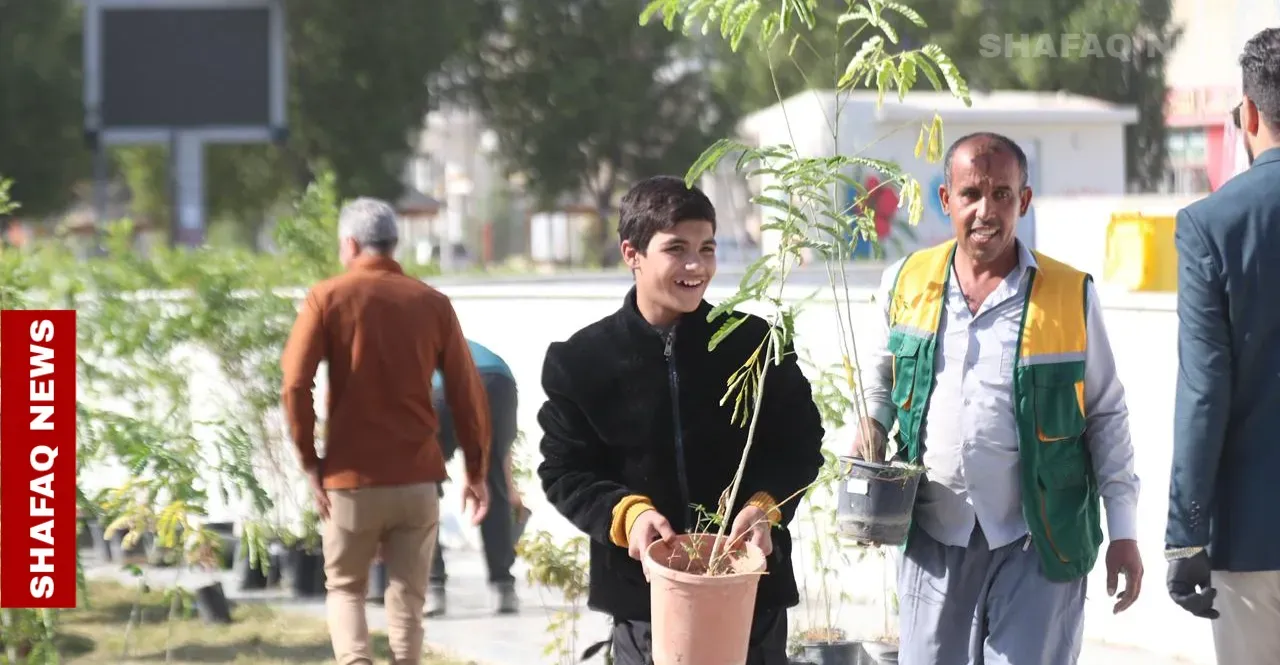
In response, Iraq launched the Green Belt project in 2015, a strategic environmental initiative designed to restore vegetation around major cities, curb desertification, and improve the local climate. Yet more than eight years later, the project faces formidable challenges —chief among them water scarcity and the difficulty of sustaining large-scale ecological restoration in an increasingly arid country.
The initiative goes beyond planting trees. According to a 2024 report from the Ministry of Agriculture, the Green Belt is envisioned as an integrated ecological system capable of mitigating climate change, improving public health, supporting the local economy, and ensuring sustainable agriculture for future generations.
Read more: Iraq’s green decline: Can new laws and trees reverse it?
A Living Shield
While the Green Belt project reflects a modern response to environmental pressures, the idea of surrounding Iraqi cities with vegetation has deep historical roots.
Historically, Baghdad and other urban centers were encircled by dense belts of orchards that functioned as a natural buffer against the harsh desert environment. Palm groves, citrus trees, wheat fields, and irrigation canals stretched across districts such as Abu Ghraib, Al-Mahmudiyah, and Taji, regulating wind, trapping dust, and sustaining local livelihoods.
Basra once had a similar natural shield. Northern palm groves along the Shatt Al-Arab protected the city, and Iraq’s Ministry of Agriculture recorded between 30 and 33 million date palms across the country in the mid-20th century.
These green zones moderated the local climate while providing agricultural income. But over the decades, much of this natural protection gradually disappeared. A combination of conflict, urban expansion, and environmental neglect dismantled large parts of Iraq’s agricultural landscape. The Iran–Iraq war and the first Gulf War, followed by rapid population growth and construction around cities, accelerated the loss of orchards and farmland.
In 2024, the Strategic Center for Human Rights estimated that Iraq has lost roughly 30% of its agricultural land over the past 30 years, a decline that has left cities more exposed to desert winds. Dust storms have grown more frequent and severe, threatening both public health and agricultural productivity.
The Green Belt concept itself dates back even further. The idea first emerged in Iraq during the 1970s with support from the Food and Agriculture Organization (FAO) as an early effort to combat desertification and protect urban environments. Implementation, however, was repeatedly delayed, leaving the plan unrealized for decades until it was revived under the 2015 Green Belt project.
Read more: Green turning grey: Inside Iraq's accelerating desertification
Climate-Proofing Iraq
Agricultural expert Khattab Al-Dhamin explained that the Green Belt project can significantly improve environmental conditions. “Vegetation cover can reduce temperatures by two to five degrees Celsius,” he conveyed to Shafaq News. “It also reduces wind intensity and blocks dust and sand, bringing major environmental benefits that support public health and help address climate change.”
In addition to environmental protection, the project also carries economic potential. Al-Dhamin noted that fruit-bearing trees —including palm and citrus varieties— could be integrated into the belts, generating income for farmers while creating employment opportunities for workers involved in cultivation, maintenance, and harvesting.
“These evergreen trees are drought-resistant and require less water, which makes them a practical and economic solution given the scarcity of water resources.”
Commonly used species include date palms, eucalyptus, tamarisk, acacia, and citrus trees, all capable of tolerating high temperatures and dry conditions, according to a 2024 report from Iraq’s Ministry of Agriculture.
Mapping the Recovery
Efforts to implement the Green Belt have taken several forms in recent years. Deputy Agriculture Minister Mahdi Al-Jubouri detailed that the ministry is pursuing strategic initiatives aimed at restoring vegetation and stabilizing vulnerable areas.
One project focuses on stabilizing sand dunes and protecting the road linking Al-Muthanna, Dhi Qar, and Al-Diwaniyah provinces, while converting surrounding areas into productive agricultural land using trees adapted to local climatic conditions and modern irrigation methods.
Another initiative aims to expand desert oasis zones in order to reinforce vegetation cover. Achieving that goal requires coordination among the ministries of agriculture, environment, and water resources, as well as cooperation with international organizations.
“The success of these initiatives depends on sustained cooperation between all relevant parties,” Al-Jubouri reported to Shafaq News.
Read more: The Dying Land: Iraq's Environmental Emergency
Growth against Odds
Although Baghdad remains central to the Green Belt vision, similar initiatives are emerging elsewhere in Iraq.
In Basra, historically extensive palm groves once shielded the city from desertification, though wars and urbanization significantly reduced them. Up north, authorities in the Kurdistan Region are planting new forests around Erbil to clean the air and slow the desert’s advance, according to the Kurdish Ministry of Agriculture and Water Resources.
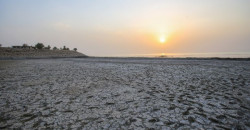
The challenge, however, is immediate and unforgiving: water. Iraq’s rivers have hit historic lows after four years of drought, cutting irrigation, shrinking crop yields, and leaving the land increasingly bare. Winter farming plans have been trimmed, with 78% of irrigation now depending on groundwater. Trees, even the toughest and most drought-resistant, need years of steady watering to take hold, a luxury in short supply.
Omar Abdul Latif of the Iraq Green Observatory stresses that this is more than a technical problem. “The project could have started 15 years ago when water was more available,” he explained. “Now, even with resilient species, it will take seven to 10 years for them to become effective windbreaks.” He further suggests that artificial rainmaking could help curb dust storms, particularly in provinces like Basra, Dhi Qar, Al-Muthanna, Al-Diwaniyah, Wasit, and Al-Anbar, where storms often begin.
The impact goes beyond the environment. Dust storms are now a public health crisis, triggering asthma, bronchitis, and lung infections. In 2022 alone, more than 5,000 Iraqis were hospitalized with respiratory problems linked to airborne dust, according to the Ministry of Health. Desertification also threatens livelihoods: the World Bank warns that declining farmland and eroding soil could deepen rural poverty without urgent intervention.
For Iraqis, the Green Belt is a defensive line against a changing climate, and a measure to protect both people and farmland. But its success rests on the very resource that sustains the country’s rivers, crops, and cities: water. Without it, even the most ambitious green visions risk withering under Iraq’s relentless sun.
Read more: From drought to saltwater: Iraq's deepening water crisis
Written and edited by Shafaq News staff.