Iraq lawmakers push to freeze provincial councils again


Shafaq News- Baghdad
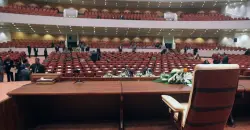
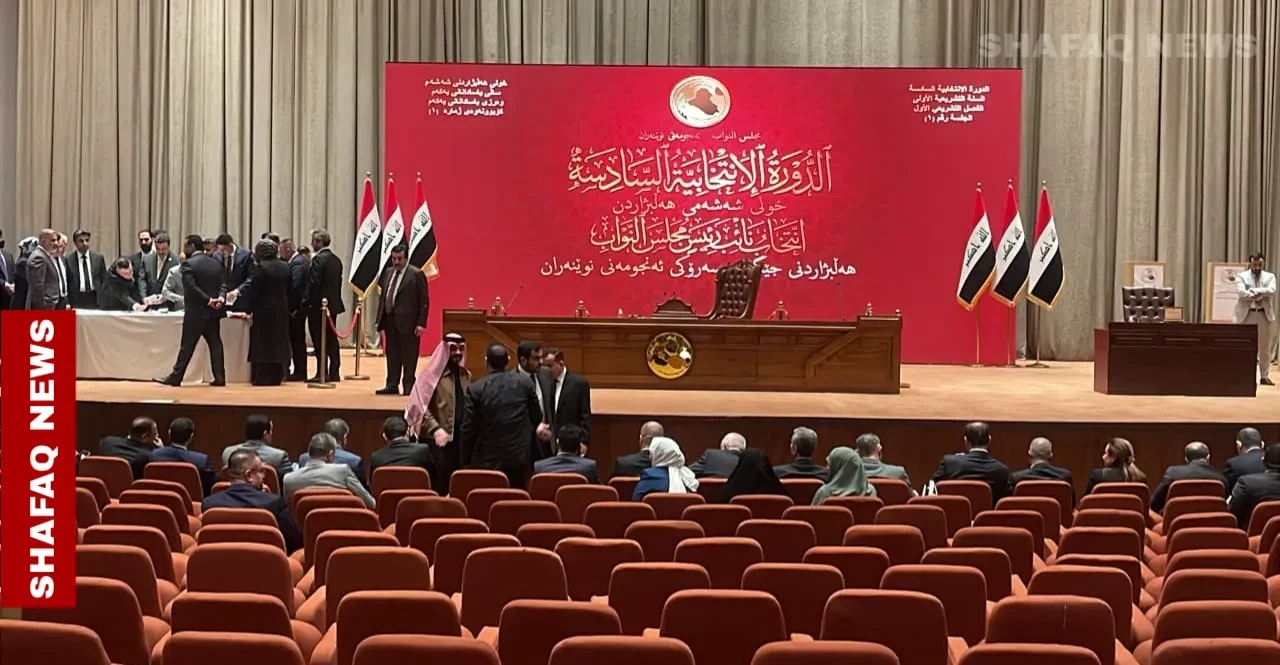
A group of Iraqi lawmakers submitted a formal request to Parliament Speaker Haibet Al-Halbousi to place a proposal to freeze provincial councils and their budgets for the current term on the agenda of the next parliamentary session.
Reviving one of Iraq's most contentious debates over decentralization, signatories based their request, submitted Sunday, on Article 20/First of the Governorates Not Organized in a Region Law No. 21 of 2008 (as amended), along with provisions addressing council accountability in cases of serious breaches of duty or violations of the constitution and law, as well as councils' subjection to parliamentary oversight, according to a document seen by Shafaq News.
The petition seeks to freeze provincial councils rather than dissolve them, since their existence is protected by the constitution and cannot be ended through this mechanism alone, MP Hamed al-Fatlawi told Shafaq News, pointing to the previous suspension of councils after they exceeded their electoral term.
Al-Fatlawi acknowledged that with roughly one year and two months remaining in the current term, “freezing the councils now would raise greater legal and political complications,” particularly since the sitting councils resulted from direct elections. Amending the provincial councils’ law to grant governors broader powers, freeing them from council-imposed constraints, represents the better long-term solution, he said, though “the current financial crisis and weak council performance are strengthening calls for a freeze.”
“Budgets allocated for provincial development and ministerial projects have not translated adequately into results on the ground,” al-Fatlawi said, accusing councils of “enabling corruption and the distribution and sale of quotas and positions, which affects public funds and project implementation.”
He doesn’t expect passage to be easy, however, predicting that Iraq's ongoing financial crisis could eventually force reconsideration of whether upcoming provincial council elections can even be held if sufficient liquidity is unavailable.
Read more: Iraq’s Provincial Councils: Dysfunctional return deepens public disillusionment
This parliamentary push comes as Iraq's government spending faces severe strain: recent figures show monthly salary obligations at roughly 7.8 trillion dinars (approximately $5.95 billion), while the government needs around 10.8 trillion dinars (approximately $8.24 billion) monthly to cover total salaries and public expenditures.
MP Mohammed Khalil goes further than the freeze proposal, arguing that abolishing provincial councils is both a popular demand and a timely necessity. Councils have become a source of "legislative disruption" within the administrative structure, he told Shafaq News, consuming budget funds without achieving their intended purpose.
“Originally meant to deliver services to citizens, the councils became an additional layer obstructing the executive branch and an arena for political interests,” Khalil argued. He stressed that oversight tools are no longer confined to local councils given the existence of the Board of Supreme Audit, the Federal Commission of Integrity, and other regulatory bodies, making him favor ending the councils outright rather than a temporary freeze.
Citing the earlier experience of dissolving district councils, Khalil said that eliminating provincial councils could similarly remove “an excess layer from the administrative structure.”
Read more: Why Iraq’s provincial councils are struggling to deliver
Article 116 establishes that Iraq's federal system consists of a capital, regions, decentralized provinces, and local administrations, while Article 122 grants provinces not organized into a region broad administrative and financial powers under the principle of administrative decentralization. The same article states that the election and powers of provincial councils and governors are to be regulated by law, and that provincial councils are not subject to the control of any ministry, operate independently, and maintain their own finances.
In Babil, council member Hussein al-Dahmoushi argued that councils, if functioning properly, can achieve their intended purpose. He acknowledged to Shafaq News, however, that their current state resembles "clinical death" due to political quota-sharing and violations of laws, regulations, and instructions. “Freezing council operations may be preferable if this situation persists,” al-Dahmoushi noted, provided their powers and duties are transferred to a regulatory body under law to avoid creating a gap in oversight and local administration.
Fellow Babil council member Mohammed al-Mansouri called the closure of "quota-based" provincial councils an urgent national necessity, describing them as having lost independent will and decisive authority, merely carrying out what is dictated to them.
In Karbala, council member Mohammed al-Masoudi rejected the parliamentary push altogether, arguing that collecting signatures to freeze councils constitutes a constitutional violation, since the constitution and law established their existence and legitimacy.
Karbala's provincial council plays a genuine oversight role, holding officials accountable and identifying citizens' problems and solutions, al-Masoudi told Shafaq News, suggesting some lawmakers' motives may be political. He noted that councils cost the state only limited sums compared to the salaries, allowances, protection details and expenses of parliament members and the three presidencies.
Provincial councils have not had a short history in Iraq. The first were elected on January 30, 2005, during the transitional period, before the 2005 constitution took full effect and before the Governorates Not Organized in a Region Law No. 21 of 2008 was enacted. Elections followed on January 31, 2009, after the permanent constitution and decentralization law were in place, then again on April 20, 2013. Local elections were then suspended for years until parliament halted council operations in 2019 amid the October protest movement. Councils were re-elected on December 18, 2023, with the new bodies beginning work in early 2024.
Read more: Iraq’s protests after Tishreen: A system that learned how to contain the street
Researchers and observers interviewed by Shafaq News argue the provincial council crisis cannot be separated from Iraq's broader decentralization crisis. Councils were meant to serve as a pillar for transferring decision-making and resources from Baghdad to the provinces, but the experiment has faced years of problems involving powers, funding, and overlap with federal ministries. Legislators attempted, particularly through 2013 amendments to the provincial councils law, to transfer service-related powers from federal ministries to the provinces, but implementation faced major difficulties due to conflicting authorities and weak coordination and funding.
Councils in many provinces instead became arenas for political bargaining and quota-sharing, while local government formation stalled for extended periods in some provinces due to political rivalries. This problem resurfaced after the 2023 elections in several provinces, with local government formation delayed by competition over positions and influence, turning local elections into a barometer of central political balances more than a genuine local contest over services and administration.
Political analyst Mujashaa al-Tamimi supports ending the councils, arguing current calls deserve serious backing, particularly amid the financial crisis. Provincial councils have, in many cases, shifted from a tool for improving local administration into an additional layer of bureaucracy and political bargaining, al-Tamimi told Shafaq News, pointing also to suspicions of extortion, interference in provincial affairs, and waste of public funds.
In an interview with Shafaq News, Alaa Najah, another political analyst, cautioned against reducing the issue to a matter of spending, arguing that discussion of freezing provincial councils should not be reduced to a cost-cutting measure or a fix for weak performance, since the issue is tied to the broader concept of administrative centralization and the relationship between central and local government. Elected councils should not be abolished simply due to weak performance, he added, but should instead undergo evaluation, accountability, auditing and reform.
If weak councils or members implicated in corruption are identified, the appropriate response is opening investigations and holding those responsible accountable, not resorting to abolition or suspension as a first option, Najah said, while also declining to defend councils simply because they are elected. He noted the reverse question is equally legitimate: what have these councils delivered, what has been spent on them, what impact have their decisions had, and what project delays have resulted from disputes between councils and governors?
Najah suggested provincial councils may represent an "excess layer" under the current model, particularly given the existence of governors, state departments, and elected members of parliament representing each province. The core problem, he concluded, lies not merely in the councils' existence but in how they operate, the scope of their powers, the level of oversight and accountability applied to them, and the nature of reforms needed within the local governance system.
Written and edited by Shafaq News staff.