Iraq ends the UNAMI era: A nation steps into the unknown


Shafaq News
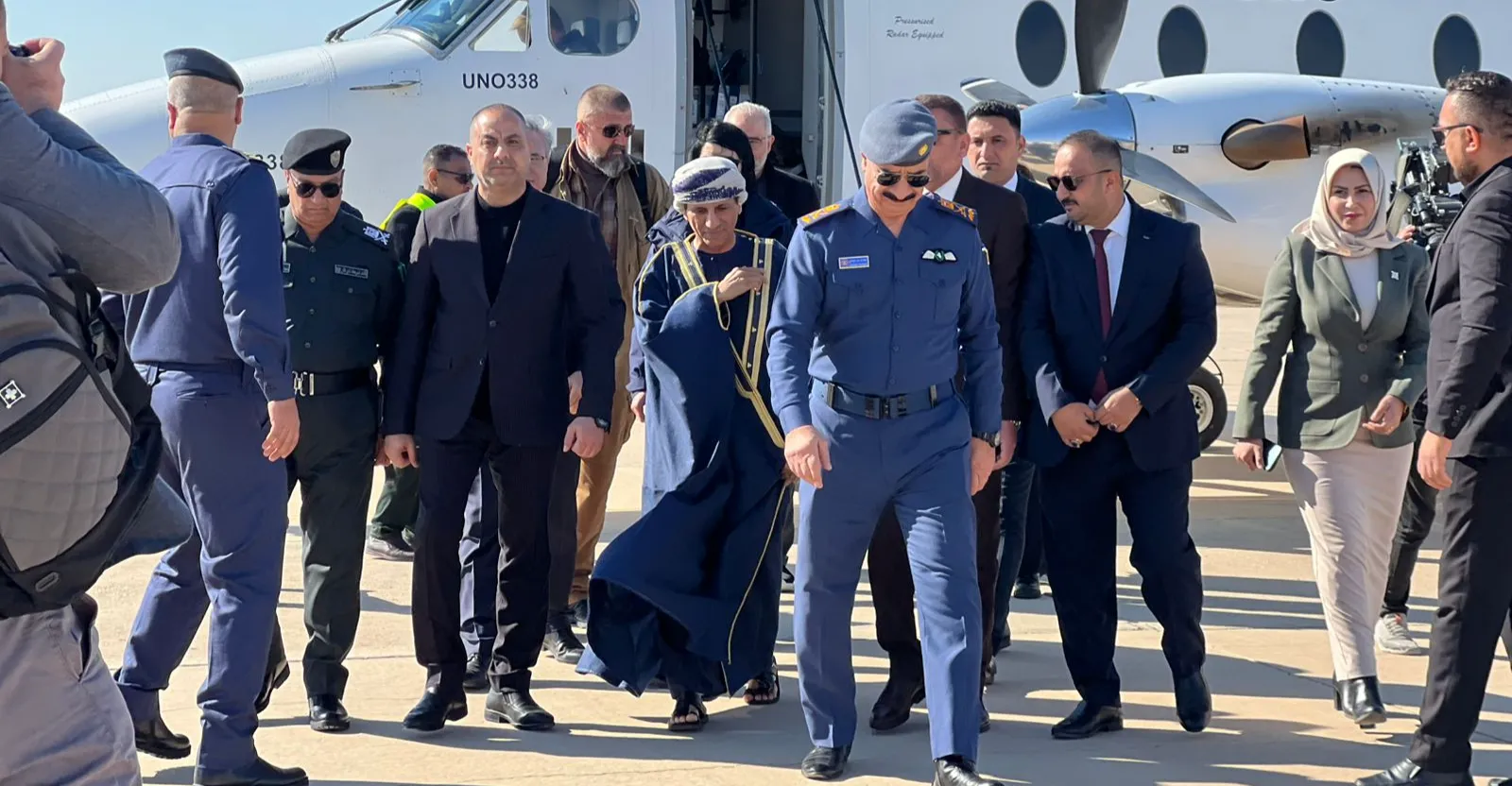
Iraq is preparing to close a defining chapter in its post-2003 history as it moves to terminate the mandate of the United Nations Assistance Mission for Iraq (UNAMI) after more than two decades of diplomatic, political, and humanitarian engagement. The development comes as UN Secretary-General António Guterres arrives in Baghdad to take part in the ceremony marking the formal beginning of UNAMI’s drawdown ahead of its final departure at the end of 2025.
While the Iraqi government formally requested in 2023 the mission’s closure, the decision has triggered intense debate inside the country. Specialists warn that Iraq may be heading toward a “humanitarian and political vacuum,” arguing that the move was driven by public pressure rather than a sober assessment of institutional readiness or national needs.
UNAMI was established in 2003 under Security Council Resolution 1500 at the request of the Iraqi government, and its mandate was significantly expanded through Resolution 1770 in 2007 to include inclusive political dialogue, national reconciliation, electoral assistance, and regional facilitation between Iraq and its neighbors.
In May 2024, the Security Council extended the mission for a final 19-month period, ending on 31 December 2025. Days earlier, caretaker Prime Minister Mohammed Shia al-Sudani had formally notified the UN Secretary-General that Iraq wished to terminate the mission permanently on that date and limit its remaining work to economic reform, public services, sustainable development, climate change, and other developmental priorities.
Experts caution that the mission’s departure will leave a “wide humanitarian gap,” given the thousands of vulnerable Iraqis who relied—directly or indirectly—on programs coordinated under UNAMI’s umbrella.
Mohammed Jumaa, a legal expert working with a UN organization, argues that the government’s decision was “hasty” and shaped more by public sentiment than by an objective assessment of the country’s needs. While UN missions routinely withdraw at the host state’s request, Jumaa believes the Iraqi decision “carries clear negative implications,” particularly for international assessments related to governance, political conditions, and institutional stability.
Over the past two decades, UNAMI has played a central role in shaping Iraq’s political and humanitarian landscape. It has advised governments, facilitated national reconciliation, observed some electoral processes, coordinated with civil society, and served as the backbone for cooperation between Iraqi institutions and UN agencies.
Although UNAMI does not directly implement humanitarian or development programs, it has been the primary channel through which challenges were identified and technical expertise mobilized. The mission was also crucial during the war against ISIS, coordinating emergency assistance, reconstruction efforts, and restoration of essential services for millions of displaced Iraqis. It supported health and education programs and water-supply projects in close partnership with state institutions.
According to its website, UNAMI’s human rights office produced dozens of periodic reports documenting conditions in prisons, enforced disappearances, political assassinations, attacks on minorities, and ISIS crimes against the Yazidis.
Ali al-Abbadi, head of the Iraqi Human Rights Center, warns that the termination of UNAMI could undermine Iraq’s ability to address complex files requiring specialized international expertise—pollution, environmental degradation, human rights, and the empowerment of oversight bodies.
He acknowledges longstanding concerns about aspects of the mission’s operations, including funding mechanisms, staff conduct, and perceived “biases” in handling certain governmental files. Yet, he stresses that UNAMI’s withdrawal will leave a major gap, particularly for independent organizations that lacked sufficient operational space during the mission’s presence. One of the mission’s shortcomings, he notes, was its failure to effectively convey Iraqi protest movements to the international arena.
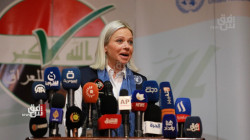
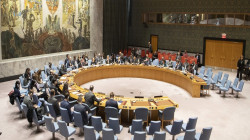
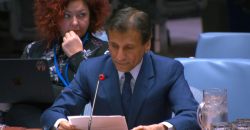
In his final briefing to the Security Council earlier this month, the Secretary-General’s Special Representative for Iraq, Mohammed al-Hassan, stated that the end of UNAMI’s mandate “does not mean the end of cooperation,” but rather the beginning of a new phase in the UN-Iraq relationship.
Political analyst Nasser Duraid delivers a scathing assessment of the UN’s final phase in Iraq, arguing that the appointment of Mohammed al-Hassan was intended “to close the mission’s file” rather than to advance core issues such as human rights, women’s rights, detainees, freedom of expression, or monitoring Iraq’s political trajectory.
Duraid contends that the final UN report “does not reflect the scale of violations or the continuous deterioration of internal conditions,” warning that this approach will be recorded as “a major failure” for the United Nations. He maintains that international disengagement from Iraq has been reinforced by public apathy, low electoral participation, and the absence of large-scale protests.
“UNAMI’s closure is not a protocol event but a sorrowful moment akin to a funeral,” he said, pointing out that the mission effectively ended because of three converging factors: the performance of the political class, international abandonment, and the Iraqi public’s passivity.
With the departure of one of the most influential international actors in the country, Iraq enters a pivotal test: can its institutions assume full responsibility for humanitarian, environmental, developmental, and oversight files that UNAMI helped shepherd for two decades? The answer, experts say, will define the contours of Iraq’s next chapter after the UN mission’s departure.
Written and edited by Shafaq News staff.