Iraq after the regional ceasefire: US bases and unresolved political questions


Shafaq News
Since April 8, no confirmed attack has been recorded against US military installations in Iraq. Drone activity has continued in Erbil and Al-Sulaymaniyah provinces in the days following the ceasefire, though these targeted Kurdish security sites and Iranian opposition camps rather than aUS positions directly.
The ceasefire, reached through Pakistani mediation between Washington and Tehran, has held on that specific front; however, it has not altered any of the conditions that made those attacks possible, effective, and, according to the armed factions themselves, far from over.
The United States spent the 40 days between February 28 and April 8 absorbing an unprecedented tempo of drone and missile strikes on its installations, diplomatic facilities, and contractor personnel across Iraq. It responded with retaliatory airstrikes on Iran-aligned armed factions, groups formally integrated into the Iraqi state.
That calculation -keep Iraq a manageable distraction, not a second front- shaped every American decision in the country during the conflict. The ceasefire preserved it, for now, but the factions, the vulnerabilities, and the political dysfunction that made the campaign possible are all still in place. And Baghdad’s newly designated prime minister, a political novice with a complicated financial biography, has 30 days to form a government capable of navigating what his predecessors could not.
The Campaign
When the United States and Israel launched strikes on Iran on February 28, 2026, targeting military infrastructure and killing Supreme Leader Ali Khamenei, Iraq and Lebanon immediately became secondary theaters of the wider war. The Islamic Resistance in Iraq (IRI), an umbrella grouping of Iran-aligned armed factions that had already conducted more than 170 attacks on US military assets since October 2023, dramatically escalated its operations. Washington’s preference was clear: keep the Iraqi front contained, manageable, and below the threshold that would require the kind of direct, sustained military engagement that would consume attention and resources needed elsewhere.
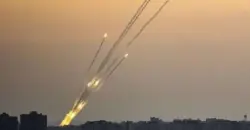
That preference was immediately tested. Between February 28, 2026, and the ceasefire announcement on April 8, Shafaq News documented over 900 strikes landing on the US logistical support center at Baghdad International Airport and the US Embassy compound in Baghdad’s fortified Green Zone, causing damage and triggering lockdowns. Air defense systems engaged repeatedly over Erbil and around Harir Base in Iraqi Kurdistan, where the American presence is significant. The scope of attacks expanded to energy infrastructure in northern Iraq, including the Lanaz refinery in Erbil and the Sarsang oil field in Duhok.
In the Kurdistan Region alone, about 650 attacks were recorded over those 40 days, with US diplomatic and military facilities among the primary targets.
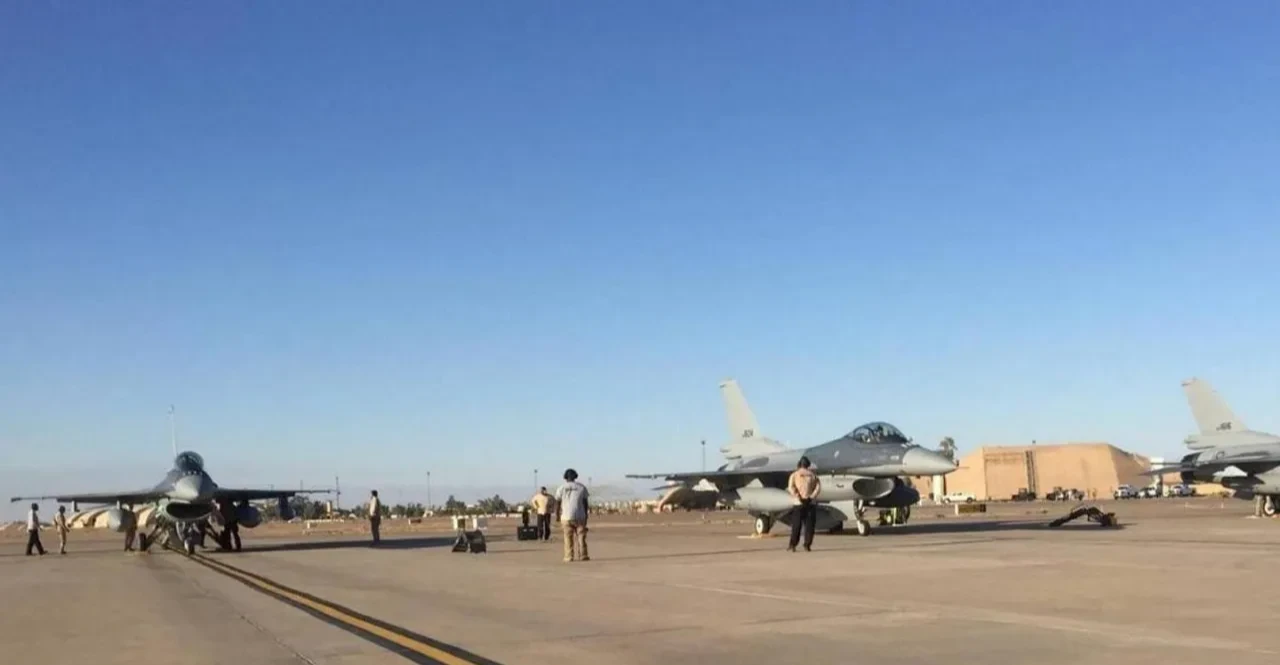
The IRI’s campaign extracted concessions from the strategic environment without battlefield victory. It operated on a logic of attrition: not destroying American assets, but making the cost of maintaining them —in personnel, contractor presence, and political capital— prohibitively high. Nowhere was this logic more precise than at Martyr Brigadier General Ali Flaih Air Base, formerly known as Balad, located roughly 70 kilometers north of Baghdad in Saladin province.
Balad is the operational hub of Iraq’s American-supplied F-16 fighter fleet, maintained under a contract worth over $252 million awarded to V2X, a Colorado-based defense firm formed through the merger of Vectrus and Vertex Aerospace, and running through late 2026. A senior security source inside the base told Shafaq News it sustained approximately 13 drone attacks during the heightened US-Iran tensions. The strikes were aimed not at the aircraft but at the contractors responsible for maintaining them. The F-16s remain protected in more than 35 hardened underground shelters.
In an interview with our agency, security expert Abdul Sattar Al-Jubouri said the withdrawal of foreign contractors created a technical vacuum that Iraqi personnel cannot fill, particularly for software systems, advanced avionics, and complex component overhauls.
Former Iraqi Air Force officer Jamal Al-Azzawi described Iraqi teams at Balad as capable of handling routine maintenance, but acknowledged the gap left by the contractor departures.
An employee of V2X, speaking anonymously to a British outlet in March, called the base a high-value target with more than 200 American nationals on site, and reported that some Iraqi military and contract employees had been passing sensitive operational information to IRI-affiliated contacts in preparation for further strikes.
Renad Mansour, a senior research fellow at Chatham House, described the governing dynamic that makes this possible: the armed factions “have one foot in the state and one foot out of the state.” That hybrid model, simultaneously part of Iraq’s formal security apparatus and operationally autonomous from it, is precisely what allows IRI-affiliated networks to gather intelligence inside a base nominally under Iraqi government control.
The Ain al-Asad Air Base in western Al-Anbar province —historically the larger of the two principal American installations in Iraq— is no longer part of this equation. On January 18, 2026, the United States completed a full withdrawal from the base, handing control to the Iraqi army. What remained of the American footprint before February 28 was concentrated at Erbil Air Base in Iraqi Kurdistan and the contractor presence at Balad. The IRI’s campaign targeted both.
Read more: Drone incidents reported across 14 Iraqi provinces in latest escalation
The Ceasefire
The two-week ceasefire, brokered by Pakistani Prime Minister Shehbaz Sharif, required Iran to reopen the Strait of Hormuz while the United States and Israel halted strikes on Iranian territory. The IRI simultaneously announced a suspension of its operations in Iraq and across the region. Then, the Iraqi flags and Iranian flags were waved together in Tahrir Square in Baghdad.
The ceasefire frayed almost immediately. Iran-aligned armed factions continued drone attacks near the Baghdad Diplomatic Support Center and Baghdad International Airport on the day it took effect, prompting the US Embassy to warn American citizens against further possible attacks and to avoid air travel. Since the ceasefire’s implementation, the Kurdistan Region has been hit by a further 48 attacks. All, according to Shafaq News sources, directed at Iranian Kurdish opposition sites and conducted by the Islamic Revolutionary Guard Corps rather than IRI-affiliated factions, bringing the documented total since February 28 to 695. The ceasefire, extended at least once at Pakistan’s request, has been violated by both sides and functions as a negotiating framework rather than a durable agreement.
What the ceasefire does not address is as significant as what it halted. Iran’s 10-point counter-proposal, which Tehran has framed as the basis Washington accepted, includes the withdrawal of all American forces from bases across the region. That demand, if pressed in negotiations, would eliminate the residual US presence at Erbil Air Base and the contractor mission at Balad, both of which Baghdad has simultaneously asked Washington to maintain.
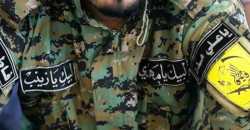
Meanwhile, the armed factions have made their own position explicit. Hezbollah Al-Nujaba, one of the IRI’s most prominent constituent factions, declared this week that Iraq would permanently remain the “striking force” of the Resistance Axis and described its fighters as “martyrdom projects” on that path. “We renew our pledge and covenant,” the group said in a statement addressed to Ayatollah Mojtaba Khamenei, son of the assassinated Supreme Leader, “we —the sons of al-Nujaba— will remain your loyal soldiers.” Al-Nujaba, along with other IRI-affiliated factions, claims hundreds of attacks on US military installations in Iraq and across the region since February 28 —a figure that cannot be independently verified but is directionally consistent with documented evidence. The guns have paused. The intent has not.
Read more: Iraq’s Islamic Resistance after Ali Khamenei
The New Government
Into this environment steps Ali Al-Zaidi, named prime minister-designate on April 27 after a political deadlock that lasted more than five months following Iraq's November 2025 parliamentary elections. Al-Zaidi, 40, is a businessman who has never held government office. His path to the nomination was shaped as much by what he is not as by what he is: former Prime Minister Nouri Al-Maliki, a deeply divisive pro-Iran figure, withdrew after his candidacy ran into fierce opposition —both from some parties within the Coordination Framework (a Shiite-led coalition that underpins the current parliamentary majority) itself and from Washington, which threatened to cut all US support to Iraq if he took office and suspended nearly $500 million in dollar shipments to Baghdad to reinforce the point. Al-Zaidi emerged from the wreckage of that deadlock as a consensus no one had planned for.
The US Embassy in Baghdad quickly welcomed the outcome, extending its "best wishes" to Al-Zaidi and expressing support for Iraq's sovereignty and "security free from terrorism" —language that functions as diplomatic shorthand for Washington's core demand: meaningful action against IRI-affiliated armed factions operating inside the Iraqi state.
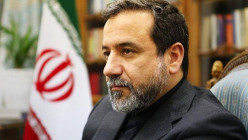
Tehran moved with equal speed, though with markedly different emphasis. Iran's Foreign Minister Abbas Araghchi congratulated “my brother” Al-Zaidi on his designation and affirmed Tehran's "respect for Iraq's sovereignty" and support for "political stability, development, and enhanced cooperation" serving the interests of both peoples —a formulation that conspicuously sidesteps the security architecture question altogether and instead frames the relationship in terms of bilateral economic and political alignment.
That both capitals issued congratulations within the same diplomatic window, yet in languages pointing in opposite directions, captures precisely the structural bind Al-Zaidi inherits: a government whose external legitimacy depends on satisfying patrons whose core demands are mutually exclusive.
Al-Zaidi’s biography complicates the picture. He served as chairman of Al-Janoob Islamic Bank, which faced restrictions on US dollar transactions as part of a wider crackdown on sanctions evasion, and has been linked in reports to alleged money laundering on behalf of the Iranian Revolutionary Guard Corps. Those allegations remain unverified. But they frame the central question his nomination poses: Is Al-Zaidi a genuine compromise figure capable of navigating between Washington and Tehran, or a lowest-common-denominator candidate whose financial entanglements will limit his room to move on the question that matters most —the armed factions?
The next Iraqi government will face a set of overlapping challenges shaped by both domestic constraints and external pressure. Washington is expected to press Baghdad to move against Iran-aligned armed factions it designates as terrorist organizations, even as those same groups remain embedded within Iraq’s ruling coalition and maintain close ties to Tehran.
At the same time, Baghdad will need to rebuild relations with Gulf states that were targeted by Iranian drones and missiles during the conflict and are now calling for clear steps to curb the influence of armed factions operating from Iraqi territory.
Economic pressures are also likely to weigh heavily. Disruptions to oil exports during the closure of the Strait of Hormuz exposed the country’s reliance on crude revenues, which make up around 90 percent of the state's income.
Another unresolved issue concerns the Popular Mobilization Forces (PMF), a state-sanctioned paramilitary network formed during the fight against ISIS. While formally integrated into the armed forces in 2016, many of its factions continue to operate with significant autonomy. Their political influence, particularly within the Coordination Framework, limits the scope for any government seeking to impose tighter control.
What Remains
Before February 28, the attrition campaign against US installations could be framed as a manageable, if persistent, security challenge —episodic strikes, intercepted drones, pro forma condemnations from Baghdad that no one took seriously. Forty days of open warfare stripped that framing away and made visible what had always been structurally true: the United States is trying to sustain a military and contractor presence in a country whose government shares power with the armed factions attacking it.
Iraq’s air force flies American jets, maintained by American contractors, inside a base where IRI-affiliated networks have been mapping personnel and passing intelligence to the factions that attacked it. The government that formally asked the United States to leave has asked it to stay. The Coordination Framework that nominated Al-Zaidi includes, among its constituent members, the leader of Asaib Ahl Al-Haq —a US-designated terrorist organization. American retaliatory airstrikes during the conflict hit Kataib Hezbollah and Badr Organization positions —both formally integrated into the Iraqi Armed Forces— placing Baghdad in the position of explaining US strikes on its own security services.
Washington’s preference throughout has been to keep Iraq a secondary theater, a manageable distraction rather than a second front. The ceasefire preserved that preference. But the armed factions have explicitly rejected the premise. Al-Nujaba’s pledge of permanent war, issued during an active ceasefire, addressed to a new Iranian Supreme Leader, signals that the pause is tactical, not terminal. The factions are not standing down. They are waiting.
Al-Zaidi's predecessors, operating with deeper political experience and more stable regional conditions, could not resolve the contradiction at the core of Iraq’s security architecture. Nothing in al-Zaidi’s biography, his political base, or the diplomatic framework currently on the table suggests he has a theory of how Iraq escapes the position it is in.
Written and edited by Shafaq News staff.