Iraq PM race stuck between largest bloc dispute and US pressure


Shafaq News
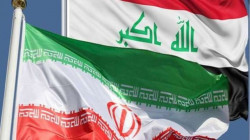
Nearly four months after Iraq’s November 11, 2025, parliamentary elections, the country remains trapped in a deep political stalemate, with rival factions still unable to agree on a prime minister. The internal dispute over leadership started from within the Shiite-led Coordination Framework but has evolved into a broader constitutional and geopolitical crisis, complicated by a regional war between Iran on one side and the United States and Israel on the other.
The deadlock has effectively frozen Iraq’s constitutional process, leaving the political class searching for last-minute compromises while regional tensions intensify and foreign pressure mounts over the next government’s leadership.
Elections Without A Government
Iraqis expected the elections to produce a new executive authority capable of translating the vote into a functioning government. Instead, negotiations have stalled over two central questions: the identity of the next prime minister and the constitutional definition of the “largest parliamentary bloc” tasked with forming the government.
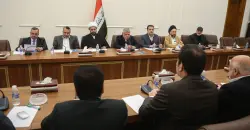
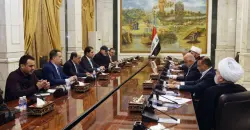
The dispute centers primarily within the Coordination Framework, the Shiite alliance that dominates parliamentary politics but remains divided between supporters of former Prime Minister Nouri al-Maliki and those backing other candidates, including the current caretaker premier Mohammed Shia al-Sudani.
While these negotiations dragged on, a new external variable emerged. The war between Iran and the United States-Israel alliance —now entering its eighth day— has introduced new pressures on Iraq’s political landscape, including direct American pressure reportedly led by US President Donald Trump to prevent certain figures, mainly al-Maliki, from assuming the premiership.
This overlap between domestic political bargaining and regional conflict has raised fears that Iraq could again become entangled in broader geopolitical struggles.
Iraq’s next Prime Minister held hostage by US-Iran standoff
Judicial Intervention And The “Largest Bloc” Debate
Amid the stalemate, Iraq’s judiciary stepped unexpectedly into the political debate. Supreme Judicial Council President Judge Faiq Zidan proposed a legal interpretation aimed at restoring what he described as the true constitutional intent behind Article 76.
Zidan’s proposal rests on a simple principle: the electoral list that wins the most votes should automatically be recognized as the “largest bloc.”
If adopted, this interpretation would fundamentally alter Iraq’s government formation process. Since 2010, political alliances have typically been formed after elections inside parliament, allowing rival parties to merge into larger coalitions that override the actual electoral results.
Critics have long argued that this practice emptied the ballot box of its meaning and turned post-election bargaining into the decisive stage of Iraqi politics.
By contrast, Zidan’s proposal would give the winning list the exclusive right to nominate the prime minister, potentially limiting the prolonged negotiations that have repeatedly paralyzed the system.
Haider Ali Abu Tara al-Feyli, a member of parliament representing the Feyli Kurdish quota, said many lawmakers support the judiciary’s interpretation. “The negotiations to form the government are still ongoing despite the internal disagreements inside the Coordination Framework,” he told Shafaq News.
“But Judge Faiq Zidan was clear in his latest proposal regarding the largest bloc as a constitutional clarification, and as members of parliament, we follow the opinion of the Supreme Judicial Council.”
Al-Feyli warned that the failure to form a government has disrupted all state institutions, and this is “extremely dangerous given what is happening in the region.” “It poses a direct threat to Iraq, so the issue must be resolved in the coming days.”
Iraq slips into constitutional vacuum as presidential deadlock drags on
Washington’s Shadow Over Baghdad
Yet the optimism surrounding a legal solution collides with strong resistance from factions inside the Coordination Framework, particularly the State of Law coalition led by Nouri al-Maliki.
For al-Maliki’s allies, the main obstacle is not constitutional interpretation but foreign pressure.
Aref al-Hammami, a senior member of the coalition, insisted that “our candidate so far is Maliki, and the latest Coordination Framework meeting reaffirmed adherence to him.” He argued that abandoning the candidacy under American pressure would undermine Iraq’s sovereignty.
“Changing the candidate because of American dictates would be humiliating for national legitimacy,” al-Hammami said. “The US government is neither wise nor respectful of agreements, and giving in to such pressure would open the door to interference even in the details of Iraqi ministries.”
Al-Hammami also downplayed the legal weight of Zidan’s proposal, considering that presenting a vision, not a binding decision,” and noting that any constitutional amendment would face significant procedural hurdles and could be blocked if three provinces reject it.
He added that another structural obstacle lies in the Kurdish parties’ delay in nominating a candidate for president, a step required before the prime minister can formally be designated.
Nouri Al-Maliki’s return rekindles Iraq’s divisions as Iran and the US pull apart
Coordination Framework Divisions Widen
Inside the Coordination Framework itself, some voices appear increasingly pessimistic about reaching a consensus candidate.
Rahman al-Jazaeri, another political figure within the alliance, described the situation as a clear political bottleneck unfolding at the same time as armed conflict across the region.
“The proposal of Judge Zidan will create a new dynamic,” he told Shafaq News.
“There are opponents to al-Sudani despite his list having the largest number of seats —46 out of the 329-seat Iraqi parliament. At the same time, there has been no official withdrawal of al-Maliki and no unanimous decision by the Framework.”
According to al-Jazaeri, current meetings between political leaders remain informal and inconclusive. He also warned that the regional security situation could delay the formation of a government further.
“Popular Mobilization Forces fighters are currently being targeted by Israeli and American airstrikes,” he said. “This will certainly delay government formation, and we may remain in a ‘state of emergency government.’”
Nouri Al-Maliki’s new doctrine for power: Pragmatism over defiance?
A Compromise Candidate Emerges?
Behind the scenes, political circles in Baghdad are quietly discussing another possible scenario: the emergence of a compromise figure outside the current rivalry.
Al-Jazaeri hinted that an independent candidate could soon enter the race, particularly after Eid al-Fitr, when a legal option may be imposed —either dissolving parliament or reconsidering the issue of the prime minister.
“There is now an independent personality outside the Coordination Framework negotiations, regionally acceptable and enjoying the approval of the senior religious authority in Najaf. This candidate may be announced in the coming days as a consensus option.”
If such a figure gains traction, it could offer a face-saving exit for competing factions unwilling to surrender their preferred candidates.
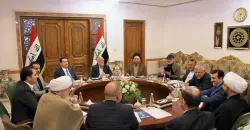
Despite Zidan’s interpretation and renewed calls by Iraq’s four presidencies —President Abdul Latif Jamal Rashid, caretaker Prime Minister Mohammed Shia al-Sudani, Parliament Speaker Haibat al-Halbousi, and Supreme Judicial Council head Faiq Zidan— to accelerate the completion of constitutional obligations, the regional war, persistent internal divisions, and mounting foreign pressure continue to shape the calculations of Iraqi factions and delay the formation of a new government.
Written and edited by Shafaq News staff.