Iran’s undersea cable threat raises risks for Iraq


Shafaq News
Iran’s threat to target undersea internet cables in the Gulf signals a push to widen its leverage in any renewed war with the United States, four experts told Shafaq News. They warned that a fight over digital infrastructure could inflict economic and security damage well beyond the warring parties, including on Iraq.
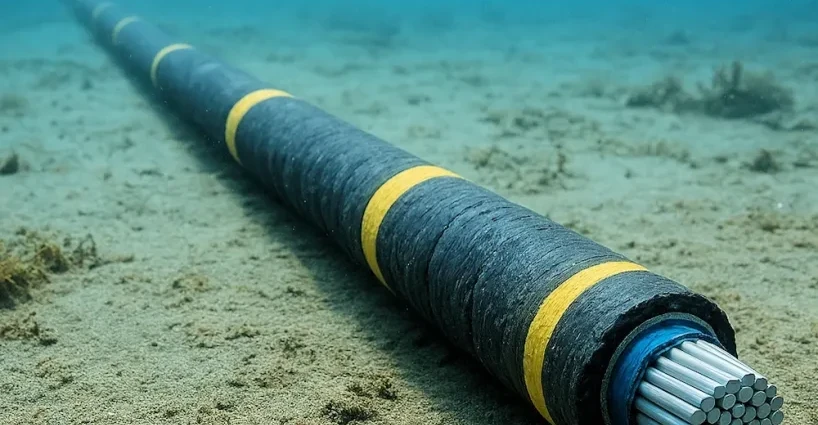
Mohsen Rezaei, secretary of Iran’s Supreme National Security Council, warned last Sunday in an interview with state-run Press TV that communications cables, data centers and artificial intelligence facilities across the region could be destroyed if war resumes. A day later, Hossein Shariatmadari, editor of the hardline Kayhan newspaper and the supreme leader’s representative there, backed the threat, calling attacks on fiber-optic cables in the Gulf a “legitimate right” for Iran. He claimed that about seven major cable systems run along the Gulf seabed and through the Strait of Hormuz, and that even limited damage could disrupt more than 80% of commercial, banking and military communications.
Saleh al-Qazwini, a writer and researcher on Iranian affairs, said the threats fit a “like-for-like” approach in the event of a full-scale war against Iran. Tehran could widen its target list if it comes under full-scale attack, prioritizing US interests, bases and companies in the region, he told Shafaq News, adding that the scale of any response would depend on Washington’s actions.
Firas Elias, an academic specializing in Iranian affairs, said the threats point to a shift in modern warfare, with communications networks and data flows joining military sites and energy resources as strategic targets.
“Iran is trying to use its position near vital sea lanes, as it has with the Strait of Hormuz and oil markets,” Elias said. He warned that hitting several cable routes at once could disrupt international communications, banking and e-commerce, as well as government institutions and companies that rely on digital services. But the real impact would depend on which targets are hit and whether alternative routes exist, he said, noting that damage to a single cable would not necessarily cause a wider outage.
Regarding Iraq, Elias said the country would not be spared despite its overland links with neighboring states, as connection quality, banking services and electronic transfers could suffer if disruption spreads to more than one regional route. “Communications security should now be treated as part of national and economic security, not merely a technical matter,” he said.
Haitham Numan, a lecturer at the University of Exeter in Britain, said Tehran sees the Gulf as a “front line” in its confrontation with Washington, while pressure on Gulf states may be intended to raise doubts about US protection. “Such threats could also push Gulf governments to warn Washington of the risks of a wider US-Iran conflict,” he told Shafaq News, describing the digital threats as a warning that Iran could reach for alternative pressure points, given its limited ability to strike US territory directly, and linked them to US threats to cut Iran off digitally after isolating it economically.
Strategic expert Ahmed al-Sharifi said the threat adds a new dimension to pressure in any new confrontation between Iran, the United States and Israel, with effects reaching well beyond the telecommunications sector. Disruption could hit financial markets, bank transfers and the electronic systems used to manage oil exports, he warned.
According to Al-Sharifi, Iraq is exposed because its financial, administrative and economic services rely on digital connectivity, and wider disruption could strain cash transactions, transfers and energy-sector services.
Iraq signed an agreement in September with Qatar’s Ooredoo to carry data from Gulf countries to Europe across its territory. In September 2025, two cables were cut near Jeddah, slowing internet access across the Middle East and South Asia.