Iran calls for a response without borders; Iraq's armed factions set their own terms


Shafaq News
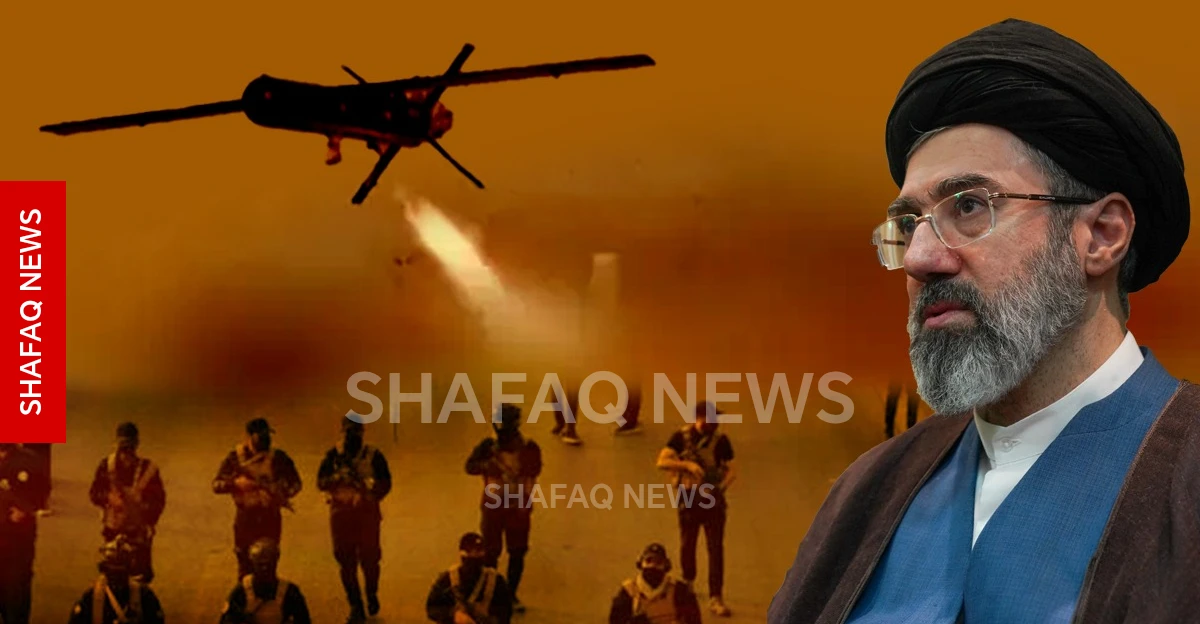
Iran's Supreme Leader Mojtaba Khamenei warned on Wednesday that any new US attack would draw a response of "much broader dimensions," and the Quds Force commander declared that Tehran's allies stood by the "unity of arenas." In Iraq, where those allies are most deeply embedded in the state, the armed factions are answering with conditions of their own, and analysts, who spoke to Shafaq News, warn that their independence may prove as dangerous for Baghdad as their restraint is reassuring.
The war that began with US-Israeli strikes on Iran on February 28 has settled into an uneasy pause. American forces broke it on the eve of the November 3 midterm elections with strikes on Iran's Qeshm Island in the Strait of Hormuz. Khamenei spoke a day after Republicans lost control of Congress. He counted the achievements of Iran-aligned groups from Palestine and Lebanon to Iraq and Yemen as part of a single campaign.
Brig. Gen. Esmail Qaani, whose Quds Force oversees the Revolutionary Guard's operations abroad, said Resistance Front commanders had declared their "absolute loyalty" to Khamenei and were acting on his directive for responses without geographical limits, presenting this as evidence of the "unity of arenas."
Analysts cannot agree on what the election means for the risk of war. Haitham Numaan, a professor of political science at the University of Exeter, said the Republican defeat may push President Donald Trump to harden his line on Iran rather than retreat. Backing down could be read at home as political failure, he argued, while a win against Iran could help his party before the next presidential race.
“Whether he can achieve one remains unsettled. If that course holds, Iraq could become one of the conflict's main arenas, with political and economic damage alongside the security risks.”
Youssef Hazimeh, a Lebanese researcher on regional and international affairs, said voters sent a message against war on Iran, and Trump's threats in the two weeks before the ballot may now give way to a recalculation of the war's political cost.
The Iraqi Equation
Iraq is where the doctrine meets its hardest test. Iran-aligned factions there run brigades inside the Popular Mobilization Forces (PMF), a state-funded umbrella of mostly Shiite armed groups formed in 2014 to fight ISIS, while keeping their own chains of command. Their political wings and allies hold roughly 60 to 70 of parliament's 329 seats. Since February, statements issued under the banner of the Islamic Resistance in Iraq, a name used by the most hardline groups, have claimed hundreds of attacks on US sites, and US and Israeli strikes have hit faction positions in return.
Emad al-Musafer, a political analyst close to the Coordination Framework, recalled that Iraq saw no strikes on its facilities, military sites, or commanders during the Twelve-Day War between Iran and Israel in June 2025. The factions launched no attacks on US bases or Israel, even as Baghdad rejected the operations against Iran.
The picture changed once PMF sites and commanders were targeted, he said, which pushed the factions to respond. “Their participation in any new round depends largely on whether Iraq or its armed formations are attacked again.”
Al-Musafer still counts on the understandings between the government and the factions to contain escalation, "especially as parties are seeking to push Iraq into the conflict."
After the US-led Coalition ended its military mission on September 30, Prime Minister Ali al-Zaidi opened a 90-day de-escalation period: the factions halt attacks and receive guarantees that US forces will not strike them. It is the first stage of a plan to bring their weapons under state control by June 30, 2027. No attacks on US sites have been reported since October 1.
However, a government source close to al-Zaidi told Shafaq News on Thursday that negotiations with the armed factions have reached a near-deadlock, warning that escalating rhetoric could “spill into the streets” and threaten security.
The conditions
Ali al-Fatlawi, spokesman for Harakat Ansar Allah al-Awfiya, one of the factions that accepted the plan, spelled out what the truce rests on. The factions and the government have agreed to prevent Iraqi territory and airspace from being used to attack neighboring states, "foremost among them Iran," he said.
“The factions will honor those understandings as long as Iraq is not used to target Iran. Repeated use of Iraqi territory to harm Iran could prompt a different position,” he warned, and the decision would then rest with a "higher leadership of the resistance."
He turned the question back on Washington and Baghdad alike: can the United States refrain from using Iraqi airspace in an attack on Iran, and can the government stop it?
Political analyst Hussein al-Kinani adds scale and duration to the calculation. “A limited confrontation may not draw the factions into direct participation, but a wider war, or attacks on PMF commanders and headquarters, could.” He distinguishes between joining a regional war and responding to a direct attack, which the factions may treat as grounds for self-defense.
The Faction That Moves Alone
Essam al-Faili, a professor of political science at Baghdad's Mustansiriyah University, said Khamenei's speech carried a message to groups and cells bound to wilayat al-faqih, the doctrine of clerical rule underpinning Iran's political system, to prepare for a possible confrontation. “Some of these factions may take local battlefield decisions without instructions from Tehran at all,” he said, adding that Iran may also treat the next round as decisive, leaving its allies less room to wait.
The government has reached understandings with a number of factions, according to al-Faili, though one or two may remain outside its authority. “If they act independently, Iraq itself could become a target for outside powers.”
He pointed to statements from faction leaders, including within Kataib Hezbollah, as evidence that some still refuse to defer to the state.
Kataib Hezbollah reaffirmed on Tuesday that the Islamic Resistance in Iraq (IRI) had suspended military operations inside the country until further notice.
Security expert Sarmad al-Bayati frames the risk in reverse: the greater danger is a strike on the factions that forces them to answer, more than any decision of theirs to join a regional war. “They have threatened to act if Iran is endangered,” he noted, though he expects no intervention under the current understandings unless security conditions change, considering a US or Israeli strike could bring retaliation against American sites and economic interests across Iraq, including the Kurdistan Region.
Beyond Iraq
Elsewhere in the alliance, the gap between Tehran's language and its allies' conduct is wider still. In Lebanon, Saudi-owned Al Arabiya reported, citing sources close to Hezbollah, that Iran has told the group not to join a renewed war. Deputy Foreign Minister Saeed Khatibzadeh reportedly carried the message to Beirut.
Lebanese media reported in October that Hezbollah had made a matching pledge to Parliament Speaker Nabih Berri, its closest ally. The precedent invites caution: the group gave Berri a similar assurance before entering the war on March 2.
Iran's embassy has reportedly denied the account, and Hezbollah has not commented. Its secretary-general, Naim Qassem, has framed the group's fight as a defensive one against Israel in recent speeches without invoking the unity of arenas. Hazimeh sees insufficient signs that either Lebanese or Iraqi factions will enter a confrontation, a prospect he says receded after the US vote.
Yemen is different. Hazimeh rates it the front most likely to escalate into a wider war, and the Houthis (Ansarallah) are already fighting one of their own choosing, with drones and missiles aimed at Saudi airports and air bases.
The movement's priority is "the confrontation with Saudi Arabia and the parties that back it, including the United States, Israel, and Britain," said Hamed al-Bukhaiti, head of the al-Huda Center for Strategic Studies in Yemen.
Abdullah al-Nuaimi, a member of the movement's political bureau, was more guarded, saying Yemen's priority is to defend itself, though a wider war could impose different calculations.
Adel Rajeh, a member of Yemen's Alliance of Parties Against Aggression, said that any attack on Iran could open several fronts at once, with Iran holding the Strait of Hormuz, Yemen positioned at the Bab al-Mandeb, and Iraqi factions able to strike US bases. “The Yemeni leadership [Houthis] has declared it stands with Iran.”
In Tehran, Mohammad Hossein Hashemi, a professor of international relations at the University of Tehran, pointed out that the allies are not instruments that move on Iranian orders, citing "the non-participation of the Houthis, Hezbollah in Lebanon, and the Iraqi factions in some phases of the previous confrontation."
Iran, he said, may prefer to answer a new attack itself.
Baghdad's Limits
Iraqi political analyst Mujashaa al-Tamimi described Khamenei's remarks as a test of whether Baghdad can keep the US-Iran confrontation off its soil. The government's tools, he said, include reserving decisions of war and peace for the state, using the powers of the commander-in-chief, and keeping channels open to both Washington and Tehran.
Each of those tools depends on others' choices. The 90-day de-escalation period announced by al-Zaidi, and the factions that signed it, tie their compliance to how Washington uses Iraqi airspace. Those that did not sign answer to their own leadership. Tehran can call for a response without borders while reportedly asking Hezbollah to sit it out. Baghdad has no comparable choice: its neutrality holds only as long as the factions, Washington, and Tehran all decline to break it.
Read more: How Iran’s ‘unity of fronts’ strategy is changing across the Middle East
Written and edited by Shafaq News staff.