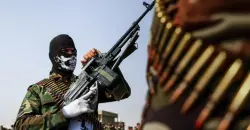
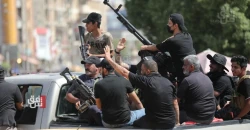
Integrating Iraq’s armed factions: The US vision and the risks ahead


Shafaq News
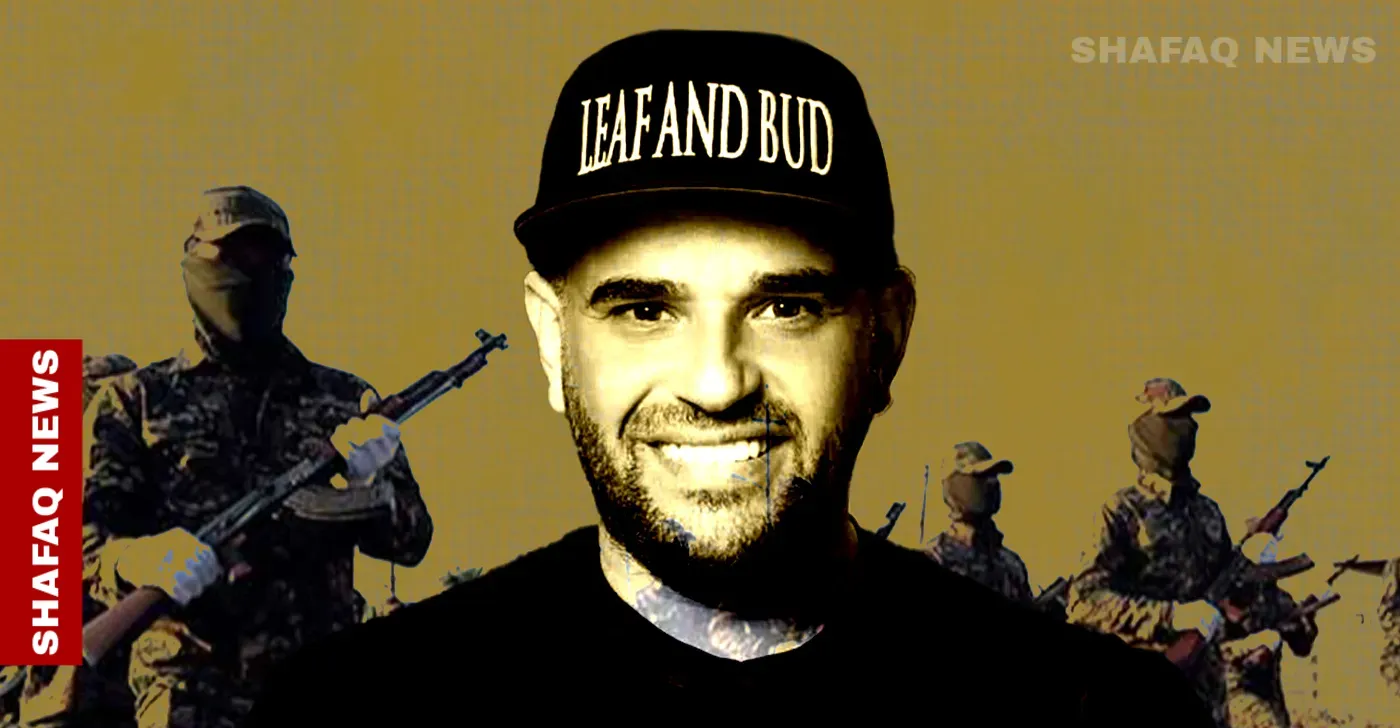
Rising tensions and expanding conflict zones across the Middle East have set a charged backdrop for US Special Envoy to Iraq Mark Savaya’s inaugural statement, which has reignited debate over Iraq’s sovereignty and the future of its national security.
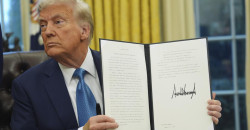
Savaya, appointed by US President Donald Trump on October 19, 2025, emphasized the need to unify Iraq’s armed forces under the central government’s authority and prevent any armed groups from operating outside the state’s control. His remarks, analysts say, reflect Washington’s intent to recalibrate the internal balance in Iraq amid fears that the Iranian-Israeli confrontation could spill over and destabilize the country.
The Iraqi-born American businessman of Chaldean-Assyrian descent said his mission focuses on promoting “stability, sovereignty, and prosperity” in Iraq. He called for a closer Baghdad-Erbil partnership and for “a fully sovereign Iraq, free from malicious foreign interference — particularly from Iran and its proxies.”
Read more: Mark Savaya: Who is Trump’s third Special Envoy to Iraq?
A New Regional Map
Security expert Mukhled al-Darib told Shafaq News that Washington’s latest move is part of a broader regional transformation unfolding since October 7, 2023. “The Middle East is witnessing the redrawing of a new map based on the emerging global economic order, alternative energy corridors, and maritime routes competing with China’s Belt and Road Initiative,” he said.
According to al-Darib, Iraq is inevitably affected by these shifts. “Baghdad’s past alignment with the so-called axis of resistance complicates the US project to consolidate its influence in the region.”
He added that the appointment of a special envoy to Iraq “is no coincidence,” pointing out that “just as Washington sent envoys to Gaza, Lebanon, and Iran, it now seeks to stabilize Iraq through a state-centered framework rather than allowing power to remain fragmented among parallel forces.”
Al-Darib predicted that Savaya will play a pivotal role ahead of Iraq’s next elections, attempting to “dilute Iranian influence.” However, this approach could make government formation “more complex, requiring new understandings between the state and the armed factions.”
Unified Vision
The latest wave of US sanctions on Iraqi entities and individuals signals a gradual escalation of pressure that Washington is employing to advance its policies in Iraq.
The United States has imposed sanctions on several Iraqi banks, companies, and businessmen linked to Iran-backed armed groups, moves that pressure Baghdad economically and politically.
By restricting access to essential dollar transactions, the measures have increased uncertainty over government budgets and the functioning of state institutions.
This has also deepened tensions within Iraq’s fragile political scene, raising concerns about the country’s ability to manage these mounting challenges.
Read more: Sovereignty strain: US sanctions trigger Iraq's liquidity nightmare
From Jerusalem, researcher Hussein al-Deek, an expert on Israeli and American affairs, told Shafaq News there is a joint American-European-Israeli consensus “to prevent the existence of any armed entities operating outside state authority in the Middle East — whether resistance groups or militias.”
“These groups emerged under Iranian influence in Iraq, Lebanon, Yemen, and Gaza,” al-Deek said. “But Washington and its allies have now decided to contain them.”
He noted that Iraq’s case differs from other arenas because there is no confrontation between Iraqi factions and Israel. “This makes integrating such groups into the Iraqi army a more practical option.” While US policy in Lebanon and Palestine relies on disarmament through force or political pressure, al-Deek believes Washington “is betting on Baghdad’s ability to regulate its relationship with the factions so that they become part of the formal security system under sovereign Iraqi decision-making.”
Considering Iraq, Lebanon, and Palestine each have distinct sociopolitical dynamics, Al-Deek argued, “No single model can be applied to all three,” pointing out that “the current US focus is tailored to Iraq, where balancing state and non-state actors remains achievable without confrontation.”
Between Theory and Practice
Jordanian political analyst Kamal al-Zaghoul told Shafaq News that the US position announced by Savaya marks a reassessment of its post-2003 policy in Iraq. “Washington now realizes that dismantling the Iraqi army was a strategic mistake,” he said. “Engaging with a national state is far more sustainable than relying on militias.”
Al-Zaghoul added that Trump, since his first term, had expressed support for strengthening national states and eventually reducing the US footprint in Iraq. “But he also recognized that withdrawal is impossible without first integrating the armed factions into state institutions.”
Still, al-Zaghoul cautioned against “forced integration,” stressing that Middle Eastern states are built on social contracts linking people and government. “Such a connection cannot be imposed by coercion — it must be negotiated.”
“If there is no shared belief in the concept of a national state, no American or foreign plan will succeed,” he continued, emphasizing that “the success of this US strategy depends on genuine intentions to promote stability and prosperity, not merely to control resources.”
The analyst concluded that if Washington’s motives are rooted in fairness and development, the project to integrate Iraq’s armed factions into the state “could succeed.” However, “if the policy remains a thinly veiled political maneuver, it risks collapsing once Trump’s term ends.”
Written and edited by Shafaq News staff.