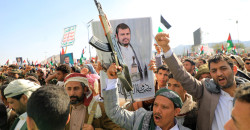
Houthi official cites ‘private channels’ with Iraqi factions


Shafaq News
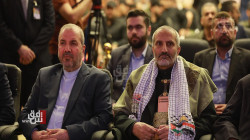
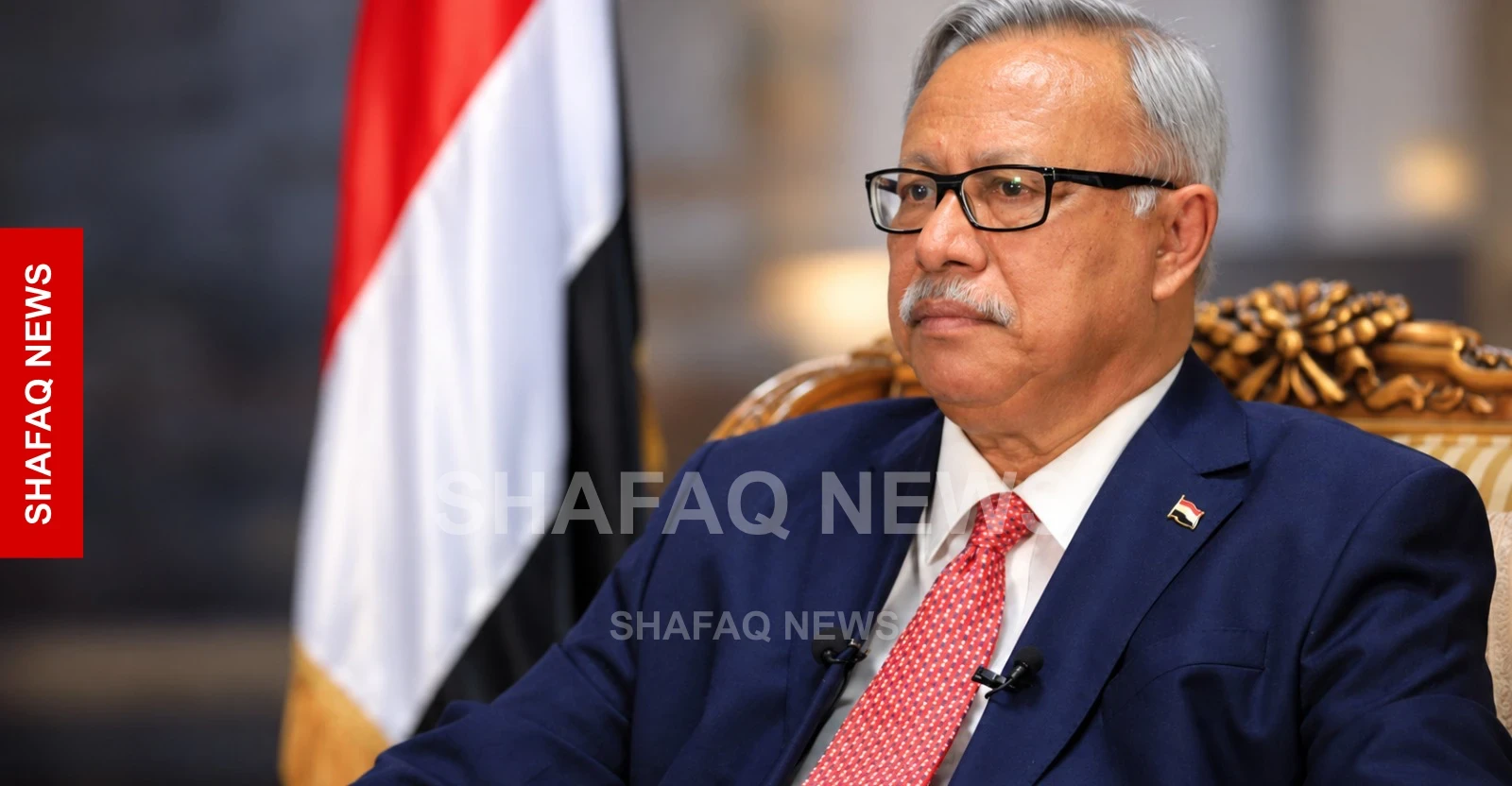
Abdulaziz Bin Habtour, a member of Sanaa’s Houthi-run Supreme Political Council and former prime minister, said Saudi vessels are excluded from guarantees for passage through the Bab al-Mandeb Strait and confirmed continuing coordination with Iraqi political and armed groups through “private channels.”
In an interview with Shafaq News, Bin Habtour also said Houthi authorities would continue military mobilization and work to develop a “war economy” in areas under their control.
Bin Habtour, who also serves as deputy head of the General People’s Congress in Sanaa, discussed Red Sea shipping, coordination among members of the “Axis of Resistance”, a regional network that includes the Houthis, Lebanon’s Hezbollah and several Iraqi armed factions, and prospects for de-escalation in Yemen amid widening fighting on the western coast and rising tensions with Saudi Arabia.
“Private Channels”
Bin Habtour said members of the “Axis of Resistance” coordinate politically, through the media, and on security and military matters, while maintaining that each party decides its level of involvement based on its own circumstances, capabilities and leadership.
Asked specifically about contacts between Sanaa and Iraqi political forces and armed factions, he said the groups’ leaders were in “continuous and ongoing coordination” through “private channels.”
He did not identify the Iraqi groups involved or clarify the extent of any military coordination.
On Iraq’s debate over bringing weapons under state control and reserving decisions on war and peace for the government, Bin Habtour praised Iraqi armed factions for their role in fighting ISIS and described their weapons as a “firm guarantee for protecting Iraq.”
He also criticized figures within Iraqi state institutions, claiming some could “leave the country” if ISIS mounted another major attack.
His remarks come as the Iraqi government moves ahead with plans to bring faction weapons under state control. Prime Minister Ali Al-Zaidi has outlined an initial 90-day period during which factions would refrain from attacks, followed by phased weapons handovers, with the process targeted for completion by June 2027.
The sovereignty debate has also become entangled with tensions between Iraq and Saudi Arabia.
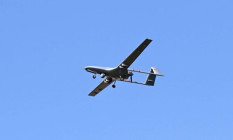
After drones struck Saudi Arabia’s East-West oil pipeline, Riyadh said they had been launched from Iraq. Baghdad opened an investigation, and the spokesman for Iraq’s commander-in-chief later said the attacks had originated from a site in Maysan province. The government removed the commander of Maysan Operations Command and formed an investigative panel.
Read more: Saudi pipeline attack deepens pressure on Al-Zaidi over armed factions
Asked about governments’ responsibility to prevent their territory from being used to attack other countries, Bin Habtour did not directly address the question. Instead, he criticized the presence of US military bases in Arab states and accused Arab governments of siding with Israel.
He also accused Saudi Arabia and other Gulf states of funding ISIS and other armed groups, without providing evidence for the allegations during the interview.
Bab Al-Mandeb
Bin Habtour described security in the Red Sea and Bab al-Mandeb as “stable and safe,” saying forces under the Sanaa authorities guarantee the passage of global trade through the strait, except for Saudi vessels.
Read more: Houthi advance raises stakes from Bab al-Mandeb to Iraq
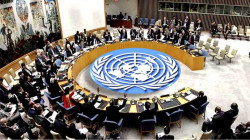
His description also contrasts with the UN's assessment of an increasingly volatile security environment around Bab al-Mandeb. On Sept. 15, UN Assistant Secretary-General Khaled Khiari told the Security Council that fighting had intensified along Yemen's west coast and that Houthi advances had heightened concerns over the strategic waterway, although commercial shipping flows at the time appeared largely unaffected. The IMO said four seafarers were killed in a Houthi attack on a merchant vessel on August 11 and urged shipping operators to assess risks before transiting the region.
War Economy
Asked about prospects for de-escalation and a renewed political process in Yemen, Bin Habtour offered no specific conditions for ending the escalation or a plan for restarting negotiations.
Instead, he called on forces allied with Sanaa to continue confronting their opponents amid the regional conflict and praised Iran and other members of the “Axis of Resistance.”
Read more: Iran war spreads to Iraq and Red Sea as regional risks mount
Another official in the Sanaa authorities, Zaid Al-Gharsi, previously told Shafaq News that an end to attacks on Saudi Arabia depended on ending the war and lifting what the Houthis describe as a blockade. He accused Riyadh of retreating from understandings over a peace roadmap.
Saudi Arabia rejects accusations that it has obstructed a settlement and holds the Houthis responsible for the latest escalation.
Efforts to establish a peace roadmap date to commitments announced by the United Nations in December 2023, including a nationwide ceasefire, payment of public-sector salaries, resumption of oil exports, reopening roads and easing restrictions on Sanaa airport and Hodeidah port. Those commitments have yet to produce a settlement ending the conflict.
Looking ahead, Bin Habtour said the Sanaa authorities would focus on maintaining their military and security capabilities, strengthening the domestic front, continuing “popular military mobilization” and developing a “war economy” to support the fighting.
The escalation has taken a growing toll on civilians. The UN refugee agency said on September 22 that intensified fighting, particularly along Yemen’s western coast, had displaced more than 130,000 people inside the country.