End of the road for Iraq’s iconic coaster buses in Kirkuk


Shafaq News – Kirkuk
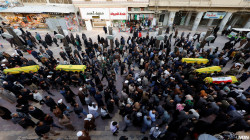
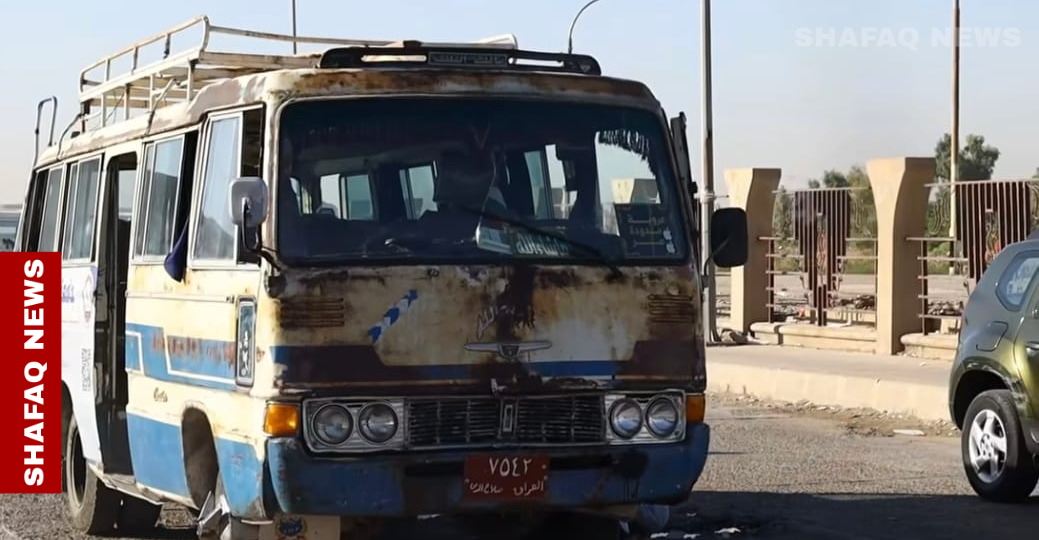
For more than four decades, the streets of Iraq—and Kirkuk in particular—have been inseparably tied to the public transport buses known as coasters, mid-sized vehicles with about two dozen seats. Imported mainly in the 1970s and 1980s, these Japanese-made buses, with their simple design and sturdy engines, became more than transport. They carried generations of employees, students, soldiers, and traders, weaving into the rhythm of daily life.
Despite wars, sanctions, and shifting technology, the aging coasters kept running. Today, however, they face what may be their final stop. A new directive in Kirkuk requires owners to convert their plates from “passenger” to “cargo,” effectively removing the vehicles from public service after decades of duty.
Abu Mustafa, who bought his bus in 1978, remembers its long journey. “It stayed with me through the war with Iran, the sanctions of the 1990s, and even after 2003,” he told Shafaq News. “We made spare parts by hand just to keep it alive. The coaster is like a soldier—it endures without complaint.”
For others, the decision threatens their livelihood. Salah Hassan, who still drives his 1980 model, depends on it to provide for his family. “This decision cuts off my income,” he told Shafaq News. “Yes, the bus is 40 years old, but it still serves people every day. Why should we be punished just because it is old?”
Abu Mohammed, now in his sixties, spoke of the bond built over decades. “The coaster has been with me for more than 40 years. It feeds my family. At this point, we are like one family.”
Traffic police argue the move is overdue. A source from Kirkuk’s Traffic Directorate explained to our agency that the measure is part of a national plan to reorganize transport. “These buses have exceeded their lifespan and no longer meet safety standards. The goal is not to target drivers but to protect lives and modernize the sector.”
Transport expert Ali Hassan Khalil agreed on safety concerns but faulted the approach, arguing that there should have been a gradual plan—soft loans for drivers to buy new vehicles or cooperative companies to reorganize their work—instead of “sudden decisions that leave them in constant conflict with traffic police.”
For drivers unwilling to comply, the streets have turned into a cat-and-mouse game with checkpoints and patrols, fines, and the threat of impoundment. “It’s like being hunted,” one driver said. “Every working day is now filled with worry and attempts to avoid the eyes of traffic police.”
Many in Kirkuk see the phasing out of coasters not only as the end of a transport era but the loss of a shared companion. One longtime passenger told Shafaq News, “The coaster is not just a bus. It is our diary. We rode it as children, as students, as workers. With its disappearance, a large part of our story disappears too.”