Early 2026 global tensions raise fears of a new phase of proxy conflict


Shafaq News
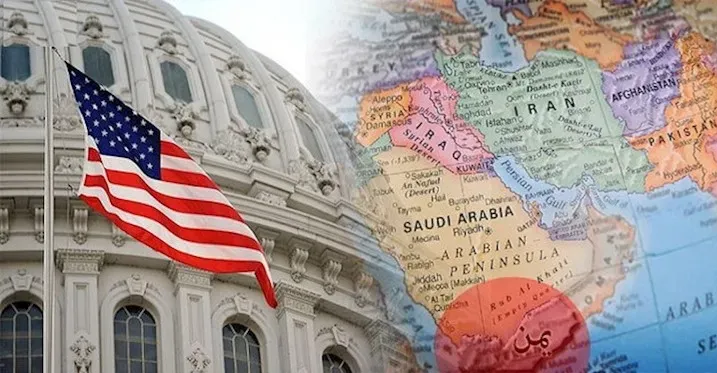
Just days into 2026, a wave of escalating developments, from US attacks in Venezuela and massive protests Iran to intensified Saudi-led airstrikes in Yemen, has sharpened concerns that the international system is sliding into a new phase of conflict, one defined less by direct wars and more by proxy battles, internal destabilization, and geopolitical pressure with potential repercussions for Iraq and the wider region.
Observers, interviewed by Shafaq News, argue that the compressed timing of these developments is no coincidence. Instead, it reflects a broader international shift led by the United States and its allies toward reshaping conflict management. Rather than large-scale military invasions, pressure now unfolds through destabilization from within -street movements, factional conflicts, and selective military strikes- raising concerns that Iraq could soon be drawn deeper into this evolving landscape.
From Moscow, Asif Melhem, head of the GSM Center for Research and Studies, frames current developments as part of a wider pattern of “managed chaos.” In his view, unrest in places such as Iran, Lebanon, Gaza, and Yemen may each have local triggers, but they ultimately intersect with US-led global strategy.
Melhem argues that internal turmoil provides Western powers with leverage. Economic protests in Iran, for example, “allow pressure to be repackaged as a democracy and governance issue, creating pathways for political and institutional coercion through international bodies.” Similar instability in Yemen, Lebanon, and Syria, in his opinion, opens space not only for intervention but also for limiting the influence of rival powers such as Russia and China.
Ahmed Fouad Anwar, professor of Zionist studies at Alexandria University, describes the current phase as a “reproduction of proxy wars in a new format.” According to Anwar, confrontations have shifted from direct clashes to “backyard battles,” where local crises become bargaining chips among major powers.
He warns that Iraq could be pulled into this pattern through internal unrest, mirroring scenarios seen in Yemen and Sudan. For Anwar, conflicts in Gaza and Lebanon illustrate how indirect pressure can achieve strategic aims without formal declarations of war, turning regional files into negotiable assets within broader international deals.
From Ramallah, international relations expert Ashraf Akka goes further, describing the current moment as a “clear marker of a new regional phase.” He contends that Iraq sits at the center of a strategy aimed at containing Iran and dismantling any political project that challenges US–Israeli–Western influence.
Akka argues that fragmentation across the Middle East is no longer theoretical but imminent, driven by what he views as a transparent push for dominance and resource control. In his assessment, the region is uniquely exposed due to implicit understandings among major powers that tolerate or enable such interventions.
Ahmed Al-Yasiri, head of the Arab-Australian Center for Strategic Studies, links the current escalation to political timing rather than crisis. He believes many of these files were effectively postponed until 2026.
Al-Yasiri points to Yemen as an example of diverging priorities between Saudi Arabia and the UAE, while describing Iran’s protests as internal pressure designed to pave the way for external targeting. Venezuela, meanwhile, has re-entered Washington’s strategic equation, resembling a renewed attempt at political change rather than isolated confrontation.
In Baghdad, political scientist Issam Al-Feyli sees a coherent US approach aimed at neutralizing perceived threats, whether in Venezuela or Iran. The methods vary, from military pressure to street mobilization, but the strategic outcome remains consistent.
Al-Feyli notes that US engagement in Venezuela took a direct military-political form, while Iran faces pressure through internal unrest, warning that Washington may act either directly or through allies, particularly Israel, which he says is preparing a distinct form of escalation against Iran. Talk of a brief “12-day war,” he suggests, may have been only an opening chapter.
Regarding Iraq, Al-Feyli stresses that recent messages delivered by US envoy Savaya carried explicit demands: disarmament of factions, anti-corruption measures, and an end to external interference. He draws parallels with pre-intervention signals sent to Venezuela, cautioning that no region should assume immunity from US targeting.
For Al-Feyli, the announcement surrounding the arrest of Venezuela’s president and his wife served as a warning beyond Caracas, signaling to leaders worldwide that defiance of US interests could carry personal and political consequences.
Taken together, these perspectives converge on a shared conclusion: the international system is entering a phase where instability itself becomes a strategic instrument. The Middle East, already fractured by unresolved conflicts, appears especially vulnerable.
US Defense Secretary Pete Hegseth recently declared that Washington can “impose its will anywhere, at any time.” And analysts interpret such rhetoric as confirmation that pressure campaigns, whether overt or indirect, will continue. For Iraq and its neighbors, the challenge lies in navigating this environment without becoming the next testing ground for a conflict whose tools may have changed, but whose costs remain devastating.
Written and edited by Shafaq News staff.