EXPLAINER: Kirkuk installs its first Turkmen Governor in two decades, but not everyone accepts it


Shafaq News
A political session held in a Baghdad hotel nearly two years ago was supposed to end a governance deadlock in one of Iraq's most divided provinces. Today, the parties who attended it cannot agree on what was decided.
Kirkuk's Turkmen community is demanding that Governor Rebwar Taha step down, claiming a power-rotation agreement requires him to hand the post to a Turkmen figure after two years. Taha's office says he is still the governor, is performing his duties, and has not resigned. A council member says a written resignation was part of the original deal. The governor's office says no such letter exists.
Taha, a senior official of the Patriotic Union of Kurdistan (PUK), says he is still the governor and has submitted no resignation. A member of the same council that elected him says the resignation was submitted in writing from the very beginning, as part of the original political agreement.
Kirkuk does not do quiet politics. But even by its own standards, this is a consequential moment.
A Province Built for Deadlock
Sit Kirkuk on a map, and everything becomes clear. Oil beneath it, four communities above it, and two governments —Baghdad and Erbil— each insisting it belongs to them.
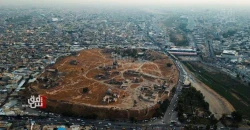
Kirkuk is a province in north-central Iraq, sitting atop some of the country's most significant oil reserves. It is home to four communities —Kurds, Arabs, Turkmen, and a smaller Christian minority —each with distinct political identities, historical grievances, and competing claims to the city itself. Kurds refer to Kirkuk as the "Jerusalem of Kurdistan." Turkmen regard it as a historic city. Arabs, many of whose families were resettled there under Saddam Hussein's Arabization policies, consider it home regardless of how it is classified politically.
The province is formally designated a "disputed territory" under Article 140 of the Iraqi Constitution, which requires a three-stage process —normalization, census, and referendum— to determine whether Kirkuk falls under the Kurdistan Regional Government (KRG) in Erbil or remains under federal authority in Baghdad. The process was supposed to conclude by 2007. Nearly two decades later, it remains incomplete, leaving Kirkuk in a constitutional vacuum that makes every political appointment feel like a sovereignty claim.
Read more: Discover Iraq: Kirkuk, a city of oil, culture, and conflict
Eighteen Years Without a Local Government
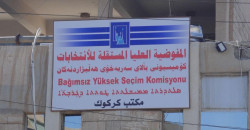
Kirkuk held no provincial council elections between 2005 and 2023 —eighteen years during which the province was governed without a locally elected body, deepening every tension it carries.
When elections finally took place on December 18, 2023, they produced a 16-seat council distributed across Kirkuk's communities as follows:
-Kirkuk Our Strength and Our Will coalition (PUK-affiliated): 5 seats
-Arab Alliance: 3 seats
-Leadership Alliance (Arab-affiliated): 2 seats
-Kurdistan Democratic Party (KDP): 2 seats
-Turkmen Front: 2 seats
-Al-Ourouba Alliance (Arab-affiliated): 1 seat
-Babylon Movement (Christian quota): 1 seat
The fractured result made coalition-building inevitable and, given Kirkuk's history, extremely difficult. Eight months passed without a governor.
The Baghdad Hotel Agreement
The deadlock broke —partially— in August 2024, when Prime Minister Mohammed Shia Al-Sudani convened a political session at the Al-Rasheed Hotel in Baghdad. The session was attended by nine of the sixteen council members: five from the PUK-affiliated coalition, three Arab members who broke from their bloc's boycott position, and one member from the Babylon Movement. The KDP's two members, the Turkmen Front's two members, and three Arab members refused to attend.
With nine present, the session elected Rebwar Taha as governor and Ibrahim Mohammed Al-Hafez as council president. It was only the second time since 2005 that Kirkuk had a locally elected governing body.
The session was immediately contested. The KDP stated it had received no official invitation. The Turkmen Front announced it would challenge the session in court. Arab members who boycotted rejected the outcome as legally invalid, citing Article 13 of the Provincial Elections Law, which requires the formation of Kirkuk's local government by consensus and participation of all winning blocs.
What made the session politically viable at all was a power-sharing agreement claimed by some participants: the governorship would rotate among Kirkuk's components. Taha would serve for two years, after which a Turkmen figure would assume the post —a historic first. That agreement, if it existed as described, is now the core of the dispute.
The Crisis, Two Years Later
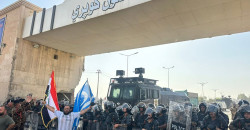
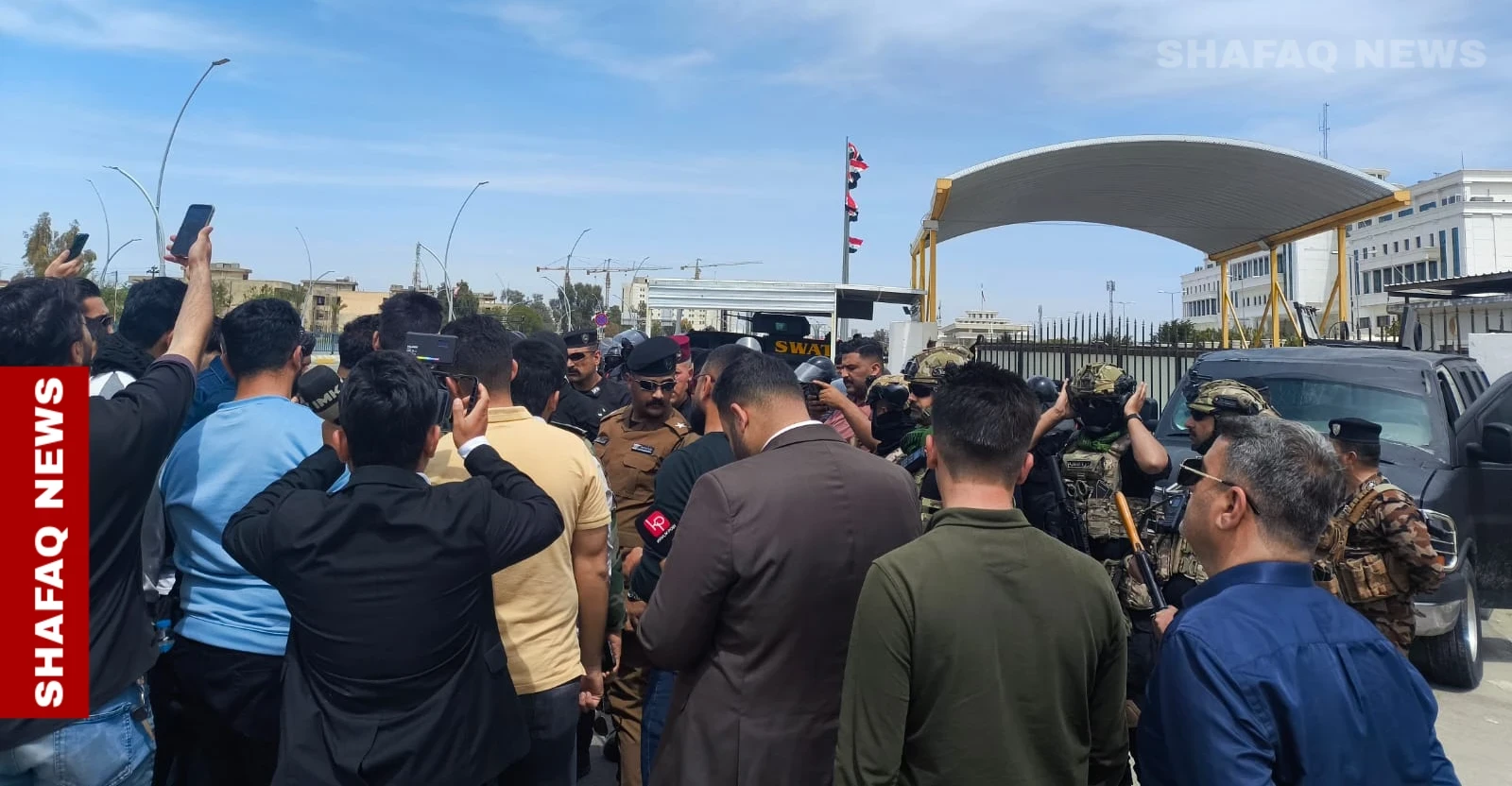
Two years have now passed since Taha took office, and the Turkmen community is demanding what it says was promised. Protests have been held, political pressure has intensified, and efforts are underway to convene a council session that could move toward impeaching Taha if he does not step down voluntarily.
At the center of it all is a question that the parties to the original Al-Rasheed Hotel agreement cannot resolve between themselves: what exactly was agreed that night, and whether any of it is binding.
Council member Raad al-Saleh told Shafaq News that Taha submitted a written resignation at the outset, as part of the original political agreement, and that the rotation commitment is binding. Taha's own media office told Shafaq News that the governor continues to perform his duties officially and has submitted no resignation letter to the provincial council.
Both statements cannot be true. And in Kirkuk, disputed facts have a history of becoming political crises.
The numbers alone make impeachment possible without the PUK bloc's cooperation. The Arab blocs collectively hold six seats, the Turkmen Front holds two, and the KDP holds two —a combined ten seats against the PUK coalition's five, with the Babylon Movement's single seat potentially decisive. Whether those blocs can unify around a shared candidate and a legal mechanism for removal is the political question Kirkuk is now trying to answer.
For the Turkmen community, a Turkmen governor in Kirkuk would be without precedent in the post-2003 era. Losing the rotation now, after accepting a minority role in the 2024 formation process, would confirm what Turkmen political leaders have long argued: that agreements made to include them are abandoned when they become inconvenient.
For the PUK, yielding the governorship under pressure, particularly to a non-Kurdish figure, carries its own political costs in a province the Kurdish movement has historically treated as inseparable from its national project.
Kirkuk's First Turkmen Governor
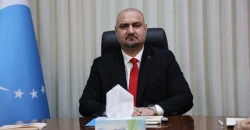
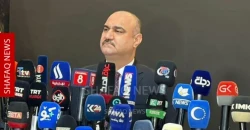
The deadlock broke on Thursday, when Kirkuk's provincial council convened and voted to install Mohammed Samaan as governor —the first Turkmen to hold the post in the post-2003 era. The session confirmed quorum, according to Ahmed Ramzi of the Turkmen Iraqi Front, who described the vote as a step toward ending administrative paralysis and ensuring governance that reflects Kirkuk's diverse communities.
Under the broader rotation framework agreed at the Al-Rasheed Hotel, outgoing governor Rebwar Taha is set to assume the post of first deputy governor, with a parallel arrangement for the deputy council speaker position —a transition that the PUK framed not as a concession but as the routine implementation of a prior agreement. PUK spokesman Karwan Gaznei confirmed his party's participation in the session, pointing out that the rotation is "a normal democratic process" and "no position is a political inheritance."
KDP Parliamentary bloc leader Shakhwan Abdullah called the vote "an illegal process conducted outside the will of Kirkuk's people," while KDP spokesman Mahmoud Mohammed said the party could not accept arrangements imposed "in bad faith and without the participation of parties that represent Kirkuk's steadfast people."
The KDP, which holds two seats on the council and boycotted the original August 2024 formation session, said it would only recognize decisions made with the full participation of all political parties and community representatives.
No Turkmen figure has governed Kirkuk since the fall of Saddam Hussein in 2003, more than two decades during which the province's smallest major community watched Kurds and Arabs contest a city they consider historically their own. Thursday changed that, however, provisionally.
The KDP's rejection leaves the session exposed to the same legal challenges that shadowed the original August 2024 formation, and a council decision opposed by one of the province's major ethnic blocs has rarely been the last word in Kirkuk. The agreement brokered at the Al-Rasheed Hotel —dismissed as illegitimate the night it was signed, contested for two years, and now partially implemented over renewed objections— has nonetheless produced something the province had not seen in a generation.
For a community that has long argued its role is acknowledged only when convenient, that is not a small thing. Stable governance in Kirkuk has always been the destination that nobody could agree on how to reach. Thursday was one more step in that direction —contested, incomplete, and, for now, real.
Written and edited by Shafaq News staff.