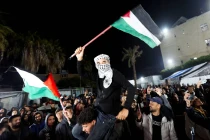
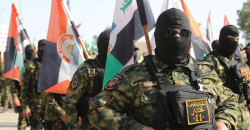
Diverging views emerge on disarming Armed Factions in the Middle East


Shafaq News
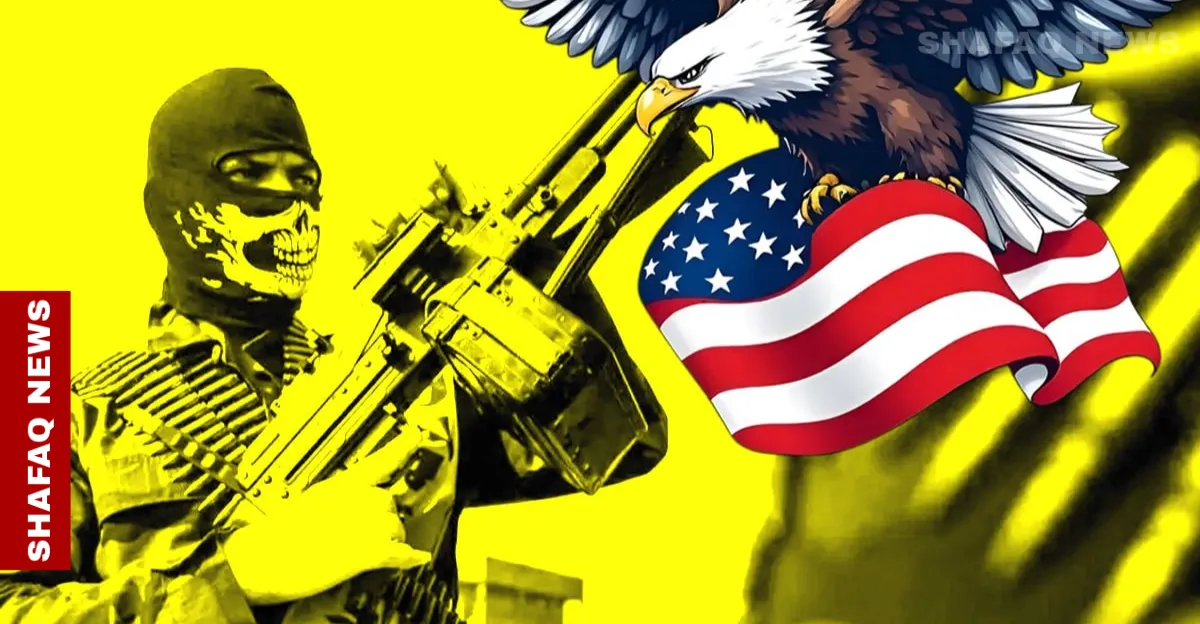
International pressure intensifies, and calls grow louder to confine weapons to state authority. This renewed debate unfolding across the Middle East over the future of armed factions in Iraq, Lebanon, Gaza, and Yemen come amid an open-ended war in Gaza, escalating tensions in the Red Sea, and sustained US pressure on Baghdad and Beirut—set against the firm insistence of factions aligned with the so-called “Axis of Resistance” that their weapons constitute an existential guarantee rather than a negotiable asset.
Within this context, Lebanese academic Ghazi Qansou, Dean of the College of Islamic Studies at the Islamic University of Lebanon, offers a comparative analytical framework to assess the likelihood of disarmament—or confrontation with Washington—among these groups. His evaluation rests on four core criteria: the nature of engagement with the United States, independent military capability, linkage to state structures, and the possibility of integrating arms into a political settlement.
Speaking to Shafaq News, Qansou considered Yemen’s Ansarallah movement (the Houthis) ranks as the most intransigent force. The group has engaged in direct military confrontation with the United States in the Red Sea and Bab al-Mandab, sustaining its operations despite US-British strikes. More critically, the Houthis control territory, including the capital Sanaa, and have transitioned from an insurgent movement into a de facto armed sovereign actor.
Read more: Zero-sum game: Can the Iran-Israel conflict push Iraq toward the front line?
This transformation, Qansou argues, renders the prospect of disarmament “nearly impossible.” The Houthis’ weapons are “no longer a tactical tool but an integral component of their governing authority and regional leverage.”
Hezbollah follows closely in Qansou’s ranking, described as “strategically defiant and tactically cautious.” While the group does not confront Washington directly, it has constructed a long-term deterrence equation against Israel.
Qansou links Hezbollah’s arsenal directly to the persistence of the Israeli threat, warning that disarmament would collapse the existing deterrence balance. However, he notes a narrow theoretical margin for compromise—conditioned on comprehensive security guarantees and a central role for the Lebanese state as a sponsor of any final settlement.
Hamas, Qansou contends, occupies a different category. The movement is “existentially defiant rather than politically confrontational” toward the United States. It does not fight Washington directly but engages Israel, which enjoys US military and political backing.
In the absence of a protective state or a viable political alternative, Hamas’ weapons remain non-negotiable. Yet Qansou emphasizes that the group’s ability to impose conditions on Washington is limited, particularly given Gaza’s isolation and the overwhelming power imbalance.
Ali Baraka, Head of National Relations at Hamas Movement, echoed Qansou’s assessment about Hamas. Israel has failed to honor the Sharm el-Sheikh ceasefire agreement reached on October 10, Baraka told Shafaq News. “As long as Israeli attacks on Gaza persist, demands to disarm the resistance are illogical.”
“Hamas cannot abandon its weapons while occupation and aggression continue,” he stressed, adding that resistance arms will remain until Palestinians secure their full legitimate rights.
Baraka framed the struggle as a national liberation phase rooted in an occupation dating back to 1948, asserting that armed resistance remains a historical and national path pursued by Palestinian factions for decades.
Read more: Lebanon: A nation unraveling tensions overshadow independence
At the bottom of Qansou’s scale are Iraq’s armed factions, which he views as the least defiant and most susceptible to pressure. Their partial integration into state structures and their regionally managed relationships allow for a degree of “rhythm control,” he argues.
While full disarmament remains unrealistic, Qansou sees space for restructuring and tighter regulation within a state framework—reflecting Baghdad’s unique balancing act between domestic sovereignty and external pressure.
Iraqi political analyst Saeed Al-Badri, however, casts doubt on Washington’s credibility. He pointed out that the United States “has failed to offer a fair vision that protects regional societies, instead continuing its military and political backing of Israel.”
According to Al-Badri, armed factions are unlikely to surrender their weapons and may opt for confrontation if disarmament is imposed. From their perspective, he said, arms represent the last line of defense against what they perceive as Israeli-American domination projects in the region.
From Yemen, Sufyan Al-Omari, Secretary-General of the Democratic People’s Party (Hashd), paints a starker picture. He believes the region is accelerating toward a decisive, existential escalation.
Al-Omari told Shafaq News that Washington views its regional influence as being at stake, while Israel’s right-wing leadership sees perpetual escalation as essential for political survival. The absence of a political horizon—amid international paralysis, the war in Ukraine, and heightened tensions with Iran—deepens the confrontation.
Yet he suggests this phase, while more painful, could be shorter due to its immense cost to the global economy, energy security, food supplies, and international supply chains.
Dr. Arif Al-Ameri, Coordinator of Relations for anti-aggression political parties in Yemen, reinforces this assessment, describing the abandonment of resistance weapons at this stage as “unlikely.” Threats persist, he argues, while adversaries continue to arm themselves with Western and regional backing.
Al-Ameri criticizes disarmament calls as devoid of real guarantees and rooted in double standards, warning that any attempt to impose such a path “will fail and may trigger decisive confrontations”—partial or comprehensive—across multiple arenas.
In contrast, Professor Hussein Al-Deek, a specialist in international relations at the University of Haifa, advances a fundamentally different reading. He explained to Shafaq News that a US-European-Arab decision has crystallized around preventing the continued existence of what he terms “non-state actors” in the Middle East.
Al-Deek told Shafaq News that the preferred route begins with internal political understandings. If these fail, he warned, Israeli or American military force would be imposed to eliminate weapons outside state authority.
He also points to developments in the West Bank, sustained pressure on Gaza and Lebanon, and diplomatic efforts in Iraq as indicators of this trajectory. In his view, Iraq’s reintegration into the “Arab fold” cannot occur while armed factions remain beyond full state control.
Read more: The War that Never Ends: A century in Palestine
Taken together, these perspectives underscore a central paradox: while international actors increasingly frame disarmament as a prerequisite for regional stability, armed factions across the Middle East view their weapons as inseparable from survival, deterrence, and political leverage.
With wars ongoing, guarantees absent, and trust deeply eroded, the gap between external demands and internal realities continues to widen—leaving disarmament less a policy option than a distant hypothetical in an increasingly militarized regional landscape.
Written and edited by Shafaq News staff.