Discover Iraq: Baghdad, a city shaped by conflict and enduring hope


Shafaq News
An in-depth portrait of Baghdad, Iraq’s capital, tracing how decades of conflict, cultural resilience, and urban life continue to shape the city and its people.
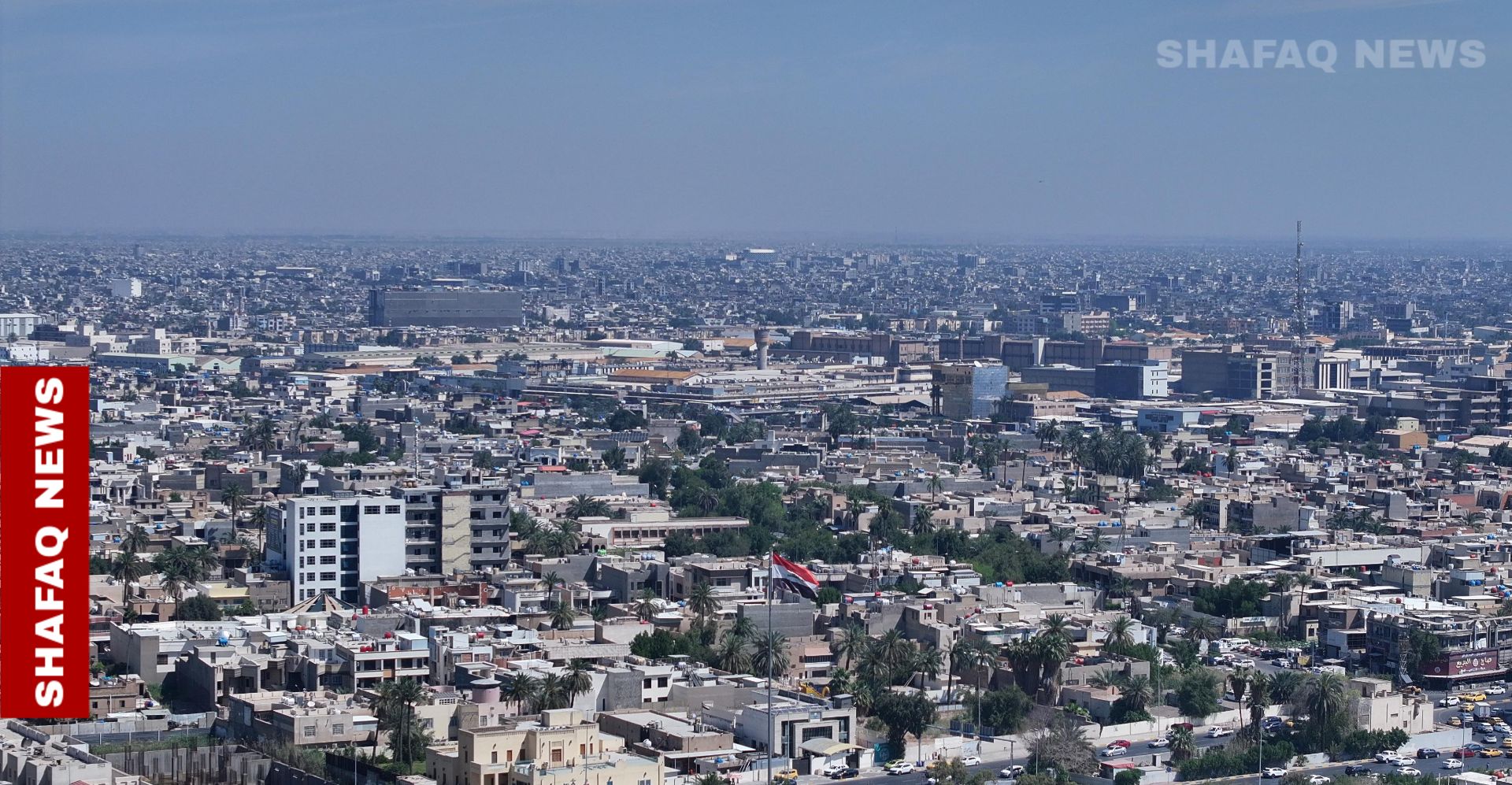
Baghdad, the capital of Iraq and long a cradle of civilization, stands as both a witness to history and a survivor of its storms. Founded in 762 CE during the height of the Abbasid Caliphate, the city once symbolized a golden age of knowledge, culture, and power.
Today, scarred by decades of conflict, political upheaval, and economic hardship, Baghdad remains Iraq’s political, cultural, and intellectual heart, where ancient legacy and modern struggle exist side by side.
The People of Baghdad
Baghdad’s demographic landscape reflects centuries of migration, settlement, and transformation. Once the historic center of Islamic scholarship, the city remains Iraq’s most populous urban area, with an estimated 8.5 million residents.
Arabs constitute the majority, but sectarian identity continues to influence the capital’s social structure. According to the Iraqi Ministry of Planning’s 2024 estimates, 80 to 82 percent of Baghdad’s residents are Shiite Muslims, while Sunnis account for approximately 17 to 19 percent. This distribution is reflected geographically: districts such as Al-Sadr City, Al-Kadhimiya, and Al-Hurriya are predominantly Shiite, while areas like Al-Adhamiyah, Al-Dora, and parts of Al-Ghazaliya are largely Sunni.
Sectarian divisions intensified after the 2003 US-led invasion. The ensuing conflict triggered widespread displacement and redrew the city’s demographic boundaries. Urban sociologist Dr. Leila Hassan described the shift as rapid and transformative. “Entire districts shifted demographically in a matter of months. The city's social fabric was ripped apart and re-stitched along sharper lines of identity,” she stated. Between 2006 and 2008, the International Organization for Migration recorded more than 1.5 million internally displaced people, many of them fleeing sectarian violence within Baghdad.
Ethnic diversity remains a prominent feature of the capital. Kurdish communities are well-established in neighbourhoods such as New Baghdad and Karrada. Many Kurdish families settled in the city during the Ba’athist period, drawn by educational and economic opportunities or seeking refuge from unrest in northern Iraq. Turkmen—mostly Shiite with a smaller Sunni presence—reside across several areas of Baghdad, maintaining cultural continuity through family networks and local organizations.
Christian populations, including Chaldeans, Assyrians, Syriacs, and Armenians, once played a significant role in Baghdad’s social fabric. Communities flourished in districts like Karrada and Mansour, but decades of instability have led to a steep decline. From over 50,000 in the late 1990s, Baghdad’s Christian population has fallen to fewer than 10,000, largely due to targeted violence and waves of emigration. The Armenian community, once centered in Camp Sarah, has also seen a reduction in numbers, although churches and cultural institutions remain active.
Other religious minorities, though diminished in size, continue to exist within the capital. The Sabeans-Mandeans—an ancient Gnostic sect—number only a few hundred, with many employed in skilled trades or the professional sector. The Yazidi population, though historically limited in Baghdad, has grown since 2014, as survivors of ISIS's attacks sought safety in the city.
Baghdad’s linguistic environment also reflects its multicultural heritage. The dominant dialect is Baghdadi Arabic, which carries traces of Persian, Turkish, and Aramaic influence. Within households and community centers, languages such as Kurdish (mainly Sorani), Syriac, Armenian, and Persian are still spoken. Institutions like the Iraqi Kurdish Cultural Center continue to offer programs in language and cultural preservation.
“Baghdad is not just a city, it’s a linguistic archive, a living museum of Iraq’s multi-ethnic soul. But like many museums, parts of it are fading,” commented Dr. Hussein al-Taie, an anthropologist at the University of Baghdad.
The Political Capital
Baghdad remains the country’s political center. The capital’s symbolic heart, the Green Zone, encapsulates the country's paradox: a fortified enclave of government institutions and foreign embassies, isolated by concrete walls and checkpoints, set apart from the chaos beyond.
“The Green Zone is a republic within a republic,” political analyst Hisham al-Hashemi observed before his assassination in 2020.
Since Saddam Hussein's fall in 2003, Baghdad has experienced continual power struggles involving political factions, sectarian blocs, and regional powers. The 2005 sectarian-based power-sharing model, designed to stabilize the post-invasion state, has entrenched patronage networks and weakened institutions instead.
Transparency International ranked Iraq 154th out of 180 in its 2023 Corruption Perceptions Index. According to Parliament’s Integrity Committee, roughly $239 billion in public funds have been misappropriated since 2003.
“Our state is run like a bazaar,” said former Electricity Minister Luay al-Khatteeb. “Everything is for sale, from contracts to public office.”
Adding to this complex landscape is the expanded presence of paramilitary groups in the capital. Over 40 factions operate under the Popular Mobilization Forces (PMF). Though formally part of the state security structure, some groups function independently, manning checkpoints, managing detention centers, and controlling localized services.
Yet amid power consolidation and institutional erosion, Baghdad has emerged as the beating heart of civic resistance. In 2019, the Tishreen Uprising brought tens of thousands to the streets, demanding jobs, political accountability, and better services. Over 600 people were killed and more than 20,000 injured, many in Baghdad’s Tahrir Square.
Protesters transformed the square into a defiant encampment complete with kitchens, clinics, and libraries. Walls and underpasses became canvases of resistance. “Every wall in Tahrir told a story,” said muralist Safa Mosafer. “We wrote the future in paint and blood.”
The Economic Pulse
Baghdad’s economic landscape is dominated by a bloated public sector. More than 60% of Iraq’s workforce is employed by the government, often in overlapping or redundant positions. In 2024, salaries for public sector workers consumed over 41% of the federal budget, limiting fiscal space for investment in infrastructure, education, and healthcare.
The private sector, meanwhile, remains underdeveloped. Complex regulations, widespread corruption, and a lack of investor confidence have stifled business activity. Iraq ranked 172nd out of 190 countries in the World Bank’s 2024 ease of doing business index, underscoring the bureaucratic hurdles facing entrepreneurs.
With limited access to formal employment, many Baghdad residents depend on the informal economy to survive. The Iraqi Federation of Industries estimates that informal activity, ranging from street vending to unregistered businesses, accounts for around 45% of the capital’s economic activity. Markets such as Al-Shorja and Bab al-Muadham are crowded with vendors navigating daily uncertainty.
“If I don’t sell tea here, my family doesn’t eat,” said Ahmed, 27, who works near Tahrir Square. “There are no jobs, no support, this is all we have.”
Youth unemployment also remains a critical issue. Nationally, over 36% of Iraqis aged 15 to 24 are jobless. In Baghdad, the figure is believed to be higher, particularly among university graduates. Government statistics show that 61% of graduates are either unemployed or underemployed.
The lack of opportunities has prompted many to leave. In 2023, more than 29,000 Iraqis applied for asylum in Europe, a large number of them from Baghdad.
For families remaining in the city, remittances from abroad have become an important source of income. Iraqis living overseas sent home $9.1 billion in 2024, a 12% increase from the previous year, according to the Central Bank of Iraq. In eastern and southern Baghdad, such transfers often offer more financial stability than state salaries or social assistance.
The city’s real estate market has also undergone a dramatic shift. Once driven by post-war reconstruction, the sector is now dominated by speculative investment and opaque land deals. Transparency International Iraq estimates that up to 30% of Baghdad’s public land has been illegally seized or sold through fraudulent contracts since 2019.
Land mafias comprising politically connected business figures are accused of manipulating land ownership and project development. Meanwhile, gentrification is transforming areas such as Al-Mansour, Jadriya, and parts of Karrada. Gulf-based developers and other international firms have invested heavily in high-end residential and commercial projects, driving up property prices.
As wealthier residents move in, lower-income communities are increasingly pushed to the city’s periphery, neighbourhoods like Sadr City, Al-Shaab, and Al-Hurriya, where public services are limited.
“Baghdad is turning into two cities,” said urban economist Dr. Saba Al-Ani. “One that is modern, secure, and wealthy, and another that is overcrowded, underserved, and deteriorating.”
Where Culture Lives
Among the city’s most prominent heritage sites is Al-Mustansiriyah School, founded in 1227 during the Abbasid era. Situated along the Tigris River, the institution once stood among the Islamic world’s leading centres of learning, offering education in medicine, astronomy, law, and mathematics. According to Iraq’s General Authority for Antiquities and Heritage, the school now receives more than 150,000 visitors annually, including students and participants in cultural festivals.
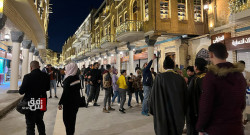
Al-Mutanabbi Street continues to function as a central hub for Baghdad’s literary and artistic life. Named after the 10th-century poet al-Mutanabbi, the street draws large crowds every Friday. Book vendors line the sidewalks while cafés host exhibitions and poetry readings. “This is the place where ideas breathe,” observed Haydar al-Taie, a philosophy graduate from the University of Baghdad. Severely damaged in a 2007 bombing, the street was later restored and has regained its role as a cultural gathering point.
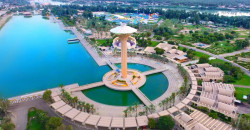
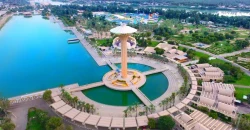
Interest has also increased in the Baghdad Tower, a 205-meter structure that reopened after years of closure due to damage sustained during the 2003 invasion. The tower, which includes a revolving restaurant and observation deck, offers panoramic views of the city. The Ministry of Tourism and Antiquities reports that domestic visits to the tower and nearby parks rose by nearly 18% in 2023 compared to the previous year.
In the same area, Al-Zawraa Park—the city’s largest public green space—offers amusement rides and access to the Baghdad Zoo. Once home to more than 600 animals, the zoo saw its population fall to under 50 during the 2003 conflict. Years of recovery have helped raise the number of animals to over 200. “For many families, it’s more than just a park,” reflected zoo director Abu Kareem. “It’s a space to breathe again.”
The Iraqi Museum remains a key destination for those interested in Mesopotamian history. Housing over 170,000 artifacts, the museum reopened in 2015 after a major looting in 2003, during which more than 15,000 items were stolen. Over 7,000 of those have since been recovered. Among the museum’s highlights are pieces from Ur, Babylon, Assyria, and Sumer, including the iconic Uruk Vase. The Ministry of Culture recorded more than 200,000 visitors in 2023.
Religious landmarks continue to draw visitors as well. Kadhimiya, an administrative district of Baghdad most famously known as a holy city for Twelver Shia Muslims, is distinguished by the Al-Kadhimiya Mosque, a highly revered shrine containing the tombs of two significant Shia Imams.
In Adhamiyah, the Abu Hanifa Mosque commemorates Abu Hanifa al-Nu‘man, the 8th-century scholar and founder of the Hanafi school of Islamic jurisprudence. Known for its Ottoman-style architecture, the mosque underwent recent restoration supported by Iraq’s Sunni Endowment and the Turkish Cooperation and Coordination Agency (TİKA).
Despite ongoing challenges, tourism officials say Baghdad is seeing a modest increase in domestic and regional interest. The Ministry of Tourism has identified more than 10 restoration and infrastructure projects launched since 2023 to support heritage sites and improve access.
Written and edited by Shafaq News staff