Contracts over conflict: How PM Al-Sudani secured stability in Iraq


Shafaq News
Explosions targeting US bases in Iraq were once almost daily events, leaving casualties and pushing the country to the brink of a wider confrontation. These attacks were more than military strikes — they were bargaining tools in the rivalry between Washington and Tehran, shaping the atmosphere of nuclear talks and regional diplomacy.
Today, the scene has changed dramatically. Under Prime Minister Mohammed Shia Al-Sudani, attacks on US bases have dropped to unprecedented lows. Armed factions that once spearheaded escalation now act with restraint, driven by political and economic calculations, and influenced by the government.
Analysts describe this period as a rare phase of stability, a sharp departure from the turbulence of previous administrations.
The Numbers Behind Stability
A special Shafaq News monitoring shows that in the first year of Al-Sudani’s term (October 2022–October 2023), no attacks were recorded on US bases — a striking contrast with the violent months preceding his government’s formation.
Across his four-year tenure to date, attacks have not exceeded 50. By comparison, former Prime Minister Mustafa Al-Kadhimi’s two years in office (2020–2022) saw around 150 attacks. The frequency, scale, and coordination of strikes under Al-Sudani reflect a fundamental change in engagement rules.
Why Al-Sudani Succeeded
Security analyst Ahmed Al-Sharifi attributes this decline to a mix of political, economic, and security strategies. “The factions that helped form Al-Sudani’s administration deliberately refrained from actions that could weaken it — particularly after receiving privileges and contracts that bolstered their economic resources,” he told Shafaq News.
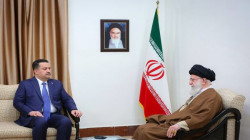
Unlike his predecessors, Al-Sudani gave these groups representation within the Coordination Framework (CF) and influence over decision-making, creating a sense of ownership and reducing incentives for unilateral attacks.
At the same time, lucrative contracts and investment opportunities tied factions into the formal economy, making stability more profitable than confrontation.
Enhanced security coordination also mattered. Iraqi intelligence capabilities improved, and cooperation with US forces tightened, making attacks harder to plan and easier to prevent. Regional dynamics played a role too: despite its confrontation with Israel, Iran avoided pressing Iraqi factions into escalation, preferring calm in Iraq.
Read more: A House of Cards: Beirut and Baghdad on the front lines.
Timeline of Attacks (October 2023–March 2025)
After a year of near silence, attacks briefly resumed following the Israel–Hamas war.
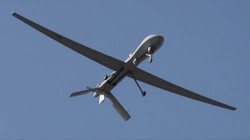
-October 2023: A wave of drone and rocket strikes on Ain al-Asad and Harir bases.
-November 2023: Multiple rocket and drone attacks, including three consecutive strikes on Ain al-Asad.
-December 2023 – January 2024: Sporadic rocket attacks, five consecutive strikes in late January.
-July–August 2024: Drone-borne explosives amid Gaza escalation.
-March 19, 2025: Single strike on Ain al-Asad.
Since then, attacks have ceased — even during major regional events, such as the assassination of Hezbollah leader Hassan Nasrallah and the 12-Day Iran–Israel conflict.
By contrast, Al-Kadhimi’s term saw constant barrages on Ain al-Asad, Balad, and other bases, carried out by multiple Iran-backed factions, including Kataib Hezbollah and Asaib Ahl al-Haq.
Interests Over Guns
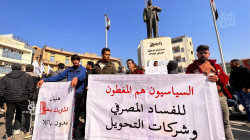
For Retired Brigadier General Adnan Al-Kanani, the new posture reflects pragmatism. He pointed to Al-Sudani’s government granting contracts to US firms and to Egyptian businessman Naguib Sawiris, who is spearheading major telecom and housing projects. “Whoever controls communications controls the command center,” Al-Kanani said, noting the shift of factions toward protecting rather than disrupting such ventures.
Amer Al-Fayez, a senior figure in the Coordination Framework, confirmed that restraint is a conscious strategy to safeguard Iraq’s stability and avoid entanglement in regional wars.
Read more: Countdown to a wider war: Why Iraq is the most vulnerable link in regional escalation.
A Case Study: The Tsurkov Release
The sudden release of Israeli-Russian researcher Elizabeth Tsurkov, kidnapped in Baghdad by an Iraqi faction in March 2023, symbolized this new pragmatism. Her freedom was announced almost simultaneously by US President Donald Trump, the US embassy in Baghdad, and Al-Sudani’s office — fueling speculation of a quiet understanding between Washington and the factions.
Implications for Iraq and Beyond
What emerges is a transformation extending beyond security. For the US, fewer attacks have opened the door to re-engage Iraq economically. For armed factions, restraint has created opportunities to consolidate political and financial power within state structures rather than through confrontation.
Analysts caution that this stability rests on continued bargains and interests. But for now, Al-Sudani has demonstrated that contracts, not conflict, can deliver security in Iraq.
Written and edited by Shafaq News staff