Between ritual and remembrance: Yazidis mark Ezi Feast


Shafaq News
Across northern Iraq and throughout the diaspora, Yazidi families broke their fast on Friday with shared meals and quiet prayers. The celebration of Eda Rojiet Ezi, the Feast of the Almighty, followed three days of dawn-to-dusk fasting, an annual December ritual that holds singular importance in Yazidi religious life.
As in every year since 2014, however, the feast carried a deeper weight. For a community whose homeland was devastated by genocide and whose recovery remains incomplete, religious observance has become inseparable from questions of survival, justice, and the possibility of return.
“Yazidis in Iraq and around the world are celebrating their religious feast today,” Amir Hazim Tahsin Bek, the spiritual leader of the global Yazidi community, told Shafaq News on Friday. “We hope this feast brings goodness and happiness to all, and that security and peace prevail everywhere.”
His words reflected a dual reality that defines contemporary Yazidi life: the determination to preserve ancient traditions alongside the knowledge that much of what once sustained them—land, community cohesion, and sacred spaces—has been damaged or lost.
Faith Rooted in Survival
The Yazidis are a Kurdish-speaking religious minority whose ancestral homeland lies primarily in Sinjar district and parts of Duhok province, with smaller communities in Syria and a growing diaspora in Europe and North America. Their faith, which predates both Islam and Christianity, is distinct and rooted in ancient Mesopotamian traditions preserved largely through oral transmission.
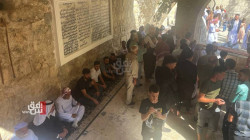
Lalish, a valley temple complex in the Kurdistan Region, remains the community’s holiest site. During the December fast, many Yazidis traditionally travel there to observe rituals linked to spiritual renewal and gratitude for divine protection.
The Three-Day Fast of December is one of the few religious obligations observed by all Yazidis, with fasting from dawn until sunset, according to religious records. Evenings during the fast are marked by communal prayer and shared meals, culminating in the feast day, which falls on the Friday before the winter solstice and symbolizes renewal in the solar cycle.
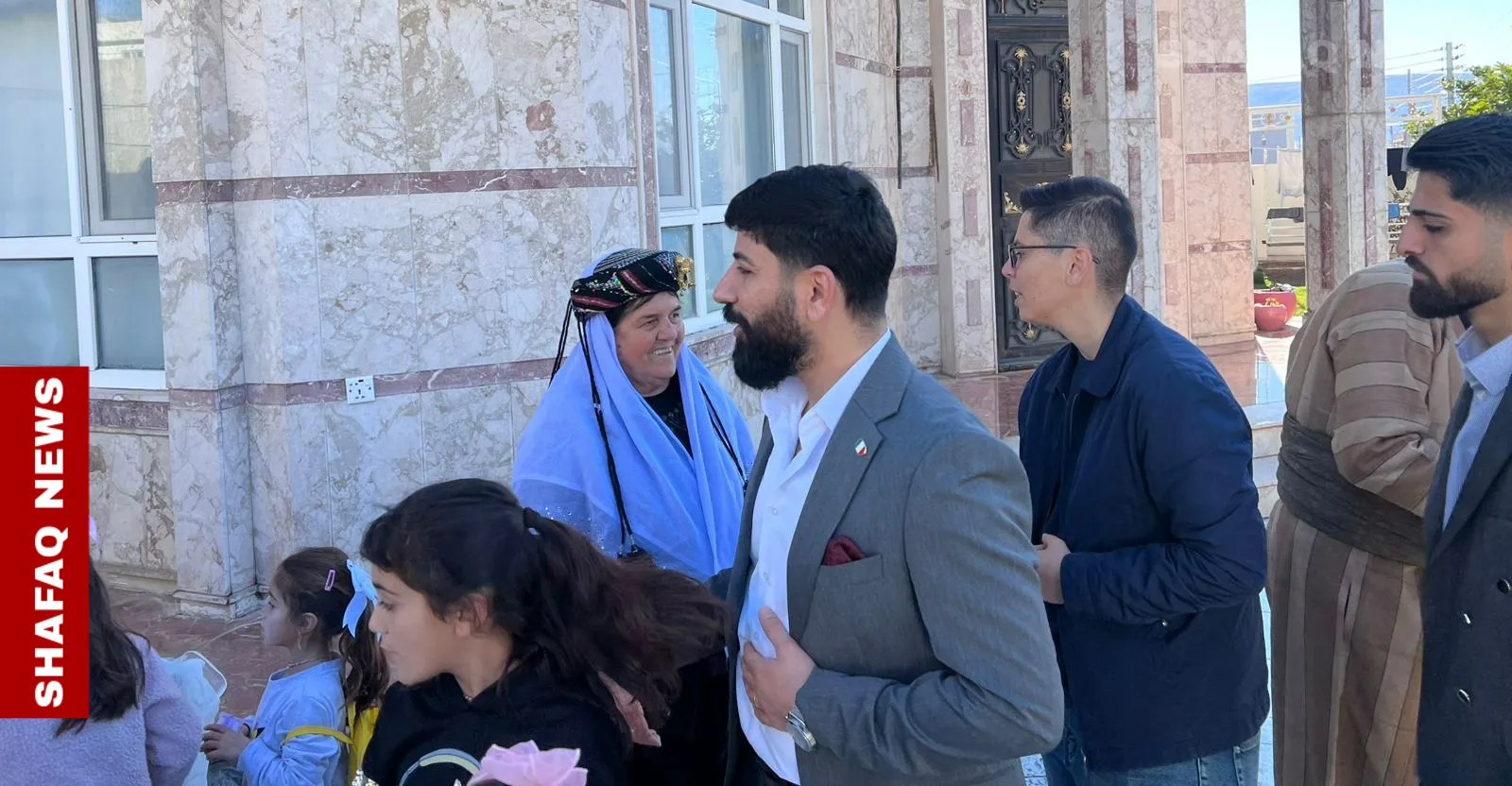
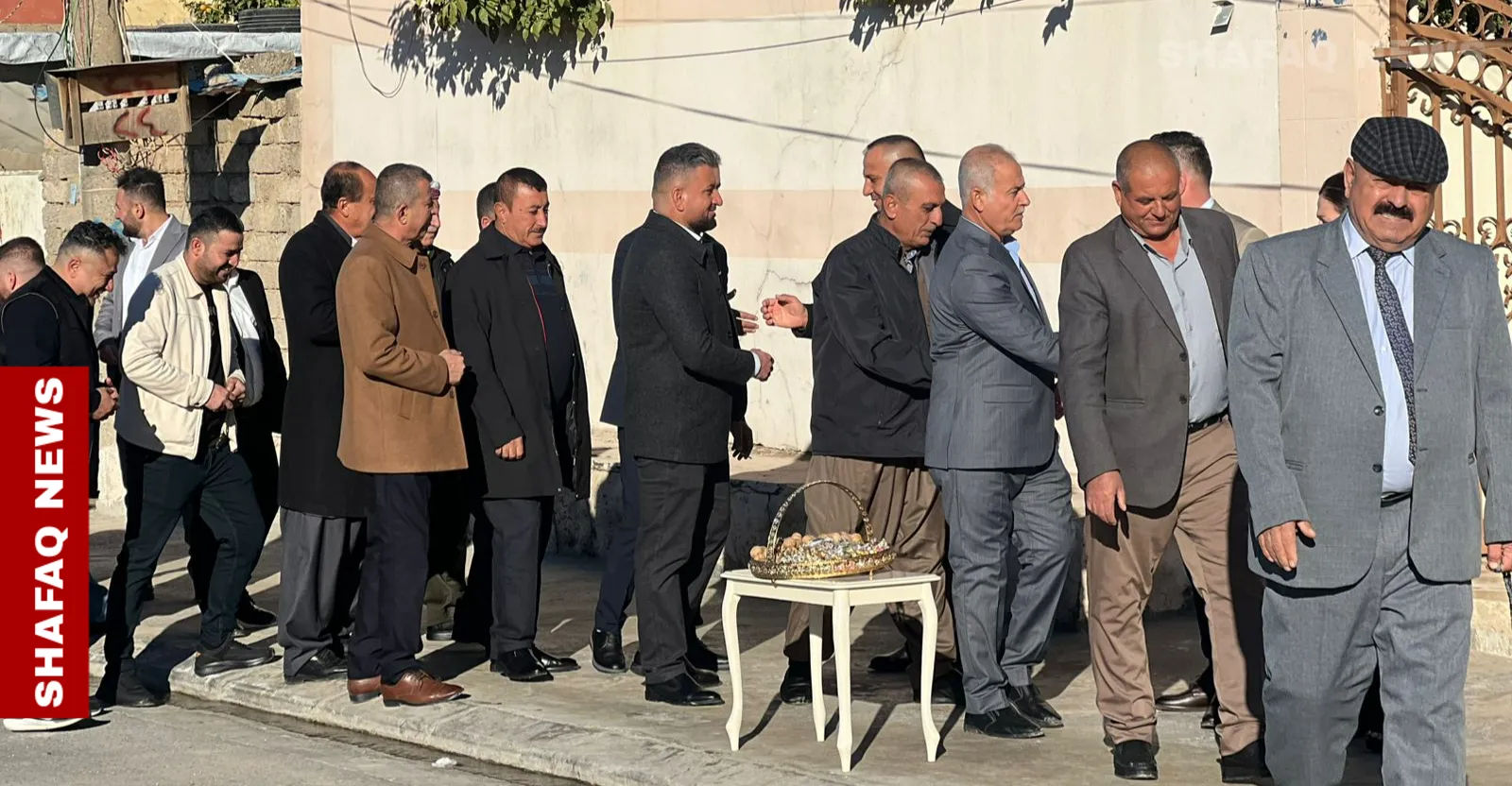
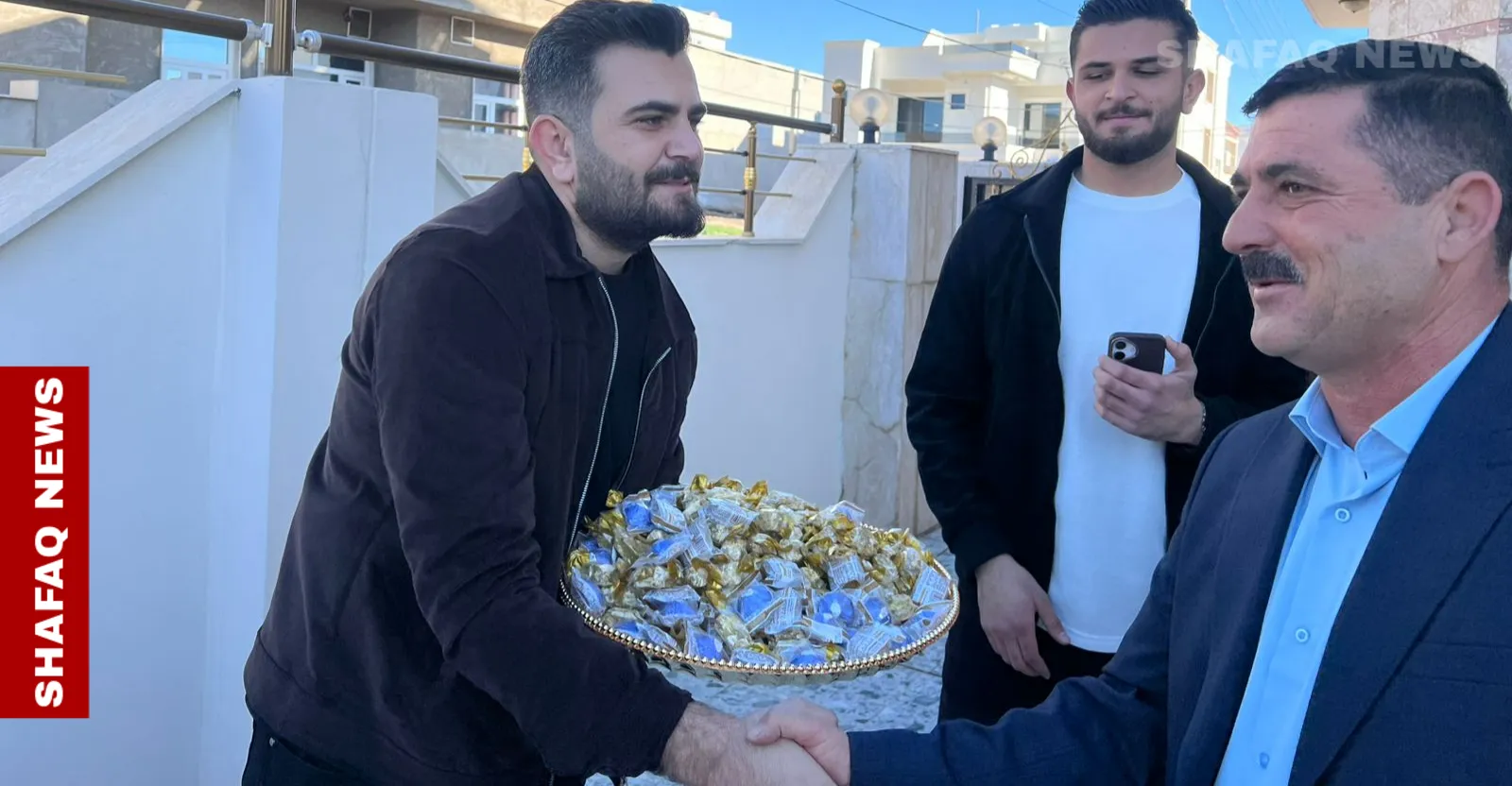
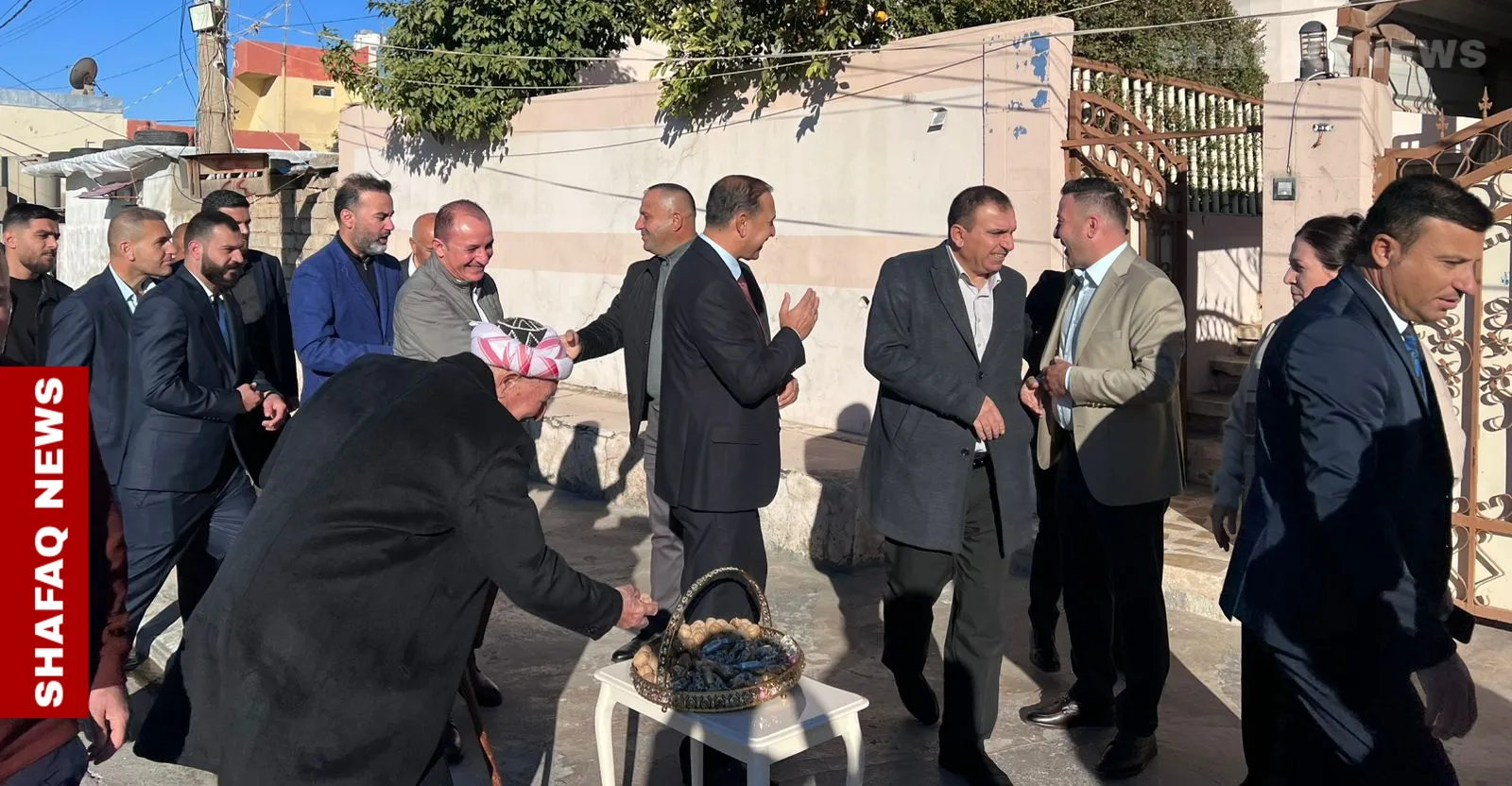
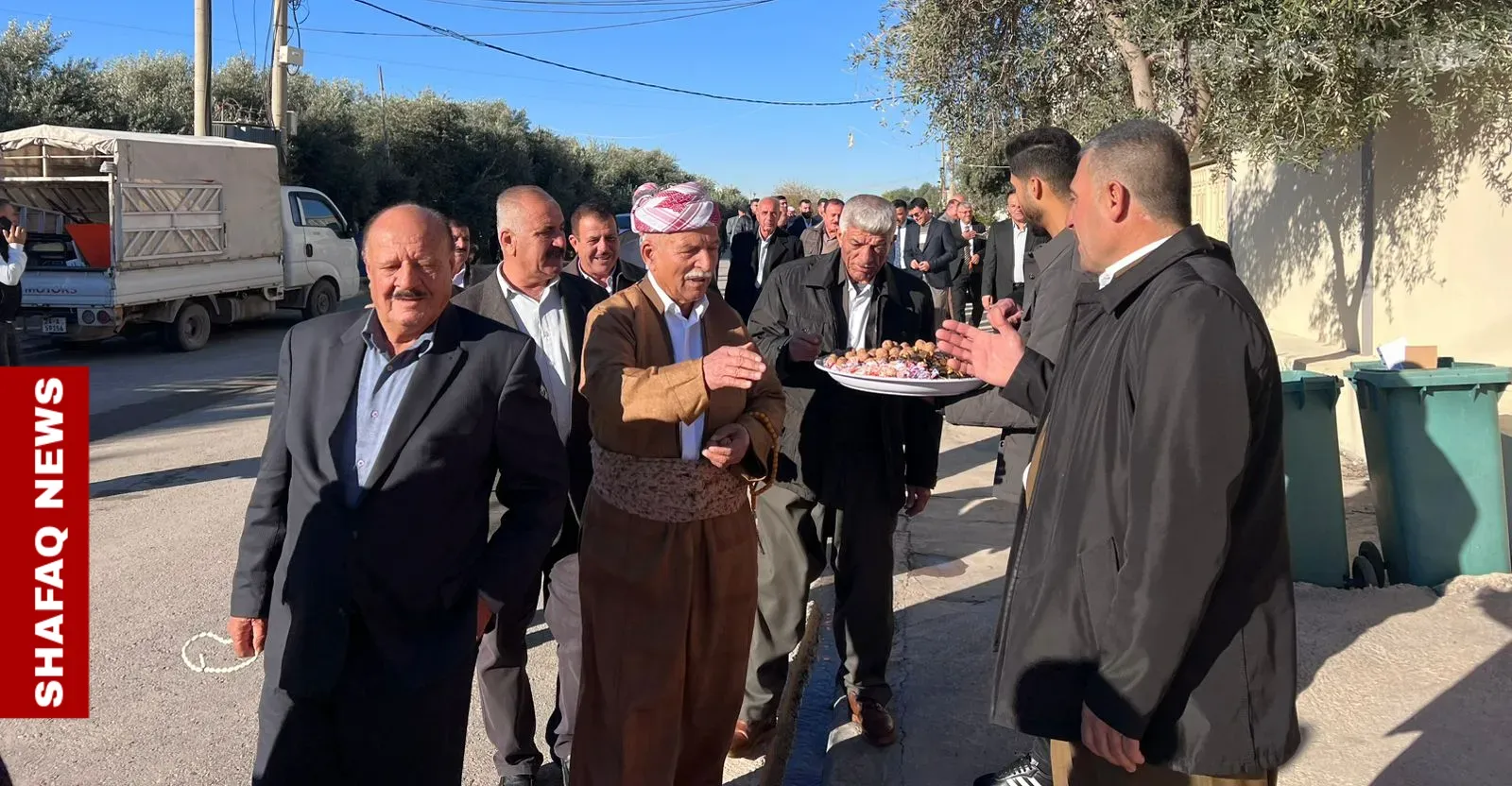
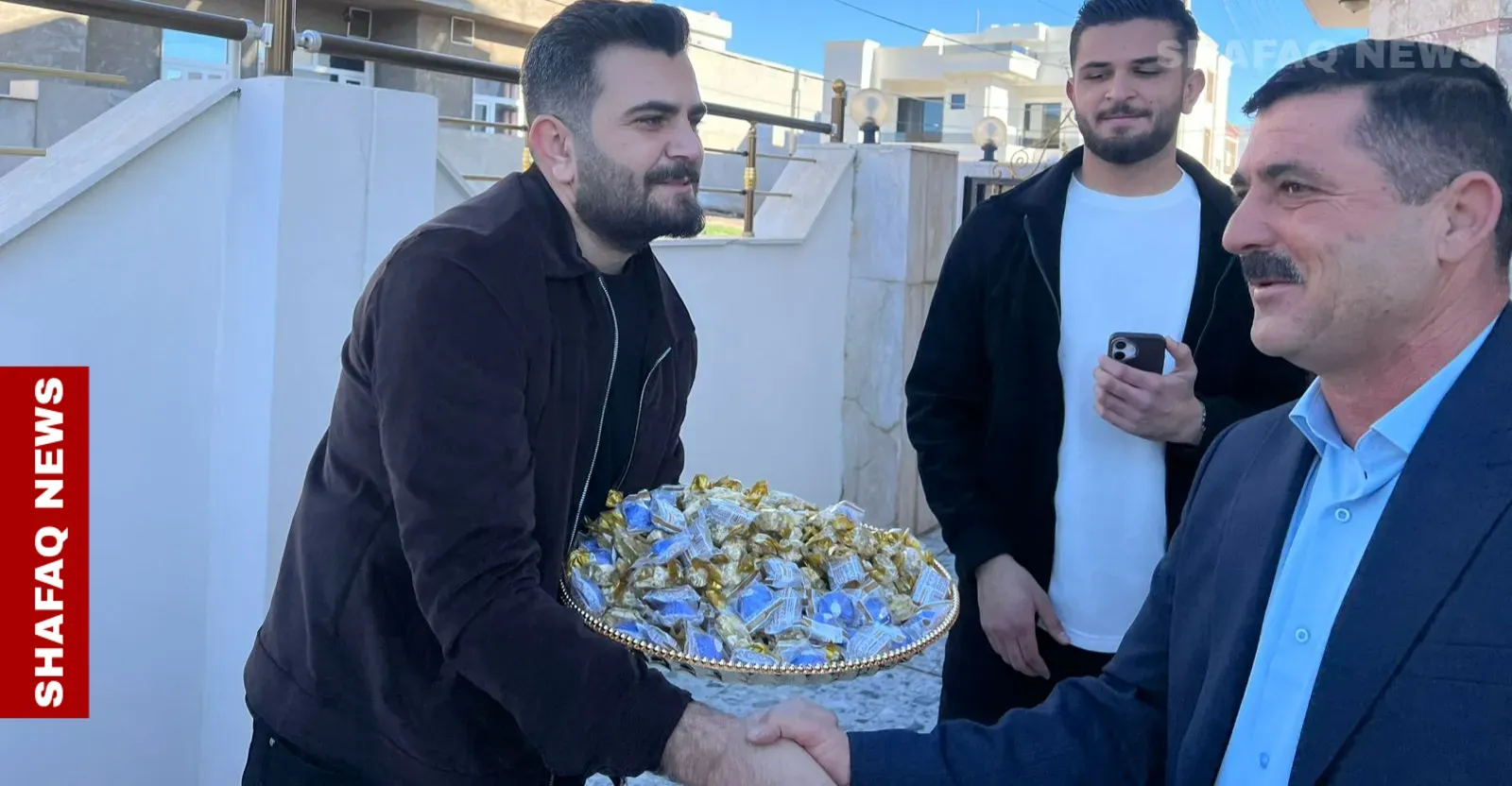
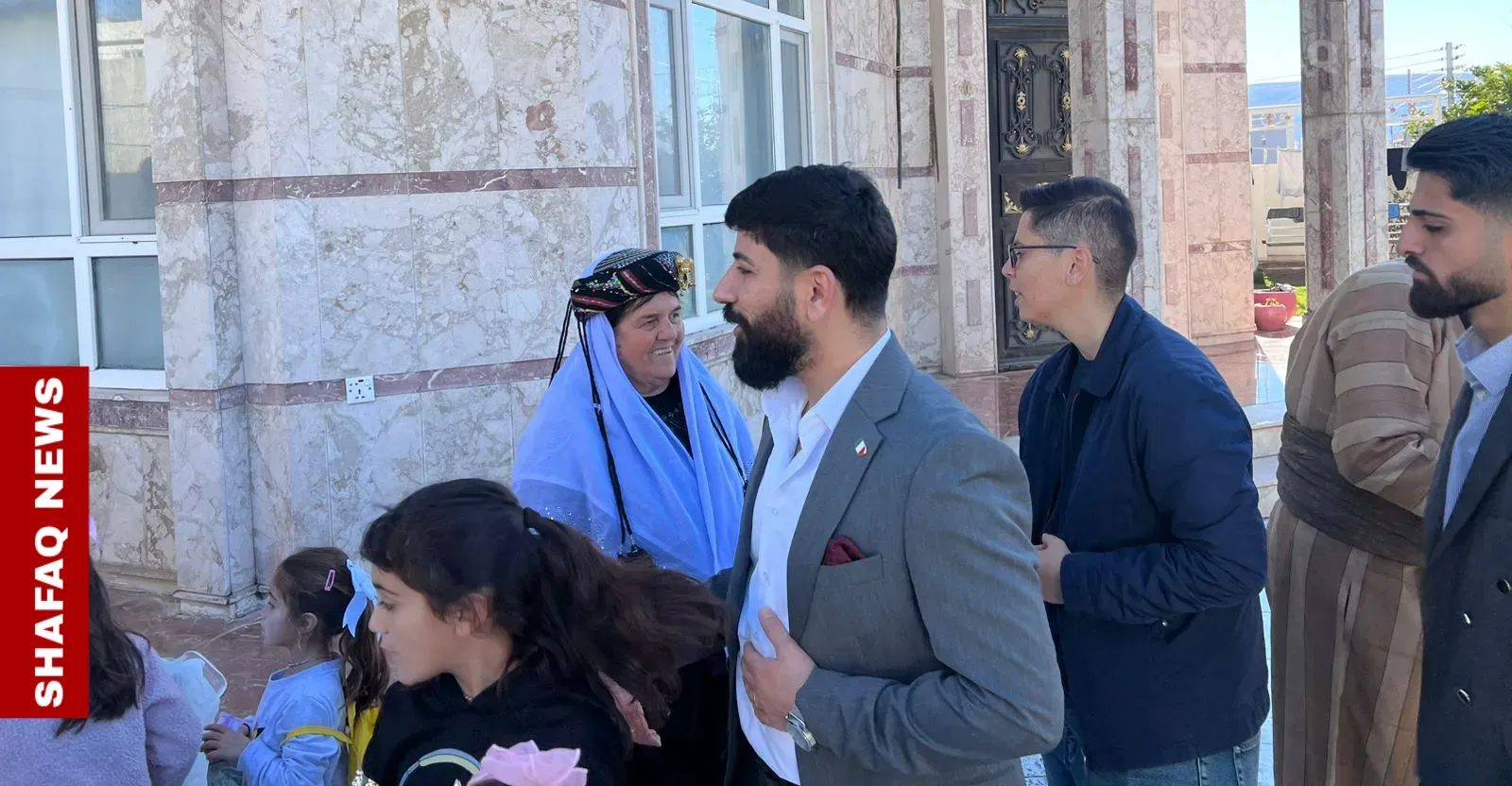
Today, families marked the occasion in ways shaped by both tradition and circumstance. Hussein Huso, a Yazidi resident of Duhok, described the social rhythm of the day. “The feast is an important social occasion,” he told Shafaq News. “I went out with my family early in the morning to visit relatives and exchange congratulations.”
Zahra Jasim, another Yazidi resident, spoke of the preparations that precede the feast. “The fast lasted three days, from Tuesday until Thursday, with Friday as the feast day,” she said. “Families prepare for it days in advance. Sour kubbah is among the main dishes, along with bulgur, rice, and meat.”
Such details—the food, the timing of visits, the shared preparation—reflect a culture sustained through practice, even as the context in which it unfolds has fundamentally changed.
What Came Before
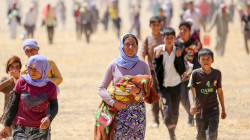
The celebrations unfolded against a backdrop that continues to define Yazidi life more than a decade after ISIS attacked Sinjar in August 2014. The campaign was systematic and devastating, involving mass killings, forced displacement, and the abduction of thousands of women and children.
Read more: A decade of suffering: Yazidis still seeking justice after ISIS atrocities
The United Nations and its investigative body, UNITAD, later concluded that the assault amounted to genocide. Thousands of Yazidis were killed or kidnapped, according to UNITAD documentation. Amnesty International, citing the Office for Kidnapped Yazidis in Duhok, estimates that about 2,600 people remain missing, while Save the Children reports that more than 1,300 Yazidi children are still unaccounted for.
These figures represent families still searching for answers, grief left unresolved, and a community unable to fully heal while so many remain missing.
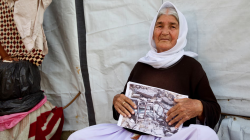
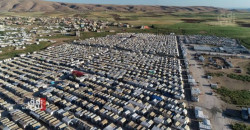
Although large-scale fighting has ended, the aftermath continues to shape daily life. The International Organization for Migration estimates that tens of thousands of Yazidis remain internally displaced, many living in camps across the Kurdistan Region, some for more than a decade.
Returns to Sinjar have occurred, but slowly and unevenly. Damaged infrastructure, lingering security concerns, and unresolved governance disputes between Baghdad and Erbil have hindered progress. A UN-backed agreement reached in 2020 aimed to stabilize Sinjar and facilitate returns, but implementation has been inconsistent, according to the United Nations Assistance Mission for Iraq (UNAMI), leaving many families uncertain about returning permanently.
Messages of Resilience
Political leaders marking the occasion emphasized both resilience and the need for continued support. Kurdistan Region President Nechirvan Barzani extended congratulations to the Yazidi community, describing the feast as a symbol of perseverance and reaffirming commitments to protect Yazidi rights and support stability in Sinjar.
Other Iraqi officials echoed similar messages, framing the occasion as a reminder of the need for justice, reconstruction, and improved living conditions in Yazidi areas.
There is a quiet defiance in the continuation of these rituals. In the face of genocide—an act intended to erase a people—the preservation of religious practice becomes an assertion of existence.
Hadiya Shamo, of the Yazidi Woman Coordination in Syria, captured this sentiment years ago in remarks to North Press, describing Ezi Feast Day as the most sacred Yazidi observance. “Though the region is under attack,” she said, “we are celebrating with sad hearts.”
That phrase reflects the emotional reality many Yazidis inhabit. Joy and grief coexist, present in every gathering, prayer, and shared meal.
The observance of Ezi Feast Day is compulsory for adult Yazidis, with exemptions for children, the elderly, and the ill. In a faith without a central written scripture, collective participation sustains belief and community cohesion. Fasting is understood as an act of spiritual purification and compassion—teachings that resonate deeply in a community shaped by loss.
What the Feast Reveals
The continuation of Ezi Feast Day demonstrates extraordinary resilience. Families observed the fast, prepared traditional foods, and gathered for prayers across camps, cities, and continents.
Yet the celebration also highlights what remains unfinished. Many marked the feast in displacement camps rather than ancestral homes, while others did so in diaspora, far from sacred sites and extended family networks. The missing were present in their absence, felt in unanswered prayers and empty spaces at tables.
As the feast continues, the questions facing the Yazidi community remained unresolved: when the missing will be found, what will enable sustainable return to Sinjar, and how a scattered community can preserve its identity across generations.
What remains clear is the community’s commitment to continuity. In observing one of their holiest rituals, Yazidis reaffirm not only their faith, but their insistence on survival, justice, and a future shaped on their own terms.
Written and edited by Shafaq News staff.