Back on Washington’s radar: Iraq’s return to the US strategic map


Shafaq News
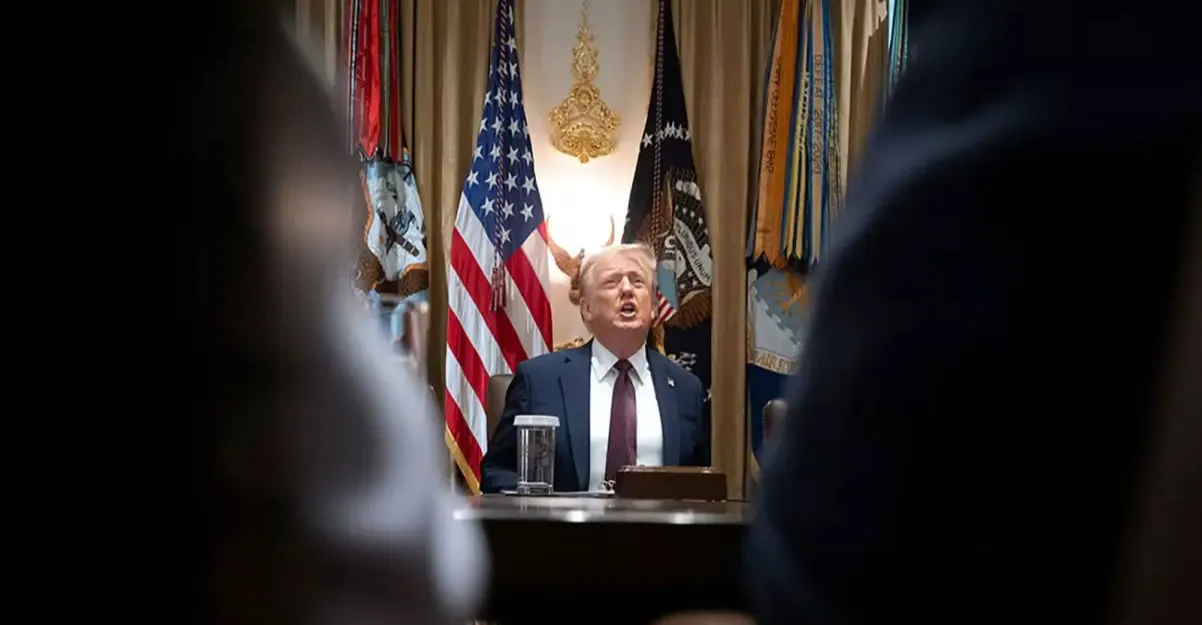
A single sentence by US President Donald Trump during a summit on Gaza in Sharm El-Sheikh unexpectedly shifted the focus to Iraq: “Iraq is a country full of oil… but it doesn’t know what to do with it. That’s your problem.”
The remark, brief but pointed, marked a sudden reentry of Iraq into Trump’s political discourse after years of relative absence. While seemingly offhand, it triggered a sequence of US moves suggesting a strategic recalibration. Within days, Trump issued a formal National Day greeting to Baghdad, citing a “renewed partnership,” and later appointed Iraqi-American businessman Mark Savaya as Special Envoy to Iraq.
Observers viewed this swift succession — a veiled warning, followed by diplomatic outreach and an envoy appointment — as more than a coincidence. It signaled renewed attention to Iraq within US decision-making circles, hinting at a potential shift from military oversight to economic leverage and governance reform.
Read more: Mark Savaya: Who is Trump’s third Special Envoy to Iraq?
From Silence to Signal
Since the 2003 fall of Saddam Hussein, US-Iraq relations have swung between deep engagement and partial withdrawal. Under Trump’s second term, Washington had mostly sidelined Iraq in favor of more urgent regional files. But now, with Trump eyeing regional energy realignment and geopolitical gains post-Gaza, Iraq appears to be reemerging — not as a security concern, but as a strategic economic actor.
While the White House declined to elaborate on Trump’s statement, analysts see it as more than rhetorical. Some interpret it as a strategic signal to Baghdad and Tehran: Washington is ready to reshape ties — but on new terms, focused on resource management and financial reform.
Expert Readings: Beyond the Soundbite
Speaking to Shafaq News, Frank Mesmar, a Republican Party member and Chair of the Advisory Council at the University of Maryland, shared his belief that Trump's statement on Iraq's oil reserves highlights the importance of responsible resource management and cooperation, adding that “his comments serve as a reminder that effective utilization of resources is crucial for avoiding significant problems.”
Mesmar stated that rather than focusing solely on the potential risks, “we can view this situation as an opportunity for the US and Iraq to work together towards a more sustainable and equitable future.”
He highlighted on Trump administration’s efforts to isolate Iran, stating that “they have led to increased pressure on Iraq's oil and energy sectors.” However, he added, this pressure also presents a chance for Iraq to pursue more diverse economic partnerships and reduce its reliance on a single industry.
“By supporting Iraq's economic development and promoting regional cooperation, the US can help create a more stable and prosperous future for all parties involved,” Mesmar concluded.
But others voiced caution. Dr. Paul Sullivan, a specialist in energy security at Johns Hopkins University, offered a more sober take. “It is sometimes hard to figure out what he means by many things. However, I can see how this could spark conversions and concern,” he told Shafaq News.
Expressing hope that Trump wants Iraq to use oil for development, seeking stabilization, Sullivan caught up, “But that may be a stretch by a professor who is interested in Iraqi development.” He suggested that Trump could also be looking at Iraqi oil exports as a replacement for Russian oil exports to some countries.
“But one wonders how much more oil Iraq can export to India and China, for example. Then there are the looming Iran issues, which are always on his mind,” Sullivan said, adding that Trump does not want Iraq to support Iran with imports of electricity or gas. “It does not look good to Trump that Iran and Iraq have an energy relationship.”
However, Sullivan stated that the “snap-back sanctions” make the situation more complicated for Iraq, but there are reasons behind those snap-backs. Iraq is an essential source of energy for many places. “That energy, if it is used to support enemies of the US, could bring problems to Iraq.”
Read more: Sovereignty strain: US sanctions trigger Iraq's liquidity nightmare
Baghdad Reacts with Caution
Iraqi officials responded to the sudden US attention with guarded optimism. The appointment of Mark Savaya — an Arabic-speaking figure with deep Mosul roots but limited diplomatic background — follows a Trump-era trend of installing non-traditional envoys such as Thomas Barrack (Syria/Lebanon) and Jason Greenblatt (Middle East peace).
Described in Washington as an envoy “for a special phase,” Savaya is expected to focus on oil-sector reform and financial oversight, while monitoring the influence of Iran-aligned factions. In Baghdad, however, his role was understood more plainly: “Trump wants someone who can watch from within.”
This low-profile but symbolically potent move suggests a new US operational model in Iraq, minimal military footprint, no ambassadorial presence, but active behind-the-scenes influence through economics and governance.
A Strategic Pivot: From Security to Sovereignty
The recalibrated approach signals a major departure from traditional US engagement. The question is no longer how Iraq combats terrorism, but how it manages its oil wealth — and by extension, its sovereignty.
This transition, though less dramatic than troop movements or airstrikes, could carry deeper long-term implications. In Iraq, where resource control intersects with sectarian loyalties, corruption, and foreign influence, Washington’s new focus hits a sensitive nerve.
The US seems to be capitalizing on Iran’s recent regional setbacks, aiming to shift Iraq’s trajectory toward an American-aligned economic model — one that bolsters bilateral trade, limits factions funding, and stabilizes energy governance.
Diplomatic Signals: Reframing the Relationship
In an exclusive interview with Shafaq News, US Chargé d’Affaires in Iraq Joshua Harris reiterated Iraq’s strategic relevance to Washington. “Iraq still holds a central place in US policy,” he said, rejecting claims of disengagement. “This is not a retreat — it’s a redefinition of interests. The US, under President Trump, is putting American interests first, and that’s a principle being applied globally.”
Harris noted that while no new US ambassador has been appointed to Baghdad — a point of speculation among Iraqi political circles — the US operates through a skilled team of professionals focused on security, prosperity, and bilateral alignment.
“We want to see a sovereign, secure, and prosperous Iraq, contributing to regional stability and benefiting from economic integration,” he added — echoing, perhaps unintentionally, Trump’s original critique of Iraq’s underused potential.
A New Chapter Opens
The return of Iraq to the US spotlight is not driven by battlefield logic, but by strategic economics. Trump’s focus on “oil and governance” reflects broader US efforts to reshape the Middle East through energy diplomacy, not military doctrine.
From the Bush-era democratization campaign to Obama’s counter-ISIS efforts and Biden’s low-profile advisory model, Iraq has played many roles in US strategy. Trump’s current approach appears to be a fourth iteration — defined by influence without embassies, leverage without boots on the ground.
In this evolving paradigm, Savaya’s envoyship, economic missions, and investment frameworks are the new instruments of power. The message is clear: influence now flows through oil contracts and financial reform, not airstrikes and troop deployments.
Trump’s remark, initially seen as casual, now reads as the opening line of a new phase in a complex US-Iraq relationship — one that places Baghdad at the intersection of opportunity and scrutiny.
Iraq, having received both a diplomatic greeting and a strategic warning in the same week, must now navigate between two American phrases: “partnership” and “accountability.”
Written and edited by Shafaq News staff.

