A witness in white: Iraq’s Sinjar cannot settle for survival alone


Shafaq News
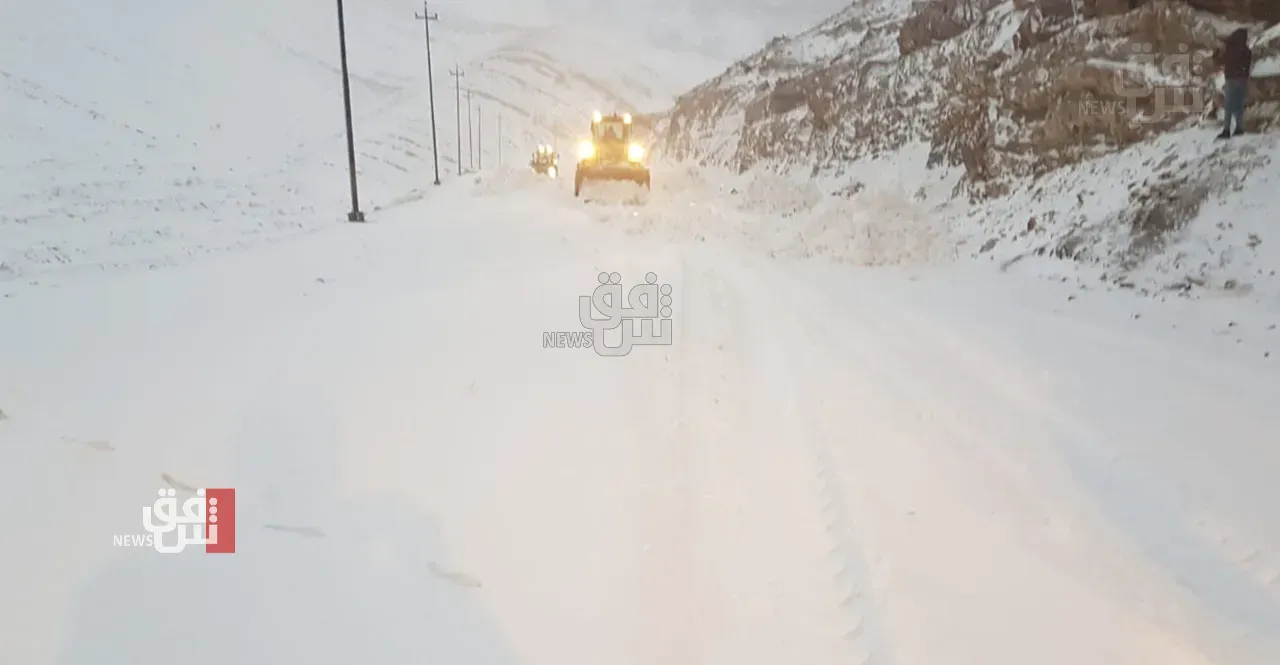
In winter, snow settles gently on Mount Sinjar, blurring the line between ruin and landscape. From a distance, the city below appears calm — almost untouched — as if time had paused rather than fractured. But Sinjar has never been frozen in time. It has endured it.
Situated in northwestern Iraq, near the Syrian border, Sinjar occupies a geography that has long shaped its fate. The mountain rises abruptly from the surrounding plains, stretching for roughly 100 kilometers and reaching elevations of more than 1,400 meters. For centuries, it has served as both shield and sanctuary — a natural refuge during moments of threat, and a spiritual anchor for the Yazidi community whose history is inseparable from the land.
Before 2014, Sinjar was home to an estimated 350,000 people, the majority of them Yazidis. Life followed a familiar rhythm shaped by agriculture, seasonal trade, and pastoral livelihoods tied to the plains surrounding the mountain. Winters were harsh, summers unforgiving, and survival depended on adaptation. That same isolation, however, left Sinjar vulnerable when violence arrived.
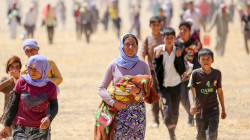
The rupture came in August 2014, when ISIS overran the district within days. What followed was not simply a military takeover, but a campaign aimed at erasing a community. Thousands were killed. More than 6,000 women and children were abducted. Tens of thousands fled toward Mount Sinjar or across the border into Syria, leaving behind emptied villages and a social fabric torn apart almost overnight.
Iraq is home to an estimated 500,000 Yazidis, most of whom historically lived in and around Sinjar in Nineveh province, with others concentrated in northern Duhok. Their presence in the region predates the modern Iraqi state, rooted in an ancient monotheistic faith sustained through oral tradition, sacred geography, and communal continuity. In 2014, that continuity was violently disrupted, turning displacement from an emergency into a prolonged condition.
Once again, Mount Sinjar became what it had been in older histories — a refuge. Families climbed its slopes under siege, trapped for days without adequate food or water. Air drops eventually broke the isolation, but the episode cemented the mountain’s role not as a symbol, but as a line of survival.
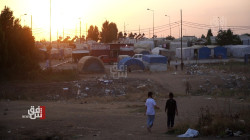
Nearly a decade later, the physical and demographic landscape of Sinjar reflects the scale of that rupture. While the district was retaken from ISIS in late 2015, return has been limited. Less than 30 percent of Sinjar’s pre-2014 population has returned, according to displacement tracking data. Many Yazidis remain scattered across camps in the Kurdistan Region, particularly in Duhok, where temporary shelter has quietly become semi-permanent life.
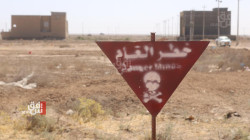
Destruction remains widespread, and more than 70% of residential buildings in parts of Sinjar were damaged or destroyed during the fighting. Schools, health centers, water networks, and electricity grids were either heavily damaged or rendered unusable. Reconstruction has advanced unevenly, hindered by unexploded ordnance, slow funding, and unresolved political disputes.
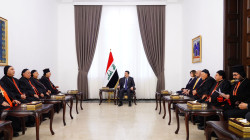
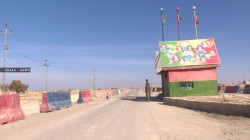
Governance in Sinjar remains unsettled. Administrative authority is divided between Baghdad and Erbil, while multiple armed forces continue to operate in and around the district. The lack of a unified security and administrative structure has left public services uneven, reconstruction slow, and families uncertain whether return is realistically possible.
This stalemate has endured despite repeated political pledges to stabilize the area. In October 2020, Baghdad and the Kurdistan Regional Government signed the UN-backed Sinjar Agreement, designed to normalize security, consolidate administration, and create conditions for the return of displaced residents. The accord envisioned the withdrawal of non-state armed groups, the formation of a mutually accepted local administration, and the integration of security forces under federal authority.
Nearly five years on, armed presences persist, administrative arrangements remain unresolved, and the agreement’s promises have yet to translate into meaningful change on the ground — deepening skepticism among displaced families about the feasibility of a lasting return.
For the Yazidis, displacement carries consequences that extend beyond material loss. Yazidism is among the world’s oldest faiths, preserved through oral tradition and an unbroken connection to place. More than 60 Yazidi shrines across Sinjar were destroyed or damaged. Entire villages that once anchored religious and social life remain empty. Children born after 2014 have grown up away from ancestral land, inheriting memory instead of geography.
The search for justice continues slowly. Dozens of mass graves have been identified in Sinjar and its surroundings, with exhumations still ongoing years after ISIS was defeated. Thousands of Yazidis remain missing. For families, time has not healed the loss — it has prolonged it, stretching grief across years of waiting.
Economic recovery has proven equally fragile. Before ISIS, agriculture accounted for a significant share of local income. Today, large areas of farmland remain unusable due to damage, contamination, or lack of infrastructure. Employment opportunities are scarce, public services are inconsistent, and younger residents increasingly leave in search of stability elsewhere. Return, for many, is no longer a question of attachment, but of viability.
And yet, Sinjar persists.
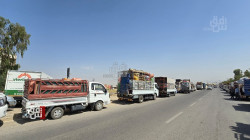
Markets reopen in pockets, and homes are rebuilt one wall at a time. Some families return despite uncertainty, driven by belonging rather than assurance. Others remain displaced, tied to the city through memory alone. The result is a place caught between presence and absence — inhabited, but not whole.
When snow falls again on Mount Sinjar, it lends the city a brief stillness. The mountain stands as it always has — a witness to cycles of refuge, loss, and survival. Beneath its slopes, Sinjar continues to exist in contradiction: a city of striking beauty shaped by devastation, where endurance has replaced certainty, and return remains unfinished.
Sinjar is not defined solely by what it suffered, nor fully by what it has rebuilt. It stands instead as a measure of what survival looks like when recovery is delayed, justice incomplete, and memory impossible to erase. Between mountain and plain, the city waits — not for symbolism, but for resolution.
Written and edited by Shafaq News staff.