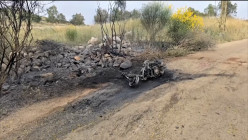
UN: War fuels food insecurity in Lebanon as women and children bear toll


Shafaq News- Beirut
UN agencies warned on Friday that Lebanon is facing a worsening humanitarian crisis, marked by rising food insecurity, mounting child casualties, and growing risks for women, despite a recent ceasefire between the United States and Iran that has not halted Israeli hostilities in Lebanon.
On April 8, US President Donald Trump announced a two-week truce with Iran following talks involving Pakistan and a 10-point Iranian proposal. Pakistani, Iranian, and some Lebanese officials said the ceasefire extends to Lebanon, but Trump described Israeli operations there as a separate “skirmish” linked to Hezbollah and outside the agreement.
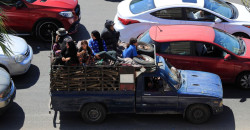
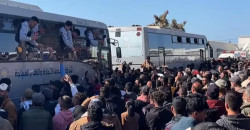
According to Lebanon’s Health Ministry, Israeli strikes continued the same day, killing at least 303 people and injuring 1,150, while the expanded offensive since March 2 has killed 1,888 and wounded 6,092, displacing around one million people —about one-fifth of the country’s population.
Food Security Under Pressure
The World Food Programme (WFP) warned that the escalation is rapidly driving a food emergency. “What we're witnessing is not just a displacement crisis, it is rapidly becoming a food security crisis,” WFP country director Allison Oman said via video link from Beirut.
Vegetable prices have risen by more than 20% and bread by 17% since March 2, reflecting what Oman called a “very worrying combination” of rising costs, disrupted incomes, and increasing demand among displaced families. The situation is most severe in southern Lebanon, where more than 80% of markets are no longer functioning, while markets in Beirut remain open but under growing strain.
📍Happening now, from #Nabatieh In south #Lebanon and Nabatieh, more than 80 percent of markets are no longer functioning, which means @logcluster humanitarian convoys are increasingly critical to sustain people.More from our Head of Programme below. pic.twitter.com/l0isclxM0Z
— WFP Lebanon - برنامج الأغذية العالمي في لبنان (@WFPLebanon) April 10, 2026
Traders in conflict-affected southern areas report having less than one week of essential food stocks remaining. Although the Qasmiyeh bridge has reopened after earlier strikes, access to the south remains difficult. The WFP said it has delivered ten convoys to assist an estimated 50,000 to 150,000 people, warning that around 900,000 people across Lebanon are already facing food insecurity.
Children Under Fire
UNICEF described the toll on children as “devastating and inhumane,” reporting that Israeli airstrikes on April 8 killed 33 children and injured 153 “in just minutes,” even as news of the ceasefire briefly raised hopes.
“Children and families faced a wave of bombardments that tore through communities with devastating impact,” the agency said, noting that around 600 children have been killed or injured in Lebanon since the escalation began. UNICEF stressed that international humanitarian law requires the protection of civilians at all times.
The intensification of hostilities in Lebanon continues to exact a devastating and inhumane toll on children. ⁰⁰In just minutes yesterday, as news of a regional ceasefire agreement briefly ignited hope across the country, deadly Israeli airstrikes struck across Lebanon,…
— UNICEF (@UNICEF) April 9, 2026
Women at Heightened Risk
UN Women reported that 102 women were killed prior to the intensified bombardment on April 8, while approximately 620,000 women and girls have been displaced. Even before the latest escalation, an estimated 70,000 pregnant women required maternal health services, many facing significant barriers to care.
The conflict in the Middle East has heightened hardships for women and girls.Hundreds reportedly killed and millions displaced with no healthcare, no protection, and no livelihoods.@UN_Women continues to call for lasting peace.🔗 Our statement: https://t.co/ot26TyDk2W pic.twitter.com/BZ4Mrl4irn
— UN Women (@UN_Women) April 10, 2026
“We call for de-escalation, protection of all civilians, unimpeded humanitarian access, gender-responsive humanitarian action, and for the two-week ceasefire to become the foundation for a just, enduring, and comprehensive peace for all women and girls across the region,” the agency noted.