Post-Assad Damascus Book Fair showcases Kurdish literature, formerly banned Islamist texts


Shafaq News- Damascus
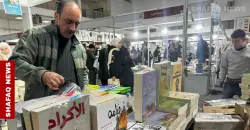
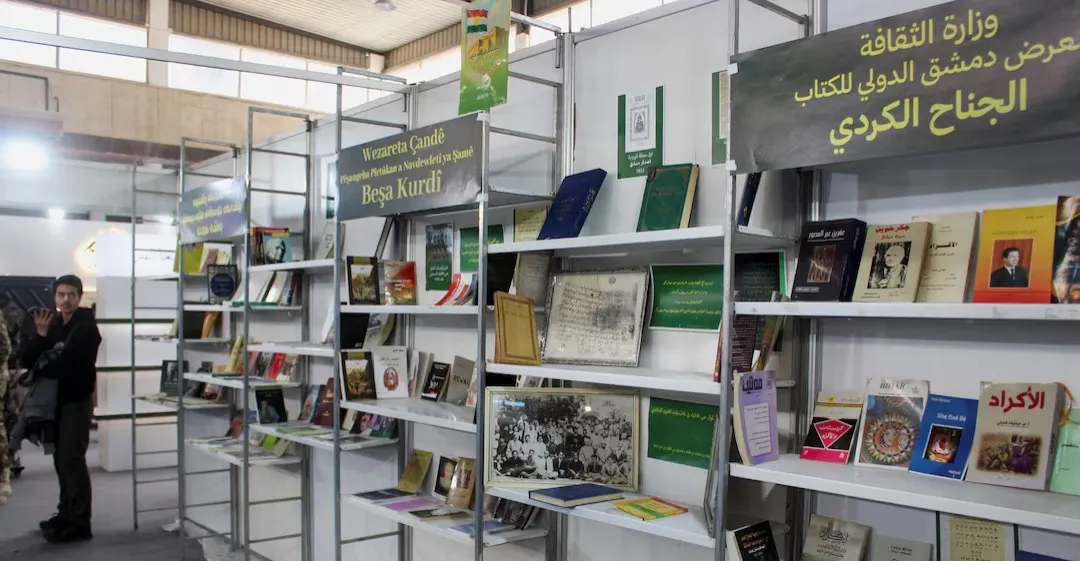
The return of the Damascus International Book Fair has laid bare the cultural shifts unfolding in Syria after the fall of Bashar Al-Assad, with organizers showcasing once-banned Kurdish literature and Islamist works long suppressed under Baathist rule.
According to Reuters, a public Kurdish pavilion operated by a man and woman in traditional attire now stands openly inside the fair, an image unimaginable during decades of strict state control. The stand displays Kurdish poetry and a 1932 Kurdish-language magazine, works that were previously circulated discreetly to avoid interrogation.
The exhibition unfolds as Damascus implements a peace agreement with Kurdish forces aimed at integrating northeastern regions under central authority.
Saleh Sarkaji, who manages the Kurdish pavilion, told Reuters that Kurdish books were hidden under Al-Assad’s rule and read in secrecy. Anyone found possessing them risked questioning or detention.
Beyond Kurdish literature, the fair features Islamist texts that once carried legal risk. Among them is Milestones by Egyptian thinker Sayyid Qutb, executed in 1966 and widely cited by later Islamist movements. During Al-Assad era, ownership of Qutb’s works could lead to imprisonment. Today, publishers report strong sales. The fair also includes classical religious texts, including works by medieval scholar Ibn Taymiyyah, whose writings have influenced various contemporary Islamist currents.
Organizers say the new edition of the fair is open to all ideas except those that threaten civil peace or promote the former regime. Coordinator Zuhair Al-Bari described the event as a break from what he called decades of “intellectual darkness.”
Not all material has passed scrutiny. Reuters reported that a book containing audio transcripts by Abu Musab Al-Zarqawi, a former al-Qaeda leader, was withdrawn following an Iraqi government request.
Human rights activist Haitham al-Maleh, whose memoirs are now displayed at the fair after years of imprisonment under Al-Assad, said the event signals “a beginning of openness to global ideas.”