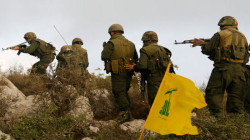
Lebanon's main parties reject US-brokered framework


Shafaq News- Beirut (Updated on June 29, at 16:38)
Lebanon's two main Shia parties, Hezbollah and Amal Movement, rejected the trilateral framework between the United States, Israel, and Lebanon, describing the US-brokered deal as unbalanced and a threat to Lebanese sovereignty.
In a statement from its political bureau, Amal said the framework entrenched terms favoring Israel at the expense of Lebanon's national interest and carried political and sovereign risks. The party reaffirmed its rejection of direct negotiations with Israel and its commitment to international resolutions, arguing the text could not serve as the basis for a just settlement that protects Lebanon's rights and institutions.
Amal tied any acceptable deal to a fixed set of conditions: a full Israeli withdrawal to internationally recognized borders, the deployment of the Lebanese army across the south, the return of displaced residents, and the launch of reconstruction.
The party also called for continued “indirect negotiations” to settle outstanding issues and for the release of detainees under the mechanism set in the November 2024 ceasefire arrangement.
Parliament Speaker Nabih Berri, who heads Amal, issued a brief warning earlier in the day, saying, "My people in Lebanon, all of Lebanon, this is strife," and the agreement "will not pass and will not be implemented."
Hezbollah Secretary-General Naim Qassem called the agreement non-existent and a humiliating surrender of sovereignty. “Any attempt to tie an Israeli withdrawal from South Lebanon to the disarmament of Hezbollah crossed every red line.”
Together, Amal and Hezbollah hold 30 of parliament's 128 seats and represent the bulk of Lebanon's Shia community. The framework they rejected, signed in Washington on June 26, commits Lebanon to disarming non-state groups and restoring state control over all its territory, while providing for a phased Israeli withdrawal tied to verified progress.
Opposition extended beyond the Shia parties. The Syrian Social Nationalist Party likened the framework to the 1983 May 17 agreement with Israel, which Lebanon later annulled, and called on the government to withdraw from it.
Druze leader Walid Jumblatt, former head of the Progressive Socialist Party, noted that the agreement was "trilateral in form but unilateral in substance," pointing to the complete absence of any mention of the armistice arrangement.
The Free Patriotic Movement (FPM), a Christian party led by Gibran Bassil and the largest Christian bloc in parliament with 16 seats, warned that several of the Framework’s provisions leave Lebanese sovereign rights exposed. The party said the agreement failed to mention an Israeli withdrawal from occupied Lebanese territory in clear and explicit terms and set no timetable for one. It also ignored the Armistice Agreement. A clause committing Lebanon to halt hostile or adversarial measures in international political and legal forums drew particular concern.
FPM also cautioned that distancing Lebanon from regional axes should not lead to the country being used to send messages or sabotage regional understandings, including the memorandum between the United States and Iran, which it said would raise the risk of renewed military confrontation.
The Islamic Group in Lebanon (Al-Jama’a al-Islamiya), a Lebanese Sunni movement with one seat in the parliament, said the measure of any agreement is the preservation of full sovereignty and a guaranteed Israeli withdrawal from all occupied territory, setting out a series of conditions in response to the framework deal, including halting attacks, securing the release of prisoners, and ensuring “a safe and dignified “return for residents to their land.
“Any discussion of confining weapons to the state and extending state authority must not take place under the pressure of occupation or threat,” the group said. It warned against tying an Israeli withdrawal to security conditions, or interpreting any clause in a way that restricts Lebanon's right to defend itself.
Lebanon's Muslim Scholars Gathering (Tajammu' al-Ulama al-Muslimeen), which brings together a group of Sunni and Shiite scholars, denounced the proposed framework, claiming it grants Israel the right to remain on and occupy Lebanese territory. The group said it remains committed to the Iran-US MoU. It also accused the Lebanese authorities of allying with Israel to eliminate the “resistance,” describing such a move as "treason" that warrants the government's removal through constitutional mechanisms.
The agreement drew backing from the top of the Lebanese state. President Joseph Aoun and Prime Minister Nawaf Salam have presented it as a step toward restoring sovereignty and placing all weapons under state control.
The Lebanese Forces party, which has 19 parliamentary seats, praised the proposed framework as "the most important political step" taken by the Lebanese state in half a century. Samir Geagea, the party’s head, said the deal would secure Israel's withdrawal, enable displaced residents to return home, and would also resolve the long-standing issue of armed groups operating outside state authority, particularly Hezbollah, which he accused of monopolizing decisions on war and peace in line with foreign interests rather than Lebanon's national interest.
Kataeb Party leader Samy Gemayel, son of former president Amine Gemayel —who, as president, oversaw the 1983 May 17 Agreement— welcomed the agreement, crediting the Lebanese negotiating team and praising the US sponsorship of the deal. The party has 4 parliamentary seats.
On Friday night, Hezbollah supporters rode motorcycles through several Beirut districts in protest, and some blocked roads with burning tires in protest of the agreement. The Lebanese army command said it respected peaceful expression but would not permit any breach of security, urging citizens to act responsibly as calls for further demonstrations circulated.
Israeli Prime Minister Benjamin Netanyahu said additional agreements with the Lebanese authorities were expected soon as part of his broader objective of "changing the face of the region."
“The Lebanese government's decision to sign an agreement with Israel is to tell Iran and Hezbollah: Get out of Lebanon and leave it alone," he stressed, noting that he had instructed the Israeli military to maintain freedom of movement to counter any perceived threats from Lebanon and destroy Hezbollah.
Israel's Defense Minister, Israel Katz, said Israeli forces would not redeploy or withdraw from south Lebanon before Hezbollah is disarmed across the country, and that Israel would preserve its freedom to act against any threat to its troops and northern communities.
About the Agreement
The Framework was signed in Washington on June 26, and includes:
-Israel and Lebanon, with US backing under President Donald Trump, declare a shared aim of ending their conflict, securing both states' sovereignty, and establishing peaceful neighborly relations.
-Both affirm each state's right to exist in peace and declare their intent to conclusively end the conflict, address its root causes, and formally terminate any state of war between them.
-The Framework follows multiple rounds of direct talks, builds on prior agreements, and commits both sides to resolving outstanding issues through direct bilateral negotiations with US mediation.
-The two governments commit to a reciprocal, conditioned process: the Lebanese army (LAF) restores sovereign authority over all Lebanese territory, pending the verified disarmament of non-state armed groups, which allows the Israeli army to progressively redeploy out of Lebanon. Details are to be set in a separate Security Annex.
-The LAF will gradually assume security control in agreed pilot zones, the mechanism for phased, verified Israeli army withdrawals, and LAF deployments. Two initial zones have been agreed upon by the Israeli army and LAF; further zones require mutual consent. Once disarmament in a zone is confirmed, reconstruction begins, and civilians may return under exclusive state control.
-Lebanon reaffirms an "irreversible" commitment to full territorial sovereignty, to rebuilding the state's monopoly on force, and to the complete, verified disarmament of all non-state armed groups, and requests international and particularly Arab support under US leadership.
-Israel states its military actions stem solely from the threat posed by non-state groups, particularly Hezbollah, says ending that threat removes any future need for the Israeli army action or presence, and declares it has no territorial ambitions in Lebanon.
-Lebanon affirms its security forces alone are responsible for national defense and that the state alone holds the authority to make war and peace, rejecting any claim by a state or non-state actor to use force on its behalf without explicit authorization, and deeming any such role illegal.
-Both governments affirm their inherent right to self-defense under the UN Charter, that no third party may exercise it on their behalf, and commit to forming a military coordination group with US participation to oversee implementation.
-Both name a secure, rebuilt Lebanon under full state sovereignty, free of any non-state armed threat, as the goal, and identify LAF deployment in the south, civilian return, and the security of Israel's northern communities as essential to lasting stability.
-Lebanon commits to a performance-based program to build LAF capacity and disarm non-state groups, with any new US assistance strictly conditioned on verifiable milestones, transparency, demonstrated results, and ongoing oversight.
Separately, the US pledges to rally international partners to support Lebanon's reconstruction, infrastructure repair, and economic recovery, including humanitarian aid, recovery programs, and investment initiatives.
-Lebanon and the US commit to blocking funds to any entity linked to non-state armed groups and to pursuing legal measures against them; Lebanon explicitly pledges to keep reconstruction funds from reaching such groups.
-On signing, the two sides will form working groups to draft a full comprehensive peace and security agreement and immediately open complementary tracks of direct, US-facilitated engagement, pledging good faith until a lasting peace is reached.
-Both commit to halting hostile actions in international political and legal forums and to working toward the return of remains and the release of detainees.
Hours after the agreement was published, the Israeli public broadcaster (Kan), citing sources, said the agreement with Lebanon includes a secret security annex whose provisions have not been disclosed.