Lebanon: Israeli Beaufort Castle blast breached ceasefire


Shafaq News- Beirut
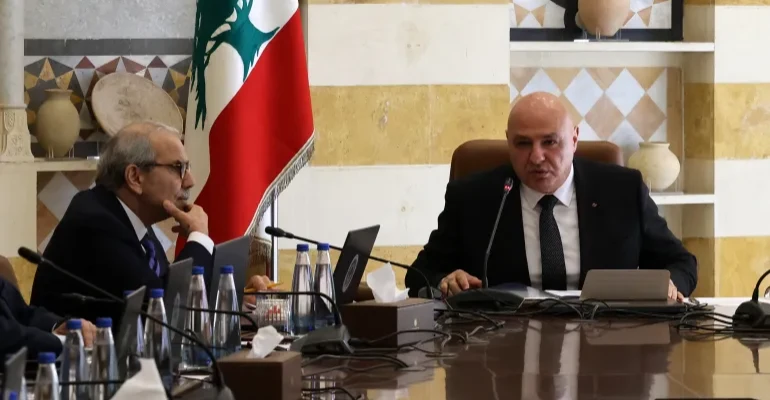
Lebanese President Joseph Aoun and Prime Minister Nawaf Salam on Friday condemned the massive Israeli explosion at the UNESCO-listed *Beaufort Castle (Qala'at al-Shqif) in southern Lebanon, saying it breached the ceasefire, endangered civilians, damaged cultural heritage, and undermined diplomatic efforts.
Aoun denounced Israel's continuing operations in southern Lebanon, particularly explosions targeting infrastructure and archaeological landmarks, describing the detonation at Beaufort Castle as a "dangerous escalation" and a "blatant violation" of existing commitments that threatened the implementation of the US-sponsored framework agreement, under which Lebanon has committed to fulfilling its obligations. Citing Lebanon's National Center for Geophysics, he noted that the blast generated seismic waves equivalent to a magnitude 3.8 earthquake.
The timing, on the eve of Lebanese-Israeli talks in Rome on the three-party framework, he added, sent "negative messages" and weakened international efforts to reinforce stability, urging the agreement's sponsors and the international community to halt actions that could derail diplomatic progress and security in southern Lebanon.
Salam, for his part, said the repeated explosions, shelling, and systematic destruction amounted to a “clear ceasefire breach” and violated Lebanon's sovereignty and international law.
إنّ الاعتداءات الإسرائيليّة المستمرّة في جنوب لبنان، تفجيراً وقصفاً وتدميراً ممنهجاً، تُعبّر عن خرق صريح لوقف إطلاق النار، فضلاً عن كونها انتهاكاً سافراً لسيادة لبنان وأمنه، ولمبادئ القانون الدولي وقواعده. وهي لا تمثّل فقط نهجاً تصعيدياً مُداناً، بل تشكّل أيضاً تهديداً لسلامة…
— Nawaf Salam نواف سلام (@nawafsalam) July 31, 2026
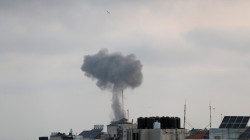
Overnight Thursday into Friday, the Israeli Prime Minister's Office and the Defense Ministry announced that the Israeli military had destroyed a network of Hezbollah tunnels beneath Beaufort Castle in the Arnoun area using approximately 700 tons of explosives. The joint statement alleged the tunnels were "a key component" of the group's plan to infiltrate communities in the Galilee.
Lebanese media characterized the operation as one of the largest carried out by Israel in southern Lebanon, saying its destructive impact and geographic extent were surpassed only by the 2020 Beirut port explosion. The blast altered the landscape around Arnoun and neighboring areas, flattening rocky hills, farmland, and dozens of homes while blanketing large stretches of land with limestone debris. The full extent of the damage to the historic fortress, however, has yet to be determined.
Israeli forces also carried out three powerful explosions near Taybeh and another in Deir Seryan, both in the Marjayoun district, as well as a separate blast in Kfartebnit, in Nabatieh. Illumination shells fired around Ali al-Taher hill on the outskirts of Nabatieh al-Fawqa reportedly ignited fires in the area.
Read more: “Attack on Identity”: Israel damages 55 historic towns in Lebanon
The developments came despite the US-sponsored framework agreement signed by Beirut and Tel Aviv on June 26, which provides for a gradual Israeli withdrawal from occupied Lebanese territory in exchange for the deployment of the Lebanese Army and the disarmament of armed groups. Israel, however, continues to occupy areas in southern Lebanon, including territory held for decades and areas seized during the 2023–2024 conflict, while its latest operations extended more than 10 kilometers into Lebanese territory.
According to Lebanon's Health Ministry, Israeli attacks since March 2 have killed 4,333 people and injured 12,236 others, including women and children.
*Beaufort Castle is one of five Mount Amel fortresses that UNESCO inscribed on both the World Heritage List and the List of World Heritage in Danger on July 24 under an emergency procedure prompted by the ongoing conflict.