Humanitarian crisis deepens in Suwayda, ongoing blockade


Shafaq News – Suwayda
The humanitarian situation in Suwayda, southern Syria, continues to deteriorate under a blockade imposed by forces affiliated with the transitional government and allied armed groups, residents reported on Sunday.
The siege has cut off access to food, fuel, and basic supplies, compounding living and service-related hardships.
Firas Kamal, a resident of Suwayda city, described daily life in Suwayda to Shafaq News as unbearable due to the fuel shortage and the halt in public transport. “Life is nearly paralyzed — no vehicles, no transport, and not enough electricity to even run a water pump.”
Many areas have experienced water outages for days, with most wells out of service. Kamal noted that the lack of electricity and fuel has made it impossible to operate water pumps or carry out repairs. “There are no resources, and equipment or spare parts aren’t allowed in.”
Wafa Al-Khatib, a teacher living in Suwayda, noted that electricity is nearly nonexistent and usually reserved for official buildings. “We don’t know when power comes or goes. We’re trying to cope, but it’s unsustainable, especially for families with children and the elderly,” she told Shafaq News.
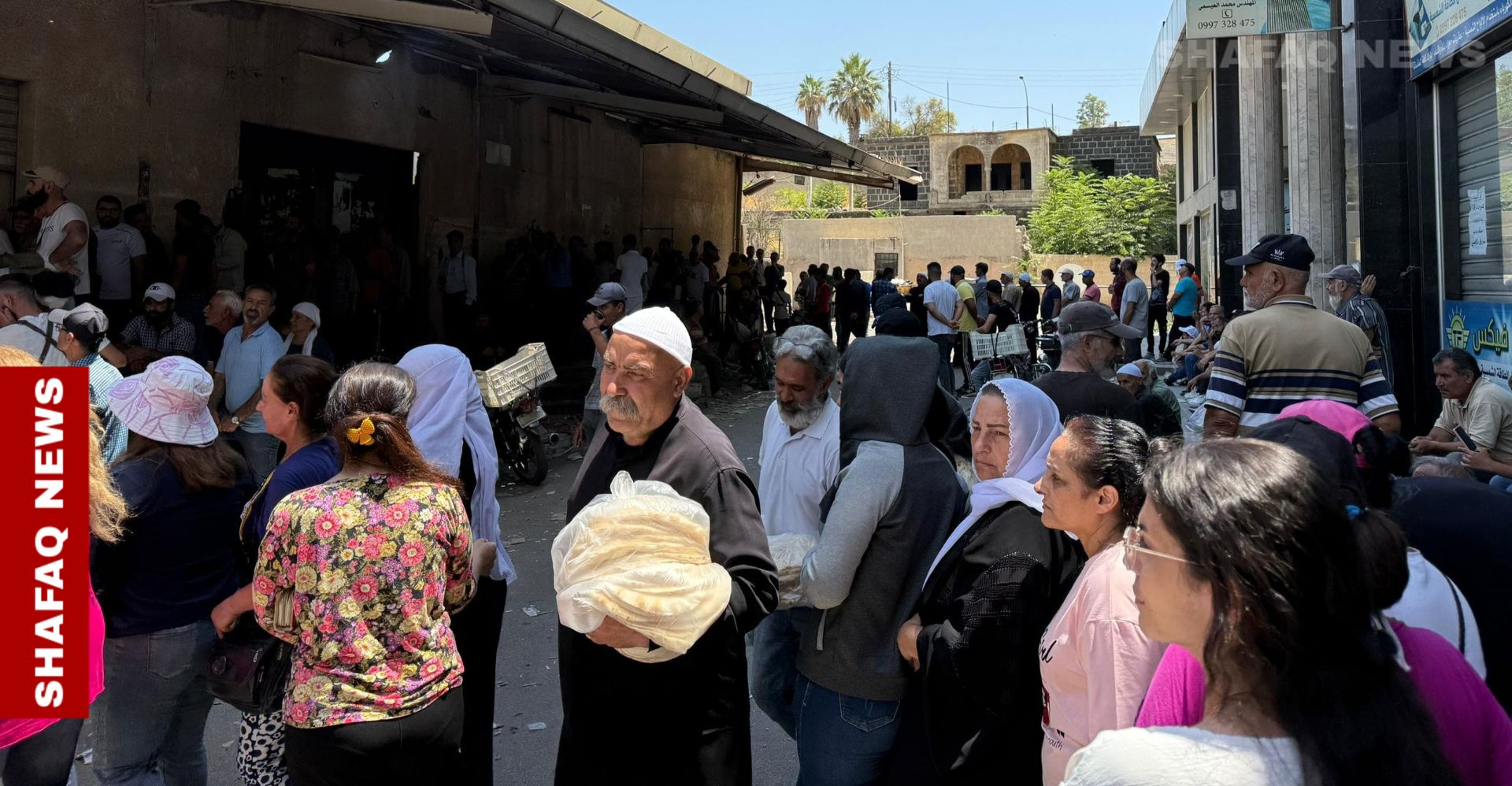
In the city of Shahba, civil activist Samer Al-Ashi described the situation as a “silent catastrophe.” He added to Shafaq News that markets are mostly closed, food stocks are dwindling, and people are standing in long lines just to get bread. “There’s a growing sense of being trapped, and things are worsening by the day.”
Despite the recent arrival of limited humanitarian aid through international organizations, Al-Ashi clarified that it has not been enough, especially as the number of displaced families grows.
Nadine Al-Aflaq, a volunteer at a shelter center, reported that aid deliveries are irregular, adding, “Some families can’t even feed their children or provide them with milk.”
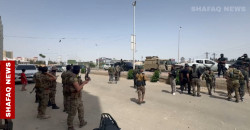
Amid persistent security tensions, residents of the town of Ara reported fresh gunfire from positions controlled by pro-government groups, in what appeared to be further breaches of the ceasefire.
In response to the siege, multiple cities and towns in Suwayda witnessed protests in recent days. Demonstrators called for lifting the blockade and demanded international protection for civilians. Activist Al-Ashi, who joined a protest in the town of Al-Qurayya, said demonstrators hold the transitional authorities responsible for what they called “ongoing violations” against civilians.
Separately, several municipal leaders and heads of local councils rejected an invitation to a meeting organized by the transitional government. They announced plans to file legal complaints against official entities for alleged serious abuses against residents.
Residents also reported growing difficulties in receiving financial remittances from abroad, worsening the economic strain on families. “Our relatives used to help us from abroad, but now even that support can’t reach us,” said a local man named Radwan.
Meanwhile, Syria’s Finance Ministry announced that it had transferred public sector salary funds for Suwayda employees to bank branches in Izraa city. The move followed “attacks by outlaw groups on public offices and banks” and aimed to ensure staff safety and protect public assets, the ministry stated.
Interior Ministry spokesperson Nour Al-Din Al-Baba dismissed the siege allegations as "propaganda by outlaw groups," accusing them of attempting to open unauthorized border crossings in and outside the country to sustain arms and drug trafficking networks.
With the main roads still blocked and only one tightly monitored route open — the Suwayda–Daraa road — the province remains in near-total isolation. Residents widely agree that the situation is growing more dangerous and requires urgent humanitarian and international intervention.