Why is a university in Khanaqin so politically sensitive?


Shafaq News
Iraq's federal government and the Kurdistan Regional Government (KRG) have reached a preliminary agreement to establish Khanaqin University under federal authority, according to official meeting minutes disclosed on Sunday.
The plan concerns a Kurdish-majority district that both Baghdad and Erbil claim, and a senior Kurdish politician said it carries political and ethnic consequences for the city's future.
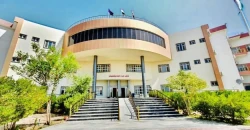
The proposed university would be based in Khanaqin and operate under the federal Ministry of Higher Education and Scientific Research. Under the agreement, the new university's president must be from Khanaqin. Its existing administrative staff would remain in place for now, and current admission procedures would continue until the formal process for establishing the institution is completed.
The agreement also sets out arrangements aimed at resolving recognition problems affecting the University of Garmian's students and graduates, a dispute that officials said concerns around 17,000 students, according to the minutes.
The Garmian Recognition Dispute
Khanaqin's three existing colleges were once part of the University of Garmian. The federal Ministry of Higher Education formally recognized Garmian on June 22, 2014, but suspended recognition of the Khanaqin colleges on August 23, 2021, because their land lies within territory disputed between Baghdad and Erbil, according to Sherko Mirwais, a senior member of the Patriotic Union of Kurdistan (PUK), one of the two main Kurdish parties in the Kurdistan Region.
In a statement, Mirwais said the lack of full federal recognition of Garmian degrees had created problems for thousands of students over several years, and that finding a legal and academic solution was legitimate. Once the issue reaches Khanaqin, however, he said it becomes a sensitive political and ethnic question tied to the city's future.
Concerns Over Land And Population
Mirwais said a federal university in Khanaqin could cost the city parts of its land and alter its population makeup. “Bringing in thousands of new employees and their families could have demographic consequences for the district.”
He also asked what would happen to the current staff of the Khanaqin colleges, which he said employ 281 faculty and administrative personnel across three colleges.
Residents and local figures had for years sought a university for Khanaqin that would be affiliated with the Kurdistan Region, Mirwais said, but those efforts stopped after federal forces took control of the city in October 2017.
Mirwais proposed resolving the Garmian graduates' situation through full federal recognition of the university. For Khanaqin, he called for freezing work on the new university until the constitution is implemented, the political situation in the area stabilizes, or a Khanaqin university is established under the Kurdistan Region. "The problem is fundamentally political," he said, urging that it be handled as part of the wider outstanding disputes between Erbil and Baghdad.
Read more: The borderland bargain: Daily life inside Khanaqin’s quietly shifting frontier
Why Khanaqin Is Sensitive
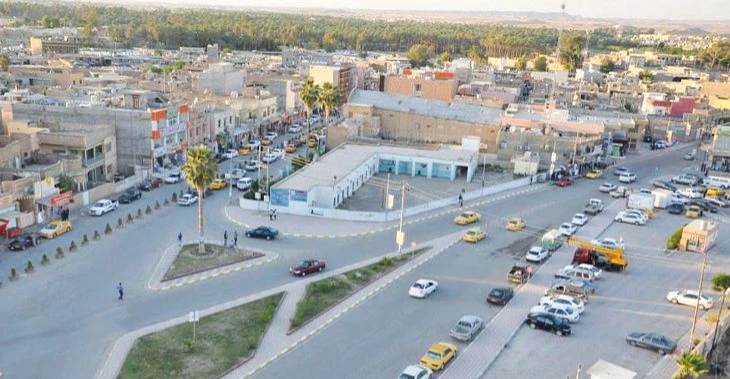
Khanaqin is a Kurdish-majority district in Diyala province in eastern Iraq, near the Iranian border. It lies outside the Kurdistan Region's formal boundaries but is one of the so-called disputed territories that both the federal government and the KRG claim.
Parts of these areas were subjected to Arabization under the former Baath Party government, which moved Kurds and other groups out and settled Arab families in their place. Article 140 of Iraq's 2005 constitution was designed to settle their status through three stages: reversing the effects of those policies, holding a census, and then a local referendum on whether each area joins the Kurdistan Region.
The article set a deadline of December 31, 2007, which passed without the process being completed. In 2019, Iraq's Federal Supreme Court ruled that the article remains in force until its steps are carried out.
Kurdish Peshmerga forces controlled Khanaqin and much of the disputed territory until October 2017, when federal forces took over those areas following the Kurdistan Region's independence referendum the previous month.
Khanaqin has seen recent disputes over administrative changes. In February 2026, the district held a general strike after the federal Planning Ministry moved to upgrade the Jalawla sub-district into a full district and turn Qara Tapa into a separate district, changes Kurdish officials said would shrink Khanaqin and violate Article 140.
Other Disputed Areas
The disputed territories stretch across northern and eastern Iraq. They include all of Kirkuk, an oil-rich province, as well as parts of Nineveh province such as Sinjar, home to much of Iraq's Yazidi community, and the districts of Makhmour, Tel Kaif, Sheikhan, Hamdaniya and Tal Afar. They also cover areas of Diyala and Saladin provinces, including Khanaqin and Tuz Khurmatu. Kurdish parties have repeatedly said that administrative decisions in these areas should wait for Article 140 to be implemented, while some Arab and Turkmen parties in Kirkuk consider the article to have expired.
Next step
The KRG education minister asked for the agreement to be submitted to the KRG Council of Ministers for approval, and it will take effect only after it is formally endorsed, according to the minutes.
Read more: Khanaqin tensions: Why is Iraq’s Article 140 back in focus?