Syria expands Kurdish education ahead of new school year


Shafaq News- Damascus/ Qamishli
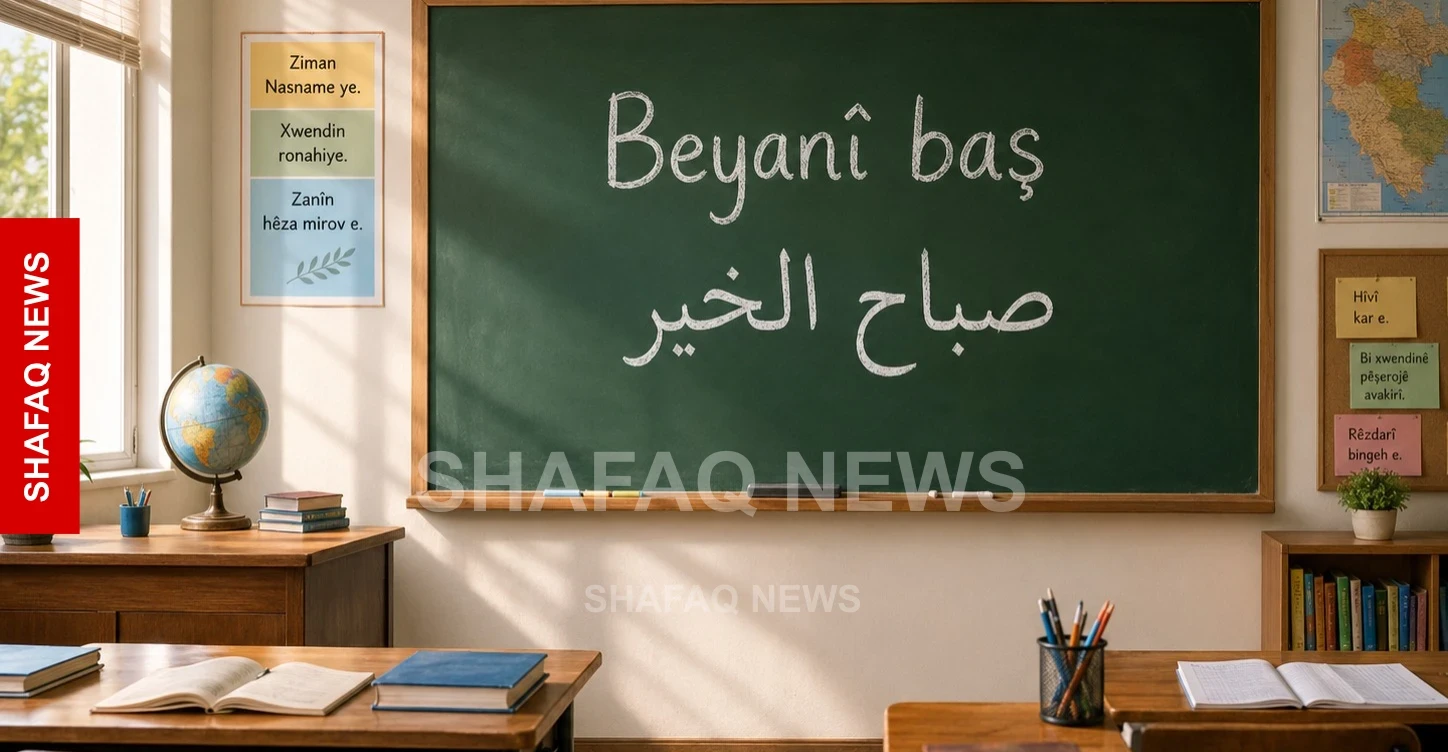
In Qamishli, a teacher was once dismissed from Syria’s Education Ministry after a military intelligence report accused him of “laughing in Kurdish.” Decades later, schools in the same city are preparing to teach Kurdish as part of the official curriculum, alongside Arabic and English.
Researcher and international arbitration adviser Abd Issa recalled the incident, describing it as an example of the restrictions once imposed on the Kurdish language.
The change comes just days before the new academic year. On August 27, Education Minister Mohammed Abdulrahman Turko issued Decision No. 2068/943, amending the executive regulations of Decree No. 13 of 2026, 10 days before schools are due to reopen.
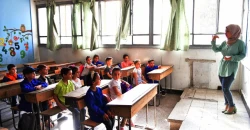
Under the new decision, Kurdish has moved from an elective subject taught for two lessons a week under the previous regulations to a component of the approved curriculum at all educational levels in public and private schools in areas where Kurds make up a significant share of the population.
The decision sets three Kurdish-language lessons a week, with the grades counting toward students’ final averages, in addition to a separate class for activities.
During the first academic year of implementation, students may also choose to study social studies, history, geography and philosophy in either Arabic or Kurdish under the approved curricula. The arrangement is intended to ease the transition for students who previously studied those subjects in Kurdish in schools run by the Autonomous Administration.
The decision does not specify what will happen after the first year, including whether those subjects will continue to be taught in Kurdish under a different arrangement or whether the transitional provision will expire.
Another question concerns the status of the Kurdish-language classes themselves: whether they will be compulsory for Kurdish students or remain an elective addition to the school schedule.
The distinction could affect participation levels and determine how widely the new policy is implemented.
From Elective Subject to Approved Curriculum
The first executive regulations, issued on January 26, designated Kurdish as an elective subject taught for two lessons a week. Its grade counted toward students’ overall average but did not affect whether they passed or failed.
The August 27 decision increased Kurdish-language instruction to three lessons a week, added a separate activities class, and explicitly made Kurdish part of the approved curriculum, with its grade included in the final average.
As a result, Kurdish has gained a stronger position as a subject in the national curriculum, while its use as a language of instruction for other subjects remains limited, under the current rules, to the first year.
The decision has drawn differing views among Kurdish politicians and analysts.
Academic and political analyst Ferdi Saadoun told Shafaq News that the four classes allocated to Kurdish language and activities appear to be additional elective classes rather than a mandatory part of the core curriculum. He cautioned that some students could opt out if the classes become an additional academic burden.
Saadoun argued that Kurdish should instead be compulsory for Kurdish students and elective for Arabs and members of other communities.
He also questioned the wording referring to “areas where Kurdish citizens constitute a significant share” of the population, asking whether it could limit implementation in cities with large Kurdish communities that do not form a majority.
Although the decision states that Kurdish has become “part of the approved curriculum,” it does not provide detailed instructions on how the classes will be incorporated into individual schools’ daily schedules. Those details are expected to become clearer once the policy is implemented.
A National Language, Not an Official One
The legal framework began on January 16, when transitional President Ahmad al-Sharaa issued Decree No. 13 of 2026, recognizing Syrian Kurds as an essential and integral part of the Syrian people and their cultural and linguistic identity as part of the country’s national identity.
The decree also designated Kurdish as a “national language” and permitted it to be taught in public and private schools in areas where Kurds constitute a significant share of the population.
It did not, however, grant Kurdish the status of an official language.
That distinction is central to the Kurdish debate in Syria. Recognition as a national language places Kurdish within the country’s cultural identity, while official-language status would entail a broader role in government offices, public institutions, correspondence and public services.
Abdul Hakim Bashar, a member of parliament and of the Kurdistan Democratic Party, told Shafaq News that Kurdish had moved “from a stage of denial, rejection and prohibition to recognition as a national language,” describing the change as historic but insufficient.
“Recognizing Kurdish as a national language is certainly a positive and important step, but it is not enough to meet Kurdish linguistic and cultural demands.”
He called for Kurdish to become Syria’s second official language alongside Arabic in Kurdish areas, allowing its use in education, public administration and state institutions.
Kurdish politicians therefore want these rights secured not only through decrees and executive decisions but also in Syria’s future constitution.
A Language Shaped by Decades of Restrictions
The sensitivity surrounding Kurdish-language education is rooted in a history spanning decades.
In 1962, an exceptional census in Hasakah province stripped around 120,000 Kurds of Syrian citizenship, according to Human Rights Watch. The effects of statelessness later extended to generations of those families.
Citizenship was not the only point of contention. The organization also documented restrictions on the use of Kurdish, bans on Kurdish-language publications, restrictions on cultural activities and Kurdish celebrations, and policies affecting Kurdish cultural identity.
After the Baath Party came to power in 1963, Arabization and cultural and linguistic exclusion became entrenched over subsequent decades, with many such policies continuing under Bashar al-Assad.
In an interview with Shafaq News, author Khaldoun Qatlan said the introduction of Kurdish into the curriculum cannot be separated from that history.
He described the move as more than an educational measure, calling it, in the context of previous decades, a “corrective action” that restores recognition to identities that had been marginalized and presents cultural and linguistic diversity as part of national unity rather than a threat to it.
Qatlan cautioned that the significance of the decision will depend on how it is implemented.
Developing academically sound curricula and training enough teachers proficient in Kurdish and its grammar will be key tests, he maintained, warning that a shortage of qualified staff could turn the new classes into a “mere symbolic facade with no educational value.”
From Autonomous Schools to State Curriculum
The situation changed after 2011 across large parts of northeastern Syria.
As Damascus’s authority receded, Kurdish use expanded and eventually became a language of instruction within the education system developed by the Autonomous Administration. A generation of students subsequently studied in Kurdish for several consecutive years.
That system, however, remained outside the central government’s formal education structure, while its curricula and certificates remained subjects of dispute with Damascus.
Issa told Shafaq News that the effects of earlier policies remain visible among younger generations. Many young people speak Kurdish but cannot read or write it proficiently because of the language’s long absence from formal education, he explained.
“What is needed is strong curricula, qualified teachers, and official and cultural support so that the language can regain its natural place in our homeland, Syria,” Issa said.
He also called for Kurdish-language higher education, asking: “What is wrong with having a Kurdish literature department in Syrian universities, and even doctoral programs in Kurdish, like any other language?”
Where Will Kurdish be Taught?
Education Minister Turko has indicated that the program will not be limited to Hasakah province or areas where Kurds form a majority.
Kurdish-language education should reach areas where Kurdish communities live, including Aleppo, Damascus and Homs, as well as Hama and Afrin, Turko noted, adding that the ministry would work to introduce Kurdish-language education in Afrin and train teachers for the program.
The decision allows teachers to be recruited from within or outside the ministry’s existing staff. Applicants will undergo written and oral tests to assess their proficiency in Kurdish, while training and qualification programs will also be organized.
Teacher availability could become one of the first practical tests of the policy, as Syria’s centralized education system spent decades without producing Kurdish-language curricula or training teachers in the language on the scale now required.
The decision also comes against the backdrop of a March 10, 2025, agreement between al-Sharaa and Abdi, which recognized the Kurdish community as an integral part of Syrian society and pledged constitutional rights and citizenship, alongside the integration of civilian and military institutions in northeastern Syria into state structures.
Implementation of The Agreement Stalled before The Process Accelerated in 2026
On August 25, Abdi announced from Damascus the end of the SDF as an independent military force following its integration into state institutions. Two days later, Damascus expanded Kurds’ place in the school curriculum, and Abdi was subsequently appointed an adviser to the presidency.
The sequence does not establish a direct negotiating connection between the developments, but it illustrates the changing political context.
As military and administrative authority shifts toward state institutions, Kurdish demands are increasingly focused on the rights those institutions will guarantee and whether those rights will survive the transitional period.
Qatlan considers the durability of the new policy its main challenge, questioning whether the current steps will mark the beginning of “a comprehensive national policy that recognizes Syria’s diversity in all its components” or remain tied to a particular political context.
The September 6 Test
Bashar considers the education measure significant but insufficient on its own to guarantee Kurdish rights without clear legislation and constitutional protections that would prevent future governments from reversing them.
Before that constitutional debate, however, the first practical test will come when schools reopen on September 6.
That is when details not addressed in the ministerial decision will become apparent, including how many schools will offer Kurdish, whether teachers and textbooks are available, how classes will be incorporated into schedules, and how many students will enroll.
Those details will determine whether the decision establishes a sustainable educational path or encounters the implementation challenges raised by Kurdish politicians and researchers.
The teacher who was once dismissed from the Education Ministry for “laughing in Kurdish” is no longer being punished for using the language. The ministry that once dismissed him is now seeking teachers who can teach it, testing their proficiency and preparing curricula in Kurdish.
The first classes will begin on September 6.