Kurdistan leads push for a greener future


Shafaq News – Erbil
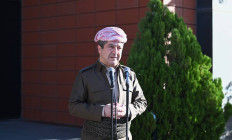
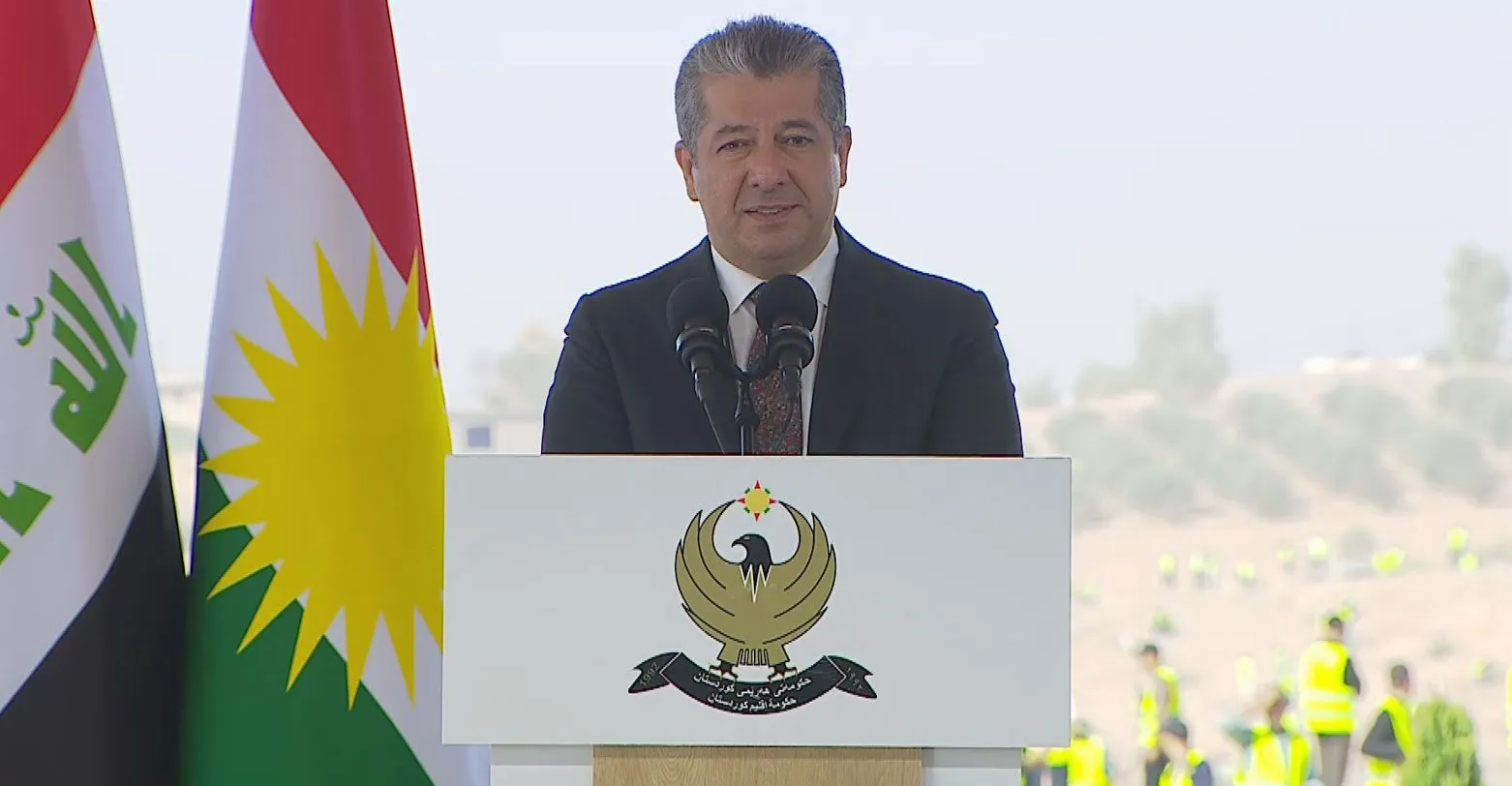
Kurdistan Region Prime Minister Masrour Barzani inaugurated on Thursday the Green Belt Project in Erbil — an 82-kilometer-long, two-kilometer-wide stretch that will encircle a quarter of the city.
Speaking at the launch, Barzani urged foreign and European governments to support the Kurdistan Region’s environmental protection efforts, warning that worsening drought and desertification could trigger a new wave of migration toward Europe and beyond.
The initiative comes amid growing environmental pressures linked to climate change and shrinking water resources. Official data indicate that about 39 percent of the Kurdistan Region’s land suffers from desertification, while Iraq overall has lost up to 60 percent of its productive soil, according to environmental reports.
Average water availability has dropped to roughly 600 cubic meters per person per year — far below the global stress threshold. The Erbil Directorate of Irrigation has cautioned that low rainfall and over-extraction have damaged local dams and reduced agricultural yields, prompting plans for 33 new water reservoirs with a combined capacity of 18 million cubic meters.
“The issue of the environment and climate change does not only affect Kurdistan; it affects the entire world,” Barzani said. “We must take this issue very seriously and act before it is too late.”
The Green Belt Project
The Green Belt is one of the Kurdistan Regional Government’s most ambitious environmental programs to date. Designed to curb soil erosion, reduce dust storms, and absorb carbon emissions, it aims to integrate green infrastructure into Erbil’s urban master plan.
The first phase involves planting three million seedlings as part of a broader strategy to combat land degradation, improve air quality, and promote sustainable livelihoods.
Local authorities estimate the belt could capture between 140,000 and 210,000 tons of carbon dioxide annually. Beyond its ecological role, the project is expected to create jobs, strengthen the local economy, and support the government’s goal of diversifying income sources beyond oil and gas.
Barzani said the initiative reflects a broader shift in government policy. “We aim to diversify the economy and develop all sectors, not rely solely on oil and gas. Environmental projects can improve people’s health, provide work opportunities, and become a new source of income,” he said.
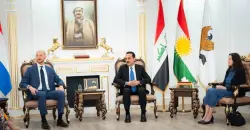
The project has drawn international technical support, including cooperation with the Netherlands in water management and sustainable agriculture.
Migration Warning
Experts warn that unchecked desertification could accelerate displacement in northern Iraq. As farmland dries and rural livelihoods collapse, residents increasingly move to urban centers — or consider emigration abroad.
“When an area turns into a desert, its people begin to think of leaving,” Barzani said. “This migration will not stop here; it will extend to other parts of the world where people seek better living conditions.”
He urged foreign governments to address the causes of migration rather than its consequences. “European countries can provide economic assistance today to avoid the social and security challenges that migration will bring tomorrow,” he said.