Kurdish rivals court Shiite bloc ahead of Iraq’s presidential vote


Shafaq News– Erbil/ Al-Sulaymaniyah
Iraq’s parliament prepares to convene on Tuesday to elect a new president, with competition between the Kurdistan Democratic Party (KDP) and the Patriotic Union of Kurdistan (PUK) having entered a critical phase, as both sides intensify efforts to secure backing from the Shiite Coordination Framework (CF), whose parliamentary weight is widely seen as decisive in determining the outcome.
Political sources within the KDP told Shafaq News that both Kurdish parties are factoring the balance of power inside the CF into their calculations, noting that the bloc controls more than 185 seats in the 329-member Council of Representatives. Without its support, it would be impossible to elect a president, particularly given the constitutional voting thresholds.
Under Iraq’s constitution, the first round of the presidential vote requires a two-thirds majority —at least 220 lawmakers out of 329— to be present and to vote. If no candidate secures the necessary majority, a second round is held between the top contenders, in which victory requires a simple majority of half plus one (165 votes) of attending members.
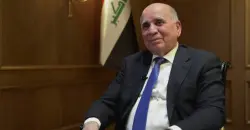
Against this backdrop, the KDP is backing Foreign Minister Fuad Hussein, relying on his long diplomatic career and regional and international ties, alongside what sources described as “political understandings with influential figures inside the Coordination Framework, including State of Law Coalition leader Nouri al-Maliki.”
The sources added that while these understandings are politically sensitive and aim to break the deadlock over electing a president, they have also sparked reservations within some parliamentary circles, which argue that Hussein’s age (80) could pose a challenge to effectively carrying out the duties of the office in the next phase.
The PUK, meanwhile, continues to support Nizar Amedi (58), portraying him as a seasoned figure in presidential affairs due to his years of work inside the Republican Palace and his previous role as environment minister. Sources within the PUK said the party believes Amedi’s broader parliamentary acceptance, “including among Sunni blocs and some of the Framework forces, strengthens his chances in a closely contested race.”
According to all sources, the battle is no longer limited to comparing professional credentials but reflects a broader political test between the two main Kurdish parties. While the KDP is emphasizing diplomatic leverage and new alliances, the PUK is banking on parliamentary arithmetic and established understandings.
Despite public assertions that the vote would proceed as scheduled, uncertainty has grown over the timing of the session. In remarks to Shafaq News, KDP lawmaker Ashwaq al-Jaf said there was no official decision to postpone the presidential election and confirmed that her bloc was heading to parliament in anticipation of the session.
However, Parliament Speaker Haibet al-Halbousi said the Council of Representatives had received a formal request from both the KDP and the PUK to delay the session to a later date, in an effort to allow more time for negotiations and possibly agree on a single Kurdish candidate.
Al-Jaf acknowledged that calls to delay the vote had emerged, citing ongoing attempts to reach a Kurdish consensus and objections from some blocs over the potential nomination of al-Maliki for prime minister once a president is elected. She stressed, however, that the KDP remains committed to constitutional timelines and will proceed with its candidate even in the absence of a unified Kurdish position.
With the CF holding the key to meeting quorum requirements and tipping the balance in either round of voting, political observers say the decisive factor may not be the rivalry between Erbil and al-Sulaymaniyah, but which Kurdish camp succeeds in translating its relations with Shiite power brokers into parliamentary votes.
Read more: Iraq’s Presidential Race: Kurdish candidates competing for the post