KCP warns of divided rule over KDP-PUK rivalry


Shafaq News- Al-Sulaymaniyah/ Duhok
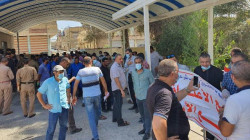
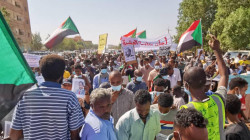
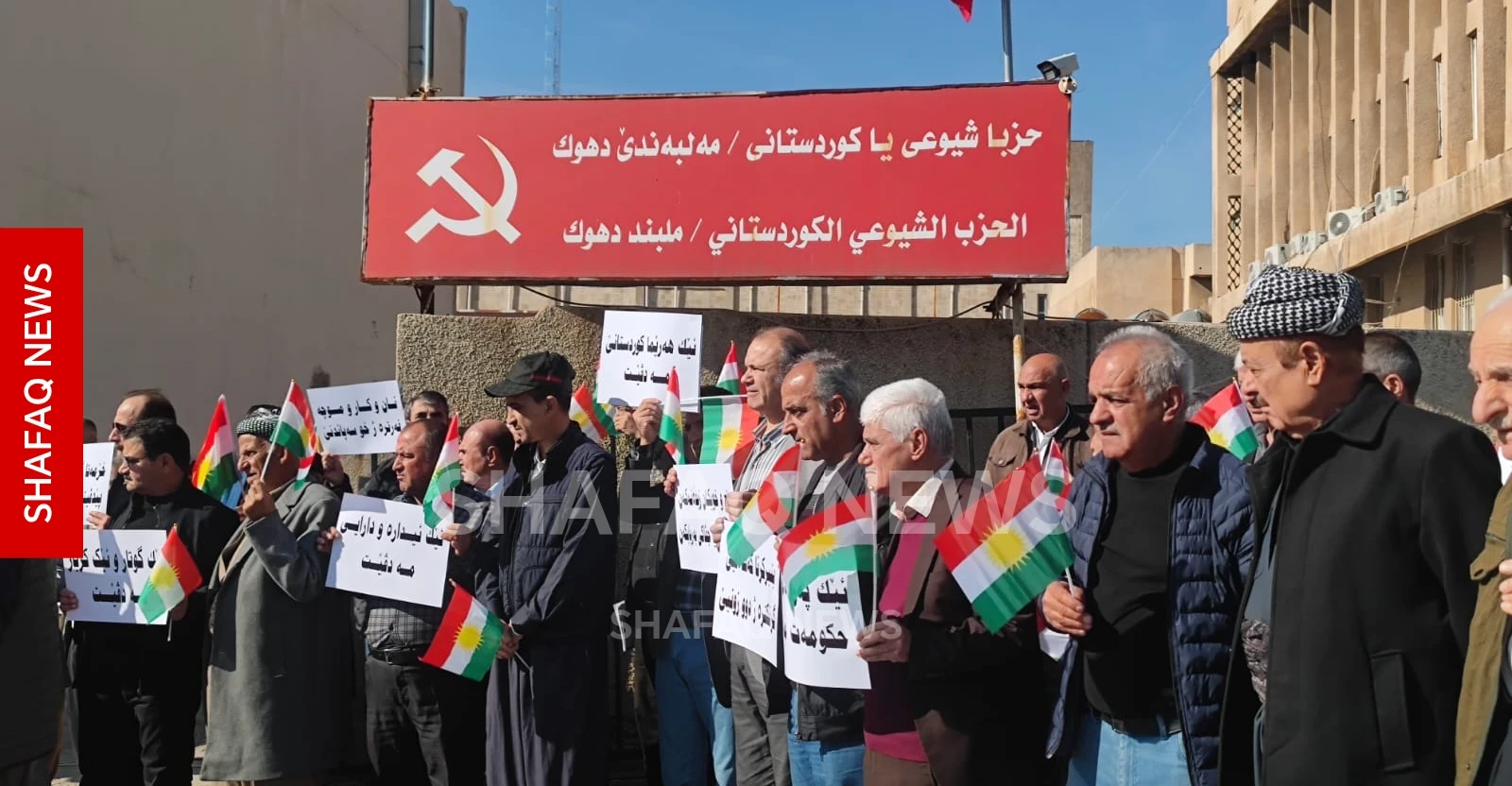
The Kurdistan Communist Party (KCP) warned on Saturday that the political deadlock between the Kurdistan Region of Iraq's (KRI) two main parties could revive separate administrations, as supporters staged protests in Al-Sulaymaniyah and Duhok demanding an end to political divisions and the preservation of the KRI's unity.
Calls for unity
In Al-Sulaymaniyah, party official Hassan Mahmoud blamed disputes between the Kurdistan Democratic Party (KDP) and the Patriotic Union of Kurdistan (PUK), delays in forming a new government, and disruptions to legislative work for a “dangerous deadlock and deep crisis.”
Mahmoud accused the rival parties of reinforcing administrative, financial, and security divisions through political power-sharing arrangements. He advocated unifying Peshmerga forces, security agencies, and public finances under a single administration, criticizing “the division of wealth and influence among a limited group” while living conditions deteriorate.
Calling for peaceful civic action to demand jobs, reliable electricity, and better education and healthcare, he cautioned that a political struggle based on “winners and losers” would harm the people of Kurdistan. He also pressed political leaders to resume negotiations or make way for figures capable of resolving the crisis.
In Duhok, dozens of Communist Party supporters demonstrated outside the party's provincial headquarters. Local official Rebar Amedi told Shafaq News that the rivalry had reached a “dangerous stage,” arguing that prolonged divisions had exposed the KRI to pressure and interference from Baghdad, Turkiye, and neighboring countries. Similar demonstrations took place in Zakho, Bamdri, and other parts of Badinan, he added.
The Dispute Behind The Warnings
The political deadlock dates back to the October 2024 parliamentary elections, when the KDP won 39 seats, the PUK 23, and the New Generation Movement 15 in the 100-seat legislature, leaving no party with an outright majority and delaying the formation of a new government.
Tensions escalated on November 4, 2026, when the Kurdistan Parliament convened despite a boycott by the PUK and New Generation, with some lawmakers from the two parties having previously declared themselves independent or severed party ties. The session drew 52 lawmakers, including six elected on the PUK and New Generation lists who attended despite their parties' boycott, and elected KDP candidate Vala Fareed as speaker.
PUK leader Bafel Talabani rejected the November 4 parliamentary session and threatened to establish parallel governing institutions in PUK-controlled areas if the KDP proceeded with political appointments, declaring, “If you form a government, we will form a government.”
Read more: SCOOP: PUK quits Kurdistan government over parliament dispute
The KDP, meanwhile, defended parliament's reopening as legal and necessary to restore legislative activity. Party leader Masoud Barzani called for renewed negotiations and a broad-based government on November 9, but Talabani dismissed the public invitation three days later as “not serious,” while leaving open the possibility of responding to a formal meeting request. The PUK and New Generation also challenged the November 4 session before Iraq's Federal Supreme Court.
Concerns Over Parliamentary Rules
Separately, the PAY Foundation for Education and Development, a Kurdistan-based NGO that monitors parliamentary performance, raised concerns about Article 110 of the Kurdistan Parliament's internal rules, which allows lawmakers to establish new parliamentary blocs. The foundation warned that the provision could enable elected representatives to shift their parliamentary affiliations, potentially changing the balance of power produced by election results.
In a statement, PAY argued that developments during the November 4 leadership vote reflected concerns it had raised in 2019, when the provision was adopted with support from parties including the KDP and PUK. It called for a review of Article 110, legal safeguards against its misuse, and stronger protection of parliamentary institutions and voters' choices.
Read more: Kurdistan Parliament deadlock through four political lenses