The head of the Islamic Supreme Council: the meeting of Shiite house forces is to build a unified vision
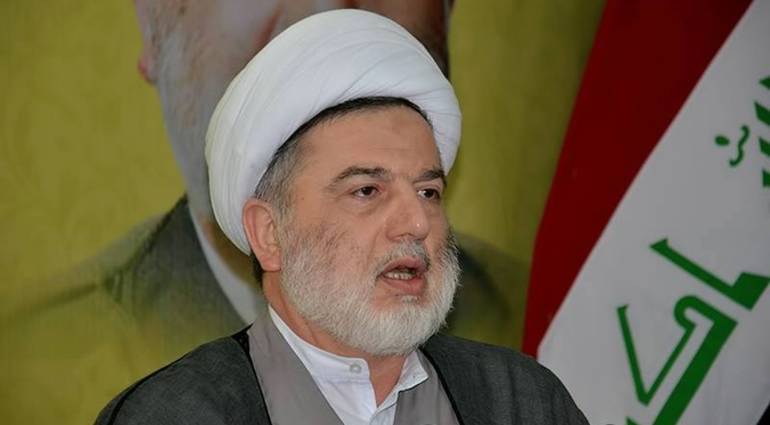


Shafaq News/ The head of the Islamic Supreme Council, Humam Hamoudi, confirmed on Thursday that the Shiite forces will hold a meeting this evening to "build a unified vision and path."
In a statement, Hamoudi said that the meetings of the Shiite house forces and today's dialogues are essential, stressing that "the unity and stability of Iraq is part of the unity of the Shiite house and its ability to face challenges, and correct the path."
He added, "the meeting of the Shiite house is to build a unified vision through which it bears the responsibility for lifting injustice, addressing the imbalances of the political process, including failure, corruption and partisan exploitation of the state."
"Everyone is keen at this stage for the unity and stability of Iraq, which cannot be achieved unless its political forces, especially the Shiites, which represent the largest population component, are cohesive and capable of producing a strong parliament at the level of citizen's ambition, and an effective national opposition in correcting any imbalances."
The leader of the Sadrist Movement, Muqtada al-Sadr, is scheduled to meet with the Shiite Coordination Framework objecting to the election results at the house of the head of the Al-Fateh Alliance Hadi al-Amiri, today.
A political source told Shafaq News Agency, "The meeting will be held in Baghdad, and the State of Law coalition leader, Nuri al-Maliki, will attend the meeting."
"The political forces will meet at a banquet to reconcile Al-Sadr with other Shiite forces, and it is hoped that the two parties will shake hands and take photos together." The source added.
Earlier, IHEC released final results on Tuesday from last month's general election, confirming populist Shiite cleric Moqtada al-Sadr's movement's victory as the biggest bloc, with 73 seats in the fractious 329-seat house.
The Takadum Party, which draws support from minority Sunni Muslims, won 37 seats. Former Prime Minister Nouri al-Maliki's State of Law group won 33 seats, and the Kurdistan Democratic Party (KDP) secured 31, according to the results cited by state media.
The results were broadly in line with preliminary figures released days after the Oct. 10 election and unlikely to alter calculations much as politicians negotiate on the makeup of a new government. Pro-Iran groups who performed poorly have refused to accept the results.
The commission said that turnout reached 44%, revised up from the 43% preliminary figure but still lower than in the last election in 2018.
The commission said that more than 9.6 million people cast their ballots in the Oct. 10 vote, where at least 167 parties and more than 3,200 candidates competed for the parliament's 329 seats.
For its part, The Kurdistan Democratic Party (KDP) commented on the new results saying that "two seats were illegally taken from the party."
Mahmoud Muhammad, KDP's spokesperson, said that the final results of the Iraqi parliamentary elections represent clearly that "two seats were deprived for two of the Kurdistan Democratic Party candidates in the governorates of Erbil and Nineveh."
He added, "We will announce the position of Party about this illegal act after holding the meeting of the political bureau."