Baghdad tightens control over what officials tell the press


Shafaq News- Baghdad
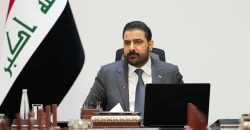
Iraq has tightened rules on government officials’ media appearances, with Prime Minister Ali al-Zaydi ordering advisers and officials to obtain prior approval from his office before speaking to the media.
The directive says the measure is intended to ensure a consistent official message and prevent statements that do not accurately reflect the government’s position. It has also raised questions about who is authorized to speak on behalf of the government and how the rules may affect journalists’ access to information.
Iraqi lawmaker Imad Yohana told Shafaq News that the measure primarily applies to advisers and spokespersons linked to the prime minister’s office and is intended to prevent conflicting information or incomplete positions from being attributed to the government.
“The government spokesperson will remain responsible for announcing official positions,” Yohana noted, adding that regulating media appearances by government employees does not necessarily amount to restricting freedom of expression. “Such rules should protect press freedom and journalists’ right to access information in line with Iraqi law and the country’s international obligations.”
The issue is particularly relevant to Iraqi journalists, who often face difficulties obtaining up-to-date information from official sources, including government and ministry spokespersons.
In some cases, news organizations rely on older statements as background for their reports or turn to anonymous sources inside ministries for updated information. The measure has also raised questions about how journalists will access information if fewer officials are authorized to speak publicly.
The prime minister’s directive comes as Iraq’s Communications and Media Commission has taken a series of regulatory measures in September against politicians, journalists and analysts.
Those measures have included bans on media appearances for varying periods, reaching 90 days in some cases, as well as formal warnings to local and foreign television channels over alleged violations of broadcasting rules.
Hadi Jalo Marai, a spokesman for the Iraqi Journalists Syndicate, told Shafaq News that media regulation should remain grounded in law while protecting freedom of expression and the right to access information.
Journalists and analysts should be free to express their views as long as they do not engage in incitement to hatred or violence, threats or extortion, Marai explained, while emphasizing the need to take Iraq’s social, cultural, sectarian and ethnic diversity into account.
Restrictions on government officials speaking to the media are not new in Iraq. Former Prime Minister Mohammed Shia al-Sudani previously introduced a similar measure after controversial remarks by one of his advisers during a televised interview.
Government institutions have also issued clarifications in previous years after statements by advisers or officials generated controversy or were interpreted as reflecting the government’s official position.
Political writer and analyst Ali al-Bayder described regulating government messaging as a matter of importance and a necessity for any country, particularly when multiple statements produce conflicting accounts of the same issue.
In an interview with Shafaq News, he argued that setting standards for who can appear in the media and what they can discuss is necessary, but warned against allowing regulation to expand into control of the media space. Such measures, he cautioned, should not result in "creating new dictatorships."
Al-Bayder also suggested that the latest directive could reflect concerns within the government over the reliability or competence of some figures appearing in the media, as well as an effort to prevent their statements from being attributed directly to the government.
Zainab Rabee, head of the Al-Nakheel Center for Press Freedoms, described prior approval for advisers’ media appearances as a normal part of government operations rather than a restriction on freedoms or political programming.
“Conflicting statements from government officials can leave journalists dealing with competing accounts and affect the credibility of their coverage,” Rabee noted, arguing that having a clear source for the government’s official position can help media organizations report that position accurately.
Political television presenter Enas Halim also underscored the importance of coordinating government messaging, noting that contradictory statements by officials can affect how the government and its positions are perceived.
Halim added that requiring advisers to consult the prime minister’s media office before speaking publicly could help coordinate the official message, “particularly because government advisers do not necessarily serve as official government spokespersons.”