Exclusive: al-Maliki, al-Ameri lead push for new Shiite bloc after Iraq cabinet vote


Shafaq News- Baghdad
Five of Iraq's “most powerful” Shiite political figures are in advanced discussions to form a new parliamentary alliance, a well-informed source exclusively told Shafaq News Friday —a development that would redraw the internal map of the Coordination Framework and place a bloc of up to 100 lawmakers in open opposition to the terms of Prime Minister Ali Faleh al-Zaidi's newly formed government.
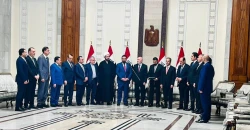
The five figures at the center of the discussions are: former Prime Minister Nouri al-Maliki, head of the State of Law Coalition; Hadi al-Amiri, secretary-general of the Badr Organization and head of the Fatah Alliance; Faleh al-Fayyad, chairman of the Popular Mobilization Forces (PMF) —the state-sanctioned umbrella of predominantly Shiite armed factions— and head of the National Contract Party (Al-Aqd al-Watani); Humam Hamoudi, head of the Islamic Supreme Council of Iraq; and Ahmed al-Asadi, head of the Sanad bloc.
According to the source, the five factions could convene as early as Friday evening or Saturday to formalize the bloc's political and parliamentary framework, with potential membership ranging between 75 and 100 lawmakers, which would make it one of the largest organized opposition forces in the current parliament.
Read more: Ali Al-Zaidi sworn in as Iraq's prime minister with a program already failed
The catalyst was yesterday's partial cabinet confidence vote, in which parliament approved only 14 of al-Zaidi's 23 proposed ministers, leaving the Defense, Interior, Planning, Culture, Reconstruction and Housing, Higher Education, Labor, Migration and Displacement, and Youth and Sports portfolios unresolved after negotiations over names and quotas collapsed between the major factions. The five factions contend their nominees were systematically blocked —foremost among them Qasim Atta, State of Law's candidate for Interior Minister— and have accused rival blocs of "stealing political entitlements" from coalition partners.
State of Law lawmaker Ibtisam al-Hilali, speaking to Shafaq News, said her coalition's nominees for the Interior and Higher Education ministries "were subjected to injustice, betrayal, and treachery" by members of the Reconstruction and Development bloc —led by former Prime Minister Mohammed Shia al-Sudani— and the Taqaddum party, led by former Parliament Speaker Mohammed al-Halbousi.
Thursday's session also produced two formal defections. Al-Fayyad's National Contract Party and the Sumariyoun Movement (affiliated with Sanad), led by former Labour Minister al-Asadi, announced their joint withdrawal from al-Sudani's coalition, citing "a clear circumvention of political and organizational agreements, a breach of pledges and covenants, and the deliberate marginalization and exclusion of elected representatives." The two factions had entered parliament with between nine and ten seats combined under the Reconstruction and Development's banner before the rupture.
Read more: Ali al-Zaidi named Iraq's prime minister: Easy nomination, harder road ahead
The source did not rule out the al-Azm Alliance, led by Muthanna al-Samarrai, joining the new bloc —a prospect that carries additional significance given that al-Samarrai had already skipped a meeting of the National Sunni Council convened to agree on ministerial nominations, in a sign of deepening disagreements between him and other Sunni leaders over the distribution of portfolios.
Other political sources told Shafaq News the fracture was not born from yesterday's session alone. Fault lines within the Coordination Framework —the largest Shiite parliamentary umbrella, which held approximately 162 seats before the current splits— had been forming since the earliest negotiations over the prime ministerial nomination, well before the eventual compromise on al-Zaidi, whose emergence as a consensus candidate surprised much of the political establishment.
Read more: Allies Turned Rivals: The Political Rift Between al-Sudani and al-Maliki
The disputes deepened through the ministerial distribution process, particularly around the position of armed factions, and factions with ideological ties to them, in the security and service portfolios, complicated by domestic and external pressure for a government with greater distance from the factions' equation and a clearer commitment to state monopoly on arms.
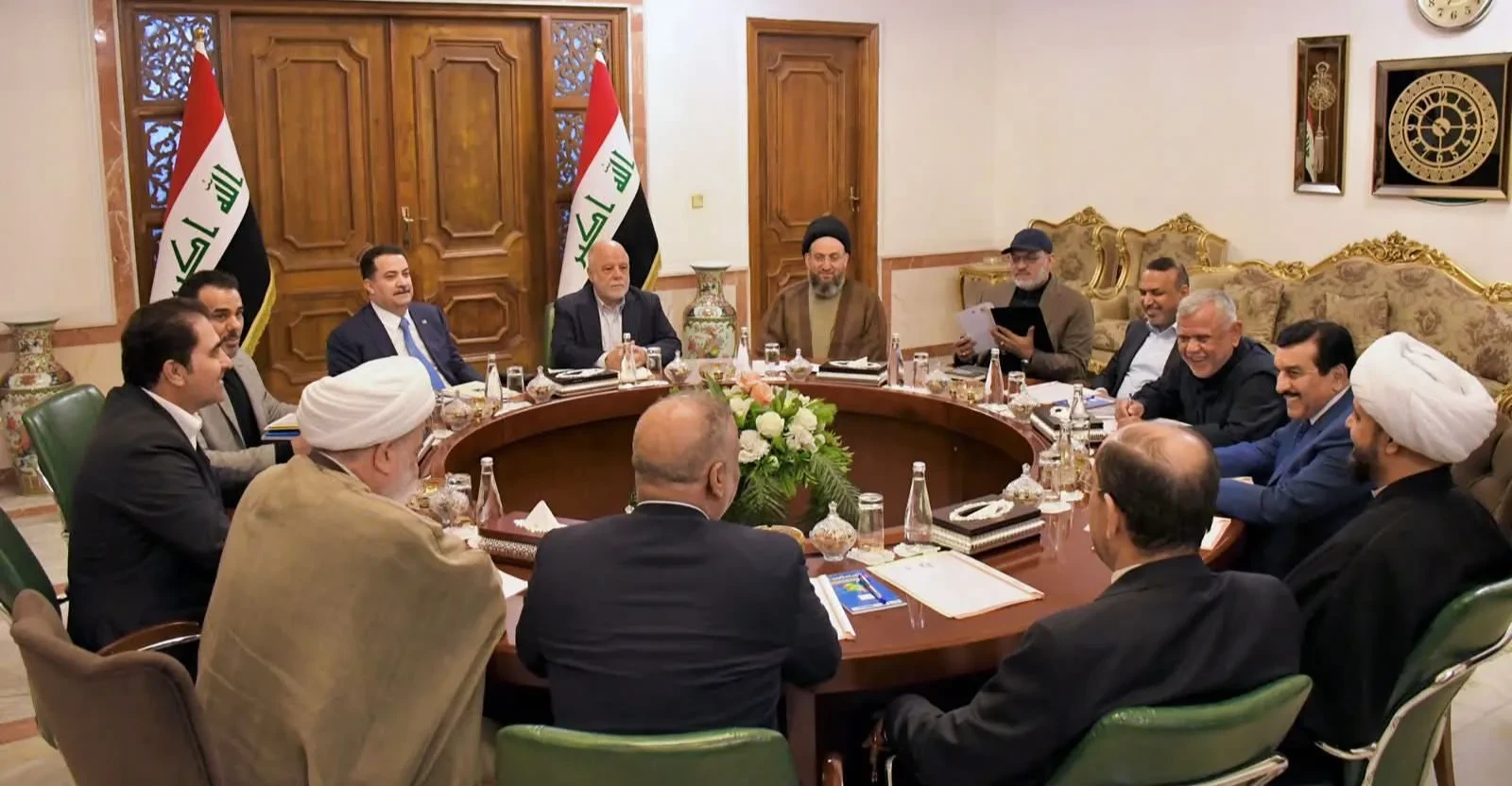
The sources now describe the Coordination Framework as effectively split into two camps. One gravitates toward al-Maliki, al-Amiri, al-Fayyad, al-Asadi, and Hamoudi —the factions contesting their returns from the new cabinet. The other, which includes Ammar al-Hakim, Mohammed Shia al-Sudani, Qais al-Khazali, and Haider al-Abadi, has treated al-Zaidi's government as a workable arrangement despite the frictions.
Read more: The Shiite Coordination Framework: Govern Iraq, but cannot agree on a prime minister
Al-Zaidi's cabinet is scheduled to return to parliament for a second confidence vote to fill the nine outstanding ministerial vacancies. No date has been set as of the time of publication.