CF navigates vetoes, rivalry in bid to choose Iraq’s next PM


Shafaq News – Baghdad
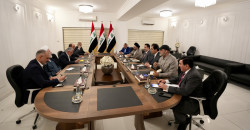
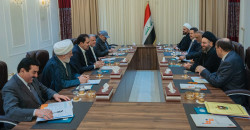
Iraq’s Shiite Coordination Framework (CF) is intensifying its efforts to select a prime ministerial candidate who can secure broad support and avoid internal vetoes, a source said on Sunday.
The source told Shafaq News that the CF, an alliance of pro-Iran Shiite groups, is screening proposed names to identify a figure capable of "passing smoothly" within the Shiite political house.
The push comes as Iraq enters a decisive phase of government formation following the November 11 parliamentary elections, with the CF positioning itself as the largest bloc entitled to nominate the next prime minister.
Within both Shiite and Sunni circles, discussions have expanded to the possibility of reactivating vice-presidential posts as part of political arrangements to accommodate key leaders outside standard ministerial roles, the source added.
Vice-presidential roles were eliminated in 2015 before the Federal Supreme Court overturned the decision in October 2016, yet the posts have remained vacant since 2018.
On sovereign ministries, the source said the CF is considering giving the Hikma Movement either the Foreign Affairs or Oil portfolio. Another option is assigning Oil to the State of Law Coalition and Interior to either the Badr Organization or Asaib Ahl al-Haq—all CF members.
Other major ministries, the source explained, remain under discussion; talks are moving toward granting the Kurds the Planning Ministry and others, while the Sunnis may receive Higher Education and Defense within a power-sharing framework shaped by political considerations. The Finance Ministry remains unsettled.
Since 2003, Iraqi governments have been formed under a power-sharing arrangement distributing the three presidencies and sovereign ministries among sectarian and ethnic blocs based on political agreements rather than explicit legal mechanisms. This structure has made the selection of the prime minister and division of key portfolios central to nearly every government formation crisis.
Competition over ministries such as Oil, Interior, Foreign Affairs, and Defense has long been among the most contentious issues due to their influence over security, resources, and Iraq’s foreign relationships, prompting Shiite, Sunni, and Kurdish forces to view them as strategic levers of power.
The uncertainty over the premiership persists despite caretaker Prime Minister Mohammed Shia Al-Sudani’s Reconstruction and Development (Al-Ima'ar Wal-Tanmiya) Coalition winning 46 seats—the largest of any single bloc. Al-Sudani faces significant hurdles to securing a second term amid divisions within the CF, which originally backed him in 2022.
Former Prime Minister Nouri al-Maliki’s State of Law Coalition won 29 seats, and the Shiite Dawa Party, which he also leads, has formally nominated him for a third term.
Once a prime minister is designated, Iraq’s constitution grants them 30 days to form a cabinet and secure parliamentary confidence.
Meanwhile, Sunni forces won 77 seats and have formed a National Political Council to coordinate their positions, while Kurdish parties secured 56 seats. Both blocs will play major roles in the negotiations that will shape Iraq’s next government—a process that in recent years has taken months to resolve.