Oil generates four-fifths of Iraq’s revenue through May


Shafaq News- Baghdad
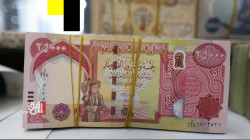
Oil revenues accounted for 84% of Iraq’s 33.747 trillion Iraqi dinars ($25.65B) in federal income through the end of May 2026, according to budget execution data released by the Finance Ministry.
The figures showed oil receipts reached 27.270 trillion dinars ($20.73B), while non-oil revenue totaled 6.477 trillion dinars ($4.92B), accounting for the remaining 16%.
Read more: Iraq’s oil bottleneck: Abundance trapped by dependency
Government spending reached 45.070 trillion dinars ($34.25B) over the same period, comprising 41.908 trillion dinars ($31.85B) in current expenditure, 3.094 trillion dinars ($2.35B) for debt servicing, and 13.6 billion dinars ($10.34M) in capital expenditure.
Employee compensation, according to the data, remained the largest spending item at 25.556 trillion dinars ($19.42B), followed by 11.373 trillion dinars ($8.64B) for social welfare. Grants, subsidies, interest payments, and other allocations totaled 3.301 trillion dinars ($2.51B), while goods accounted for 1.542 trillion dinars ($1.17B) and services 108.3 billion dinars ($82.31M).
Investment spending stood at 1.627 trillion dinars ($1.24B), including 915.9 billion dinars ($696.08M) for the national investment program, 605.9 billion dinars ($460.48M) for regional development projects, and 71.4 billion dinars ($54.26M) for petrodollar-funded projects. Buildings and public services received the largest share at 992.4 billion dinars ($754.22M), followed by transport and communications with 269.5 billion dinars ($204.82M), industry with 249 billion dinars ($189.24M), education with 99.9 billion dinars ($75.92M), and agriculture with 15.9 billion dinars ($12.08M).
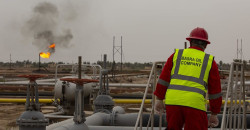
Iraq, OPEC’s second-largest oil producer, relies on crude exports for about 90% of federal revenue, a dependence that has come under growing pressure following disruptions to shipping through the Strait of Hormuz, which carries roughly one-fifth of global oil supplies. In late March, economic expert Nabil Al-Marsoumi estimated that the country had cut production by about 2.9 million barrels per day, the largest reduction among OPEC members.
Read more: No exit but Hormuz: Iraq’s economic vulnerability exposed