OPEC at 65: From Baghdad hall to global oil powerhouse


Shafaq News – Baghdad
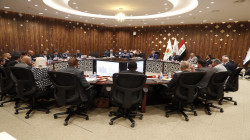
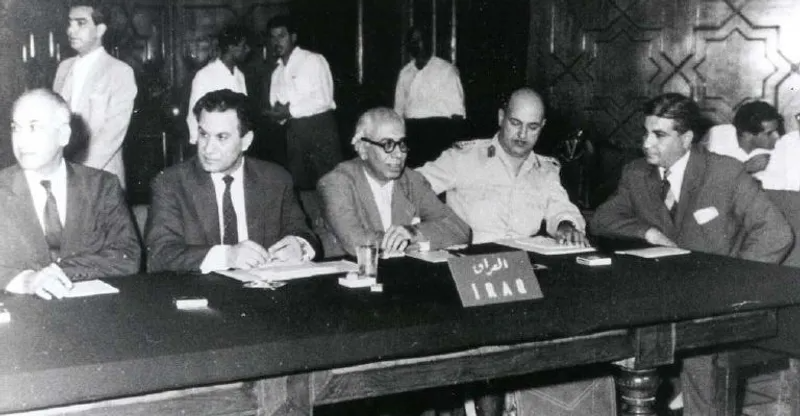
Sixty-five years ago, five ministers gathered in a modest Baghdad hall to challenge Western oil giants and reclaim control of their countries’ resources. That meeting in 1960 gave birth to the Organization of the Petroleum Exporting Countries (OPEC), now one of the most influential players in global energy.
The founders—Iraq’s Talaat al-Shibani, Saudi Arabia’s Abdullah al-Tariki, Venezuela’s Juan Pablo Pérez Alfonzo, Iran’s Foad Rouhani, and Kuwait’s Ahmed Sayed Omar—set out to end a system where international companies dictated prices while producers remained on the margins.
Asserting Control
OPEC’s early years offered little leverage, but by the late 1960s, the group issued a policy statement and, in the early 1970s, secured landmark agreements in Tehran, Tripoli, and Geneva that gave it real power to set prices. The 1973 Arab oil embargo then catapulted the organization to global prominence, quadrupling prices within months and establishing OPEC as a central force in the world economy.
However, the following decade exposed its limits, with a supply glut and falling demand that drove prices down, triggering bitter disputes among members. OPEC then introduced a quota system to regain control, but internal rifts persisted until coordination with producers outside the group became unavoidable.
That approach culminated in 2016 with the launch of OPEC+, a coalition including Russia. The alliance proved decisive during the COVID-19 shock of 2020, when oil demand collapsed. OPEC+ responded with a record production cut of 9.7 million barrels per day, averting a market meltdown.
Supporters credit the group with preventing deeper crises. A Saudi research center estimated OPEC’s spare capacity saved the global economy $193B in 2019, while an Oxford study calculated its absence would have cost $185B in 2011. Critics, however, continue to accuse the organization of manipulating markets and inflating prices.
Looking Ahead
Today, OPEC counts 12 members and remains registered with the United Nations, where it has held observer status since 1962. It forecasts global oil demand will climb to 123 million barrels a day by 2050, driven by economic and population growth despite the shift to renewable energy.
Secretary-General Haitham al-Ghais rejects suggestions that the group is fading. “Talk of OPEC’s decline is exaggerated,” he said recently. “We remain the cornerstone of market stability—and will stay so for decades to come.”