Iraq restarts oil transit through Syria toward Mediterranean


Shafaq News- Damascus/ Baghdad
Iraq partially revived oil transport through Syria toward the Mediterranean Sea, in a new move that carries broader implications beyond its current scale, a Syrian official told Shafaq News on Friday.
According to the head of the Syrian National Shipping and Logistics Association, Mohammed Riyad Al-Sayrafi, the move effectively reinserts Syria into the regional transit map. He called for the revival of the Kirkuk–Baniyas pipeline, which he described as a strategic option to reduce costs and limit reliance on maritime routes.
Al-Sayrafi noted that trade between Iraq and Syria remains unbalanced, with Iraq exporting energy in exchange for Syrian goods, adding that Damascus could expand its exports by supporting local production and easing access to Iraqi markets, as Baghdad seeks alternative routes to secure its exports while Syria’s geographic location positions it to play a central role in the next phase.
The volumes transported overland remain “very limited” compared to Iraq’s large-scale maritime exports, but the significance lies in “breaking the deadlock and re-testing Syrian geography as a vital corridor for regional energy and trade.” Land transport is not economically efficient, as it is more costly and involves logistical risks; however, he said, Iraq opted for this route to maintain export continuity amid regional challenges that could threaten other options.
He also highlighted field difficulties, including weak road infrastructure, the lack of organized collection hubs, and full reliance on trucks instead of pipelines. “We are dealing with a solution that works, but is not yet efficient.”
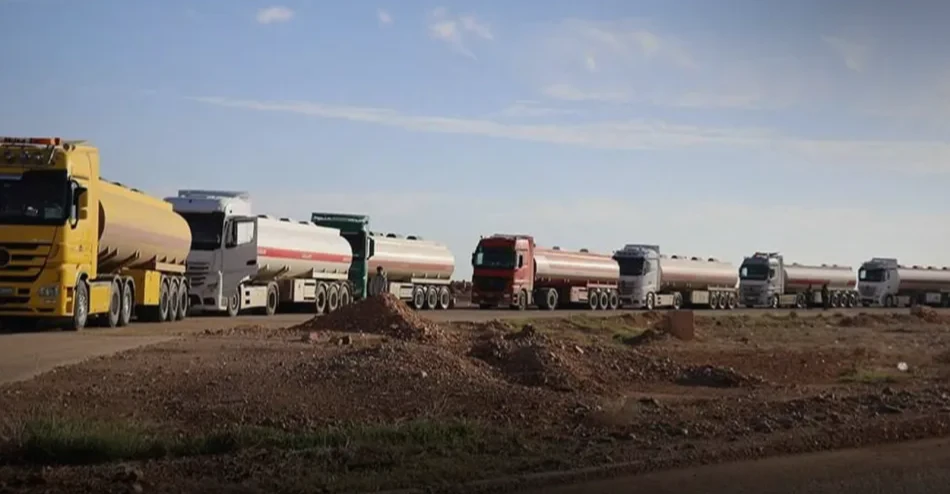
On Tuesday, Iraq began oil exports through Al-Waleed crossing. Moayad Al-Dulaimi, spokesperson for al-Anbar authorities, told Shafaq News that authorities authorized 101 tanker trucks to pass, carrying a total of 3.2 million liters of crude oil.
Iraqi lawmaker Ali Shaddad, in an interview with our agency, previously said authorities are developing alternative routes as regional tensions disrupt traffic through the Strait of Hormuz and reduce output from southern fields, with contingency plans aimed at maintaining export flows despite logistical and security constraints.
Read more: Hormuz lockdown: Iraq’s economic lifeline under threat