"Fear gauge" jump causes +$3 trillion loss in global stock markets
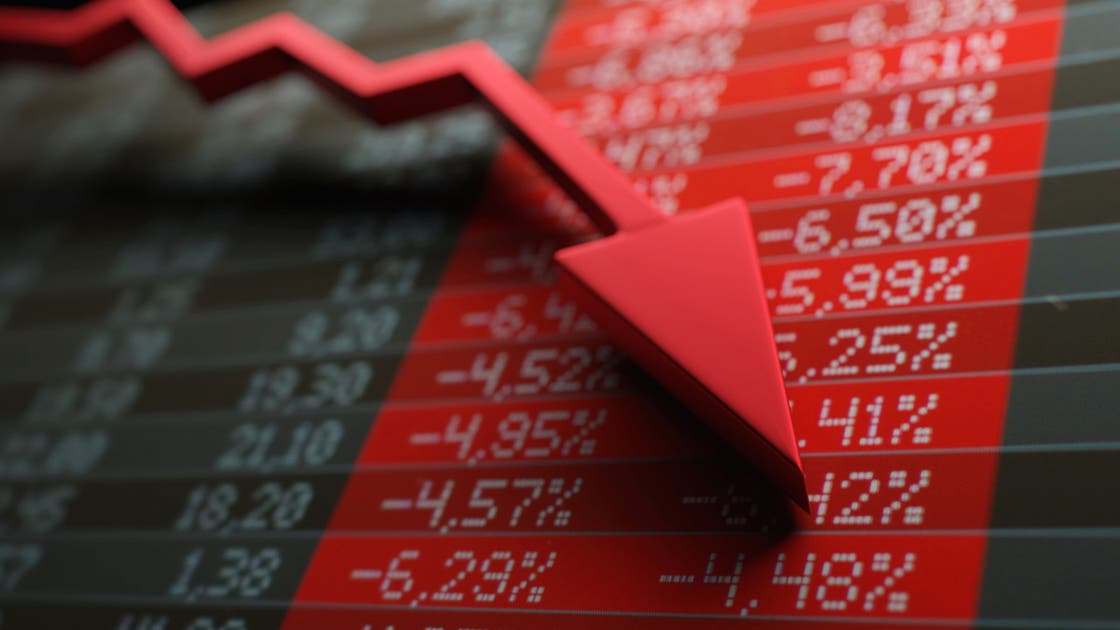


Shafaq News/ On Monday, global stock markets experienced a significant downturn, with losses exceeding $3 trillion as trading commenced for the week.
The "fear gauge", Wall Street's most-watched gauge of investor anxiety, jumped to its highest level in four years, rising over 120% compared to last Friday, as traders scrambled to hedge against market volatility during a global selloff fueled by US recession fears.
According to Al-Arabiya Business, the Japanese Nikkei 225 index saw the largest decline, recording its worst daily performance since 1987, with a loss of approximately $620 billion in market value. This figure does not encompass all Japanese stocks, many of which also suffered losses.
The MSCI Emerging Markets Index lost $504 billion, while the European Stoxx 600 Index dropped more than $300 billion.
As US markets opened with losses, the extent of the declines expanded significantly. US markets alone contributed to a drop of over $2 trillion, reducing the total market value of the largest 9,143 companies worldwide to $101.8 trillion, down from $103.8 trillion at the market open.
The figures reviewed by Al-Arabiya Business do not account for all global markets, suggesting the total losses could be even higher.
Current losses are the largest since the COVID-19 pandemic and are approaching the scale of the 2008 global financial crisis.
In this context, Michel Sleibi, Chief Market Analyst at FXPro, stated that global financial markets are experiencing heightened fear and a severe sell-off in both stocks and cryptocurrencies, driven by two main factors.
He explained in an interview with Al-Arabiya Business that increased concerns about "carry trades" emerged following last week's interest rate hike in Japan, despite the yen's decline to levels of 143 yen per dollar.
Sleibi noted that stock markets had reached high levels, prompting investors to exit and shift towards US Treasury bonds, particularly 10-year bonds.
He also mentioned that US employment data intensified market panic last Friday.
Sleibi added, "I do not foresee any immediate economic recession or emergency intervention by the Federal Reserve to cut interest rates, although there are indications of a 50 basis point cut in November."
He concluded that a change in market direction is unlikely unless stock markets fall by more than 10%. Such declines are considered natural following recent strong gains, particularly in technology stocks.