Shafaq News – Baghdad (Updated at 17:16)
Iraqis across all 18 provinces cast their ballots on Tuesday in the country’s sixth parliamentary elections since 2003, under the supervision of the Independent High Electoral Commission (IHEC).
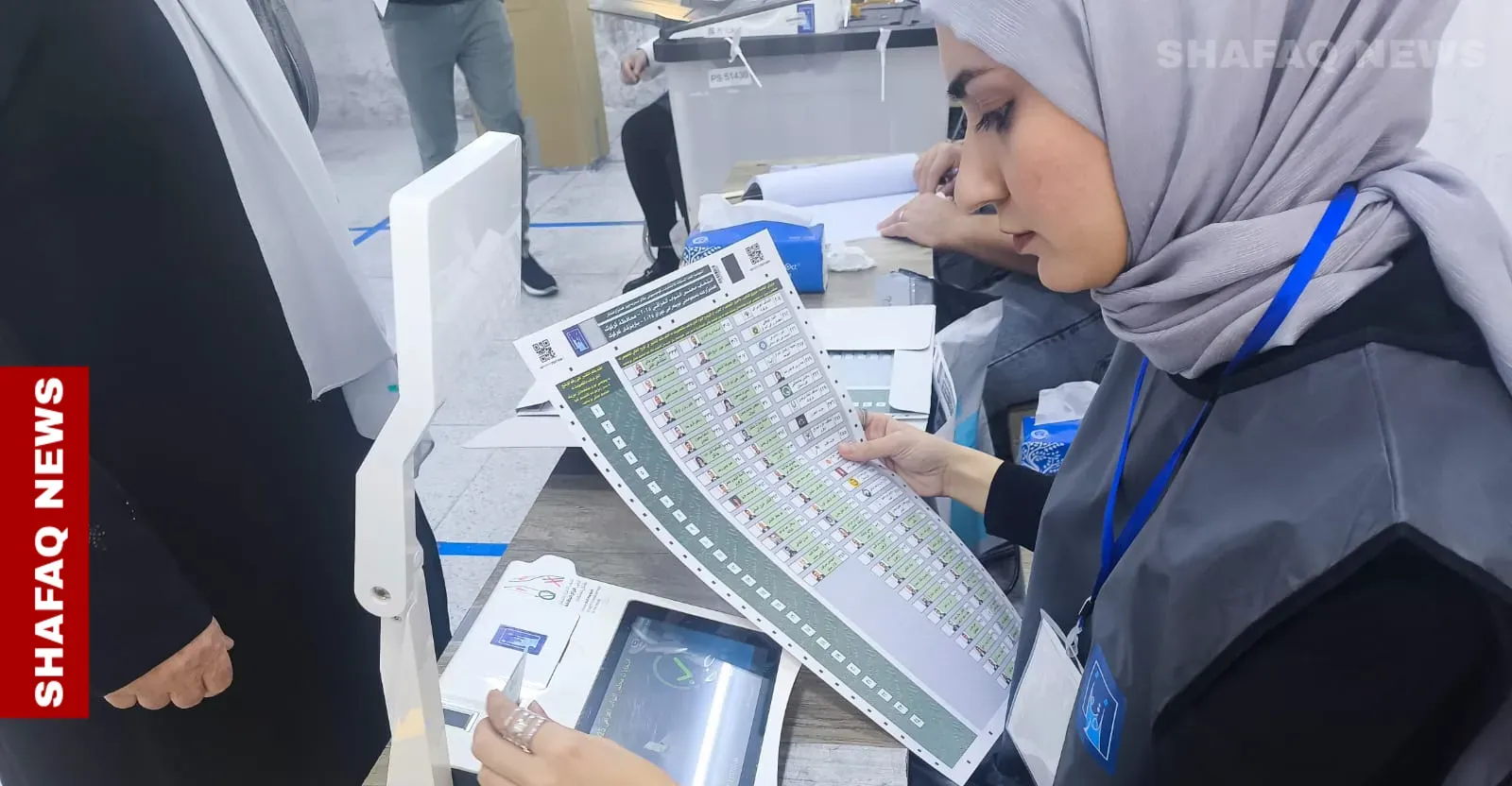
Polls opened at 7:00 a.m. and are scheduled to close at 6:00 p.m., as more than 20 million registered voters choose 329 members of parliament from over 7,000 candidates representing coalitions, parties, and independents across Iraq.
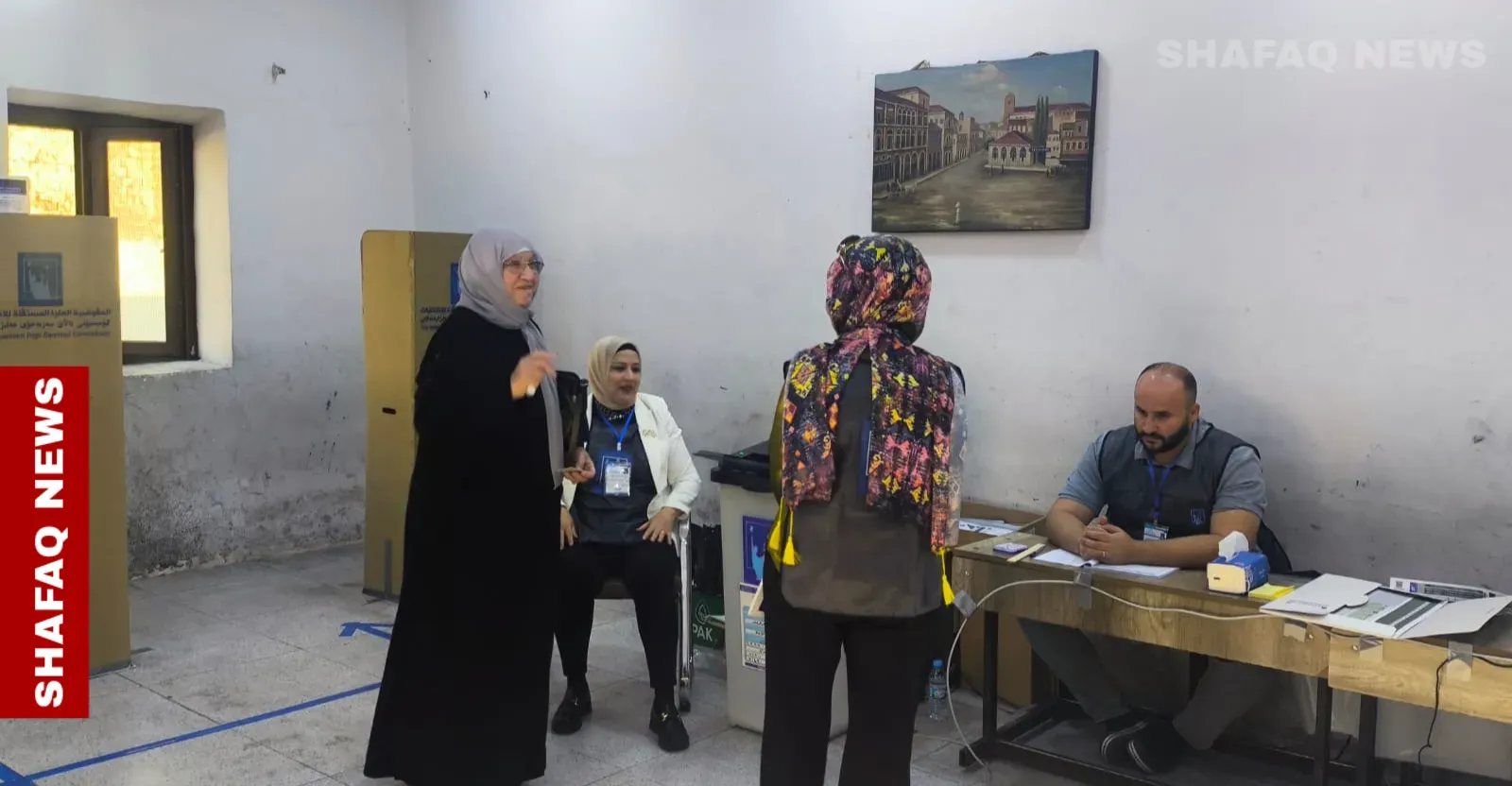
National Overview
IHEC confirmed that all polling centers across Iraq opened on time, with field offices reporting only minor technical interruptions that were promptly resolved.
The Commission’s operations room in Baghdad is monitoring every province in real time, coordinating with the Joint Operations Command and local authorities to ensure a secure and stable voting environment.
IHEC’s media team head, Imad Jamil, denied reports claiming that voters holding old election cards were being allowed to cast ballots using official identification documents. He told Shafaq News that voting is strictly limited to those holding updated biometric cards, while older cards have been deactivated since the 2021 elections.
The Commission reiterated that it continues distributing biometric voter cards and urged eligible citizens to visit the nearest registration center in their residential area to collect their cards.
The Commission also confirmed the registration of more than 1,200 international observers representing various countries and organizations, including the Arab League, the European Union, and several Arab electoral administrations. The United Nations deployed 37 observers to monitor the election process across polling stations. In addition, 55 Arab and foreign media outlets — including television networks, newspapers, and news agencies — are covering the vote, alongside over one million local observers and 500,000 accredited political entity agents.
Nebras Abu Souda, assistant spokesperson for IHEC, told Shafaq News that ballot boxes will close precisely at 6:00 p.m. with no extension, noting that the electronic voting devices are pre-programmed to automatically shut down at the designated time.
Southern Provinces (Basra, Dhi Qar, Maysan, Muthanna, Wasit, Al-Diwaniyah, Najaf, Karbala, Babil)
Polling stations in Iraq’s southern provinces opened smoothly, with reports of steady turnout throughout the morning.
In Basra and Najaf, voters lined up early to cast their ballots. Local IHEC officials said technical teams were on-site to handle any equipment issues immediately.
The head of the IHEC office in the province, Haider al-Silawi, told Shafaq News that the participation rates are noticeably rising in both district and rural areas.
In Basra, a security source reported that forces detained a suspect from al-Shaghanba tribe, wanted under Article 406, inside the Musa al-Kadhim School polling center in the Nahr al-Ezz al-Shaghanba area, following gunfire from members of the tribe directed at the polling site, which prompted security forces to return fire.
Security units also sealed off main roads near key polling centers in Karbala and Muthanna, while electricity authorities activated backup power systems to prevent outages during peak hours.
In Babil, IHEC media officer Amir Hussein told Shafaq News that technical committees and field teams recorded no breaches or technical issues in the voting equipment. He said that more than 97% of voter cards have been distributed.
Meanwhile, Ahmed al-Attar, director of the Human Rights Commission office in Babil, said minor irregularities were observed, mainly related to campaign banners placed less than 100 meters away from some polling stations.
A security source in the province told Shafaq News that clashes erupted between supporters of rival candidates in al-Sadda, north of the province, and al-Kifl, in the south. Both incidents prompted a swift security response that contained the situation without any casualties.
Central Provinces (Baghdad, Al-Anbar, Diyala, Saladin, Kirkuk)
Baghdad — Iraq’s largest electoral district — hosts the highest number of polling centers. The Joint Operations Command said the capital remains calm, with heavy security deployment around key stations.
In al-Mahmudiya district, a security source told Shafaq News that forces arrested a man near one of the polling centers for promoting a specific candidate and distributing campaign cards in violation of election regulations.
In Al-Anbar, Qutaiba al-Alwani, head of IHEC’s media office, told Shafaq News that citizens are casting their ballots “without any obstacles,” noting that “no technical faults have been recorded so far in any of the 387 polling centers.
Later in the day, a security source in Al-Anbar told Shafaq News that police arrested an army officer, a woman, and a man for attempting to buy voter cards for 75,000–100,000 dinars ($53–71) each, with legal action already taken against them.
In Kirkuk, IHEC board member Ahlam al-Jabri told Shafaq News that the voting process is proceeding “smoothly and freely,” noting that “all voters are casting their ballots without any technical difficulties.”
Al-Jabri said any minor stoppages in the electronic voting devices are handled “immediately through technical maintenance or instant replacement,” ensuring the flow of voting remains uninterrupted.
Kirkuk Provincial Council Chairman Mohammed Ibrahim al-Hafiz, in coordination with the Sunni Endowment, urged clerics in mosques and husseiniyas (Shia congregation halls) to encourage voter participation as both a religious and national duty.
The Ministry of Peshmerga said Iraqi army personnel assaulted a Kurdish man carrying the Kurdistan flag in the Tuz Kharmatu district of Kirkuk, describing the act as “inappropriate.” The Iraqi army has not commented on the incident.
In Al-Anbar and Diyala, local officials reported stable conditions and a notable turnout in early hours, while Saladin authorities confirmed that an isolated incident occurred around 8:00 a.m., without affecting the overall course of the electoral process. Security forces contained the situation, and voting resumed normally across the province shortly afterward.
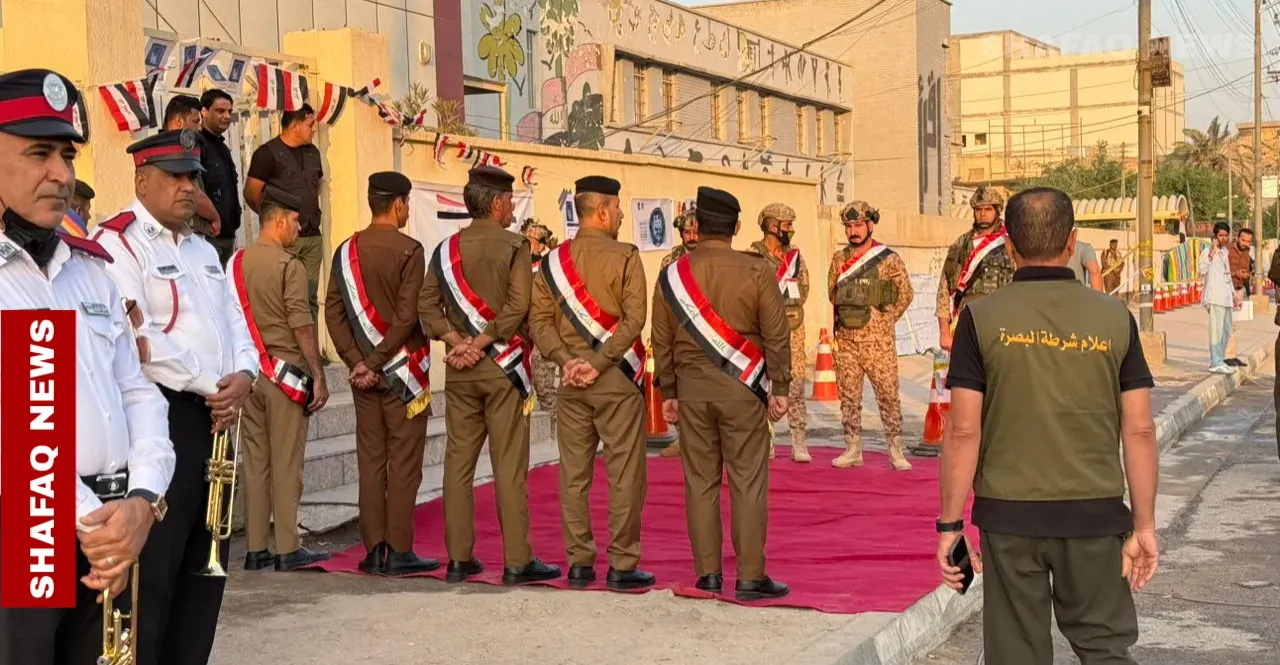
Northern Provinces (Nineveh, Erbil, Duhok, Al-Sulaymaniyah, Halabja)
In the Kurdistan Region, voting took place across more than 1,300 polling centers.
The IHEC office confirmed that 27 voting devices encountered technical issues during the general vote but were repaired shortly afterward.
IHEC regional officials said ballot operations began on time in Erbil, Duhok, and Al-Sulaymaniyah, where local and international observers monitored proceedings.
No significant technical or security issues were reported by midday.
Erbil Governor Omed Khoshnaw said in a press conference that all IHEC voting devices in the province are functioning normally across polling centers, with no malfunctions or violations reported.
In Nineveh, the IHEC office in Singar district reported that no irregularities have been recorded so far. Director Raqib Hijab said the process was proceeding smoothly under a successful security plan. He added that many displaced residents had returned to participate in the vote across 72 polling centers and 192 stations.
Local sources in Nineveh’s Tel Kaif
district told our agency that Popular Mobilization Forces (PMF) members toured
residential areas to urge citizens to vote amid low turnout. The visits passed
without incidents or tension, though many residents cited weak enthusiasm and
dissatisfaction with candidates. The PMF has not yet commented on the activity.
Security and Oversight
The Ministry of Interior and the Joint Operations Command deployed tens of thousands of security personnel nationwide.
Military aviation units were placed on standby for aerial surveillance, while police and intelligence teams monitored access routes to prevent unauthorized gatherings near polling sites.
IHEC said its technical staff are stationed in each province to ensure immediate response to any malfunction in biometric or electronic devices.

Next Steps
Ballot counting will begin immediately after polls close at 6:00 p.m., with electronic transmissions sent to central tally centers in Baghdad.
Preliminary results are expected within 24 hours, according to IHEC officials, while final certified results will be released after verification and audit procedures are completed.
Read more: Iraq’s 2025 poll: +21M voters, new law, fading monitors, and fierce bloc rivalries