Shafaq News – Baghdad
Fifteen years after the Iraqi High Criminal Court recognized the mass deportation, displacement, and disappearance of thousands of Feyli Kurds in the 1980s as genocide, members of the community gathered in Baghdad to reflect on the crimes and press for renewed action.
Earlier this week, the General Conference of Feyli Kurds hosted a panel titled “Genocide: Effects and Evidence in the Feyli Community,” examining the lasting impact of these events on the community.
Participants focused on the social, psychological, and institutional consequences that persist today, stressing the importance of preserving the community’s history not only to honor the past but also to safeguard their identity and contributions within Iraqi society.
Fouad Ali Akbar, adviser on Feyli Kurdish affairs to the Iraqi Parliament, argued that Feyli Kurds have played a crucial role in politics, culture, and the economy, supporting religious authorities and national movements, including leftist causes.
He noted that “the Baath Party singled out the community because it represented a cohesive, engaged group whose loyalty to the nation clashed with the regime’s narrow, mono-ethnic vision,” adding that thousands of Feyli Kurds remain missing, with their remains never recovered.
Akbar
referred to Cabinet Resolution 426 of 2010, which calls on the government to
address the lingering impacts of the genocide. ‘’Building a memorial
cemetery,’’ he said, represents a step forward—but cannot replace broader
efforts to restore the community’s full participation in society.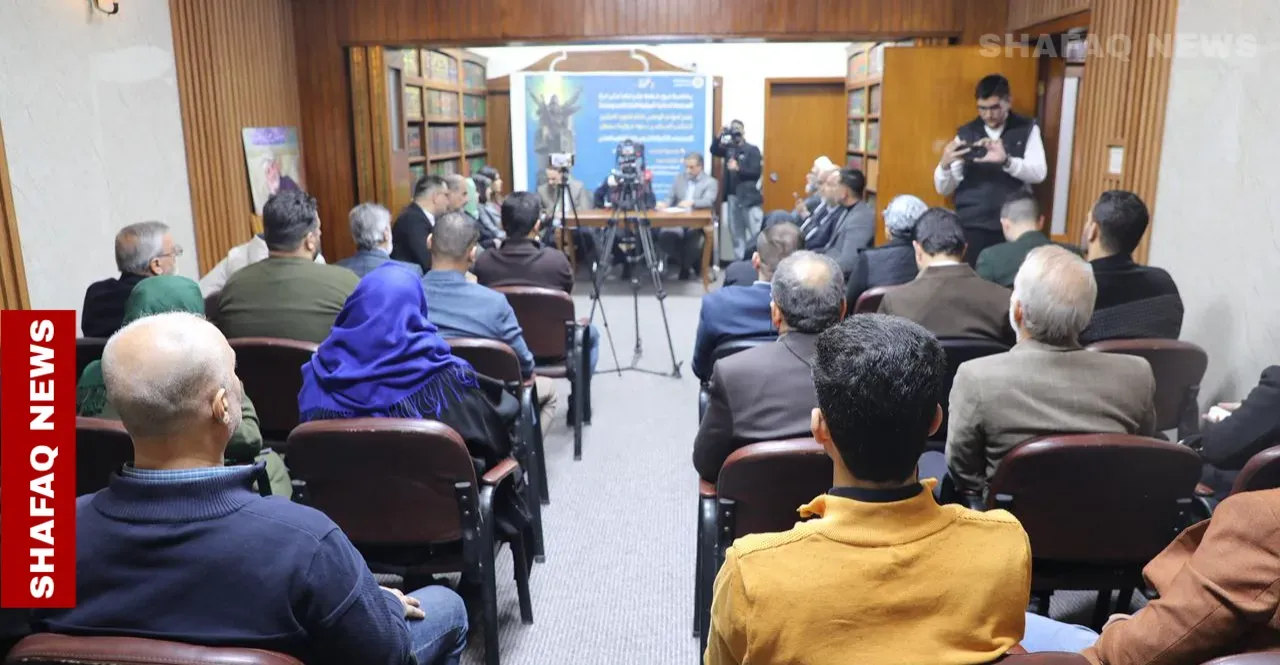
In turn, former Deputy Chief Justice of the Iraqi High Criminal Court, Munir Haddad, urged coordinated action to resolve the community’s grievances. He also acknowledged the role Feyli Kurds played in establishing the Criminal Court, which oversaw the execution of 39 former regime leaders—a process he described as “a historic moment in Iraq’s pursuit of justice.”
Meanwhile, Tarek Al-Mandalawi, head of the General National Conference of Feyli Kurds, outlined the ongoing gaps, noting that ‘’families of martyrs have received little or no compensation,’’ while cases of political prisoners and missing persons remain unresolved.
He further called on the government to act promptly, stressing that acknowledgment alone is insufficient and that tangible change requires immediate measures.
About the Feyli Kurds
Among Iraq’s oldest Kurdish groups, the Feylis have lived for centuries in Baghdad, Wasit, Diyala, Khanaqin, and Mandali. Once renowned for their contributions to trade, education, and culture, they endured decades of systematic exclusion, particularly under former presidents Ahmed Hassan Al-Bakr (1968–1979) and Saddam Hussein (1979–2003).
During that period, an estimated half a million Feylis were forcibly deported to Iran, their properties confiscated, and citizenship revoked under allegations of “Iranian origin.” At least 15,000 young Feylis disappeared in prisons, their fate remaining unknown.
Iraq’s High Tribunal later recognized the persecution as an act of genocide. Yet more than twenty years after the fall of Saddam’s regime, crucial issues such as citizenship restoration, compensation, and property restitution remain unresolved, leaving many Feylis still seeking justice and acknowledgment.
Read more: Stateless in their homeland: The unending exile of Iraq’s Feyli Kurds